Model Quality Standards
Every model we publish is built to one written production standard before it goes on sale. TurboSquid then checks it independently and awards CheckMate or StemCell. This page is the short version of that standard - what is actually guaranteed about the geometry, the UVs, the textures and the materials inside the file you download.
This page describes our current production standard. The catalogue goes back years, and models produced under earlier versions of the standard may differ - older files can carry smaller texture sets or a different material setup. The Specifications table on each model page is authoritative for that particular model.
Last updated:
CheckMate and StemCell in one paragraph
CheckMate Pro is TurboSquid's technical certification. A reviewer opens the file and checks the mesh, the naming, the pivots, the UVs and the materials against a fixed list. If anything fails, the model is sent back. StemCell goes further: the same model is built so it can be converted automatically into every major format and render engine without a human fixing it afterwards. A StemCell model is therefore also CheckMate.
Both badges appear on the model page and in the Specifications table. A model without a badge is not a worse model - it means it was not submitted for certification - but a badge is a promise that someone else checked the points below.
Geometry
- Quads and triangles only. No n-gons.
- No coincident vertices, no coincident open edges, no isolated vertices. Seams are welded, not overlaid.
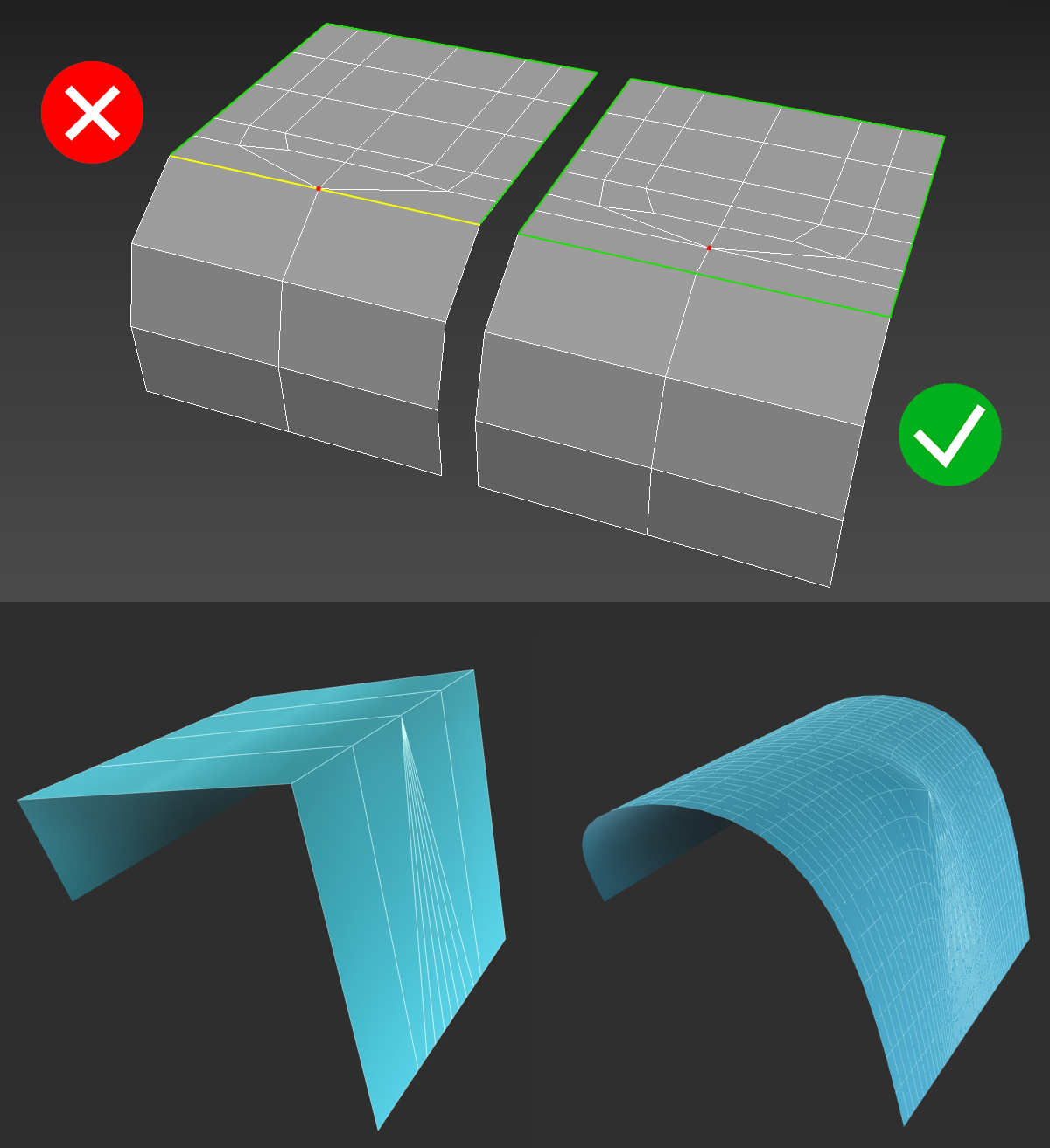
- No T-vertices on visible surfaces - they break shading and subdivision.
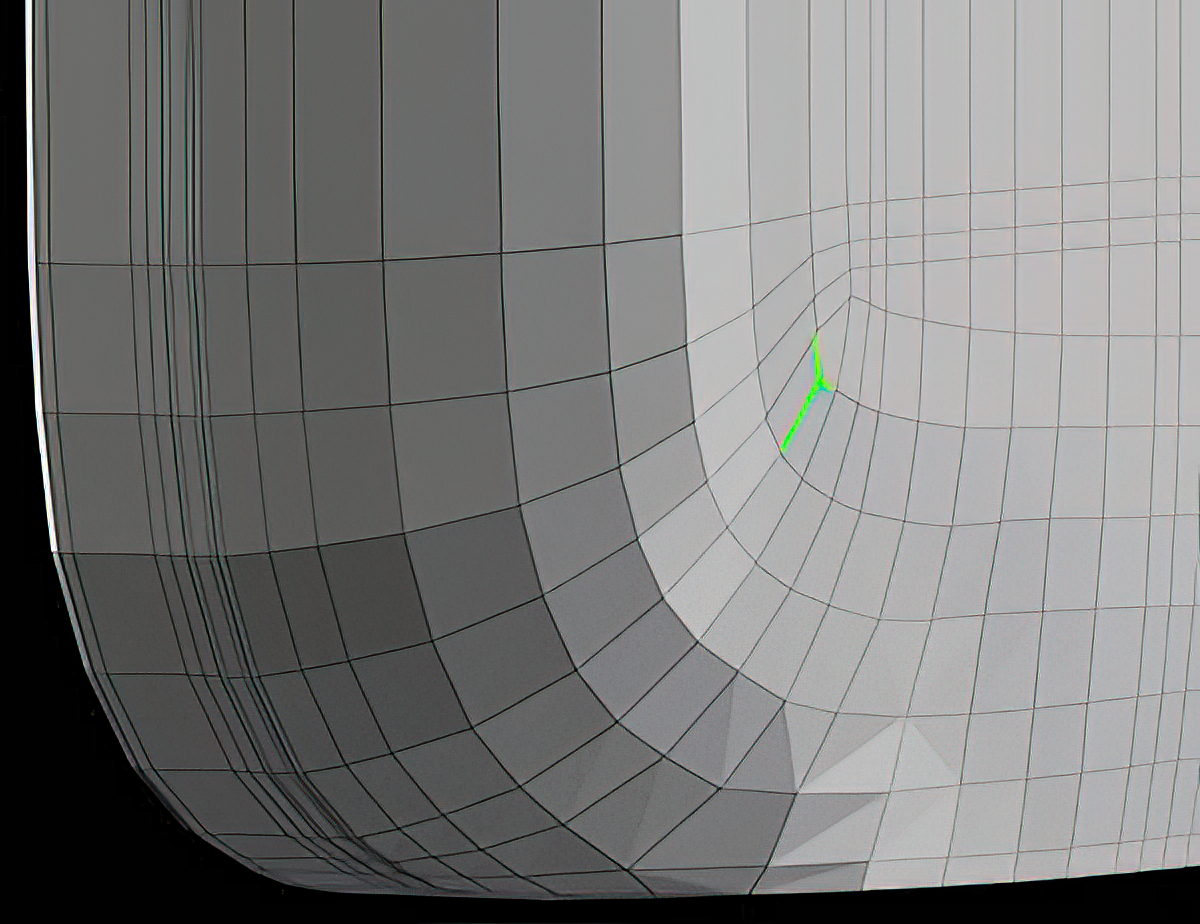
- At most five edges meeting at a point on curved surfaces. Poles with more produce pinching.
- Mesh density follows the form. Large curved surfaces get more resolution than small flat ones; density is the minimum that still matches the reference. Around 80,000 polygons per mesh is the working ceiling.
- Crease is 0 on every edge, so the model exports cleanly to other formats.
- Pivots are set on every moving part, and linked hierarchies are built - a door rotates with its handle.
- Units are centimetres, never generic, and the model matches the real object to within 1%.
UV unwrapping
- Everything is unwrapped. No object ships without UVs.
- No overlapping, mirrored or inverted islands, except where the standard explicitly allows it.
- One UDIM. All islands sit inside the 0-1 space.
- Consistent texel density across islands, so one part of the model is not visibly sharper than another. Close-up details may be given more.
- Padding by texture size - 16-32 px at 4K, 32-64 px at 8K - so mip-mapping never bleeds one island into its neighbour.
- Seams are placed where they will not be seen.
Textures
- Minimum 4096 x 4096. Resolution is chosen so nothing blurs or pixelates at close range.
- PNG. Colour maps are 24-bit RGB, monochrome maps are 8-bit greyscale. Displacement may be 32-bit OpenEXR where it helps.
- Always four maps per material: BaseColor, Metallic, Roughness, Normal - supplied even when a material does not use one of them.
- No procedural maps. Everything is baked into a real texture file, so the model looks the same in any renderer.
- No tiling, no cropping, no rotation or scaling in the material settings. What you see is what is in the file.
- Readable names -
Brick_wall,Door_knob- neverImage776.
Materials
- One material per UV set.
- V-Ray materials only, with the four maps above wired into the standard slots.
- No Blend or Multi/Sub-Object materials.
- All textures in channel 1.
- Names without spaces or Cyrillic, underscores instead.
Scene and presentation
- Every object sits in a single group; no empty helpers, no leftover objects.
- The model is positioned and oriented predictably, so it arrives upright and centred.
- Lights come from the standard studio setup, so the preview renders you see on the model page were made under the same conditions for every model.
- Fur and hair are built as geometry patches by preference, with V-Ray Fur allowed where it suits the subject.
What this means when you buy
A certified model opens without repair work. The mesh subdivides without pinching, the UVs take a new texture without a rewrap, the materials convert to your renderer, and the scale is right the first time. That is the whole point of the standard: the hours it saves are yours, not ours.
Questions about a specific model, or a format you need that is not listed? Write to 3dmolier@3dmolier.com - we convert models on request.