Refueling Boom Drogue
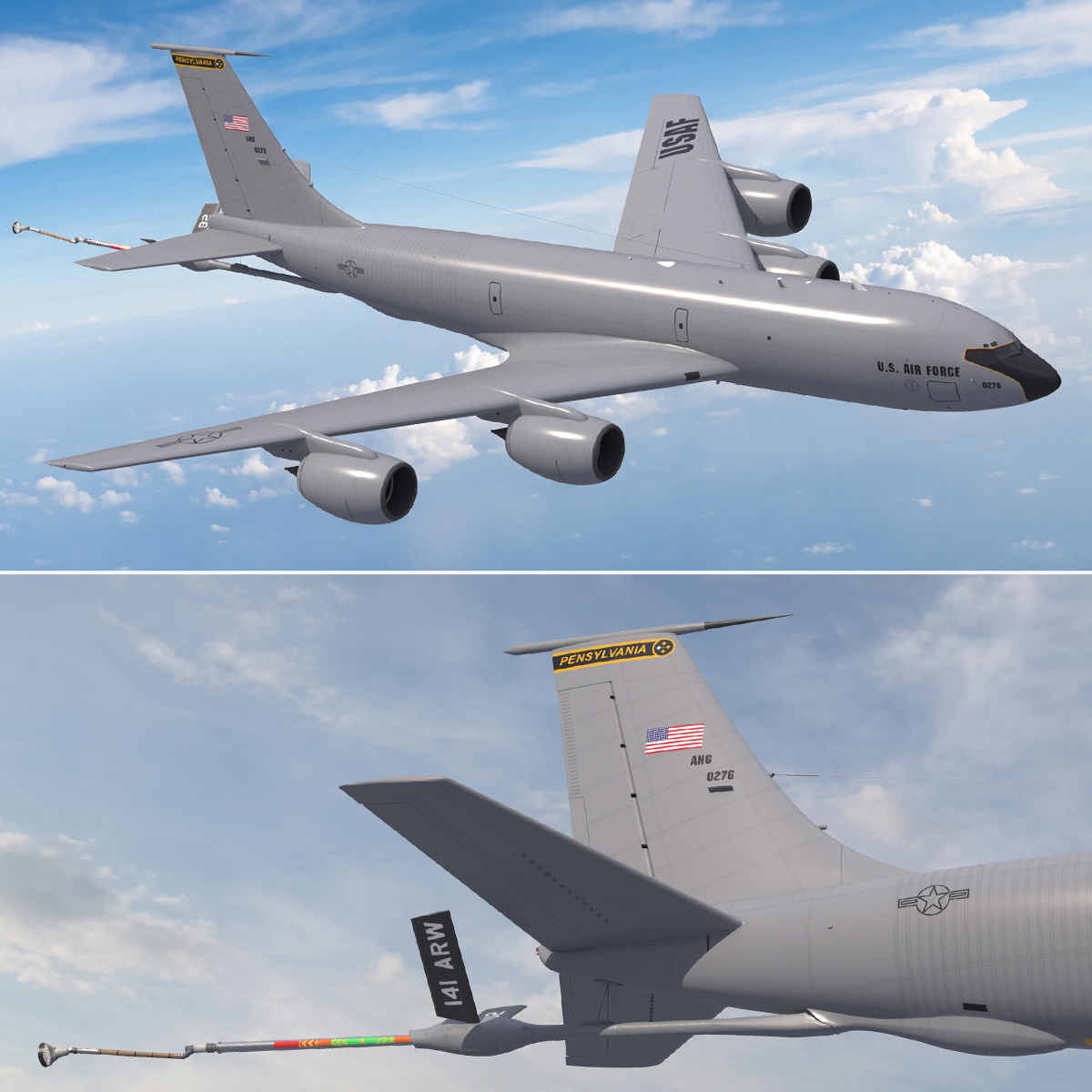
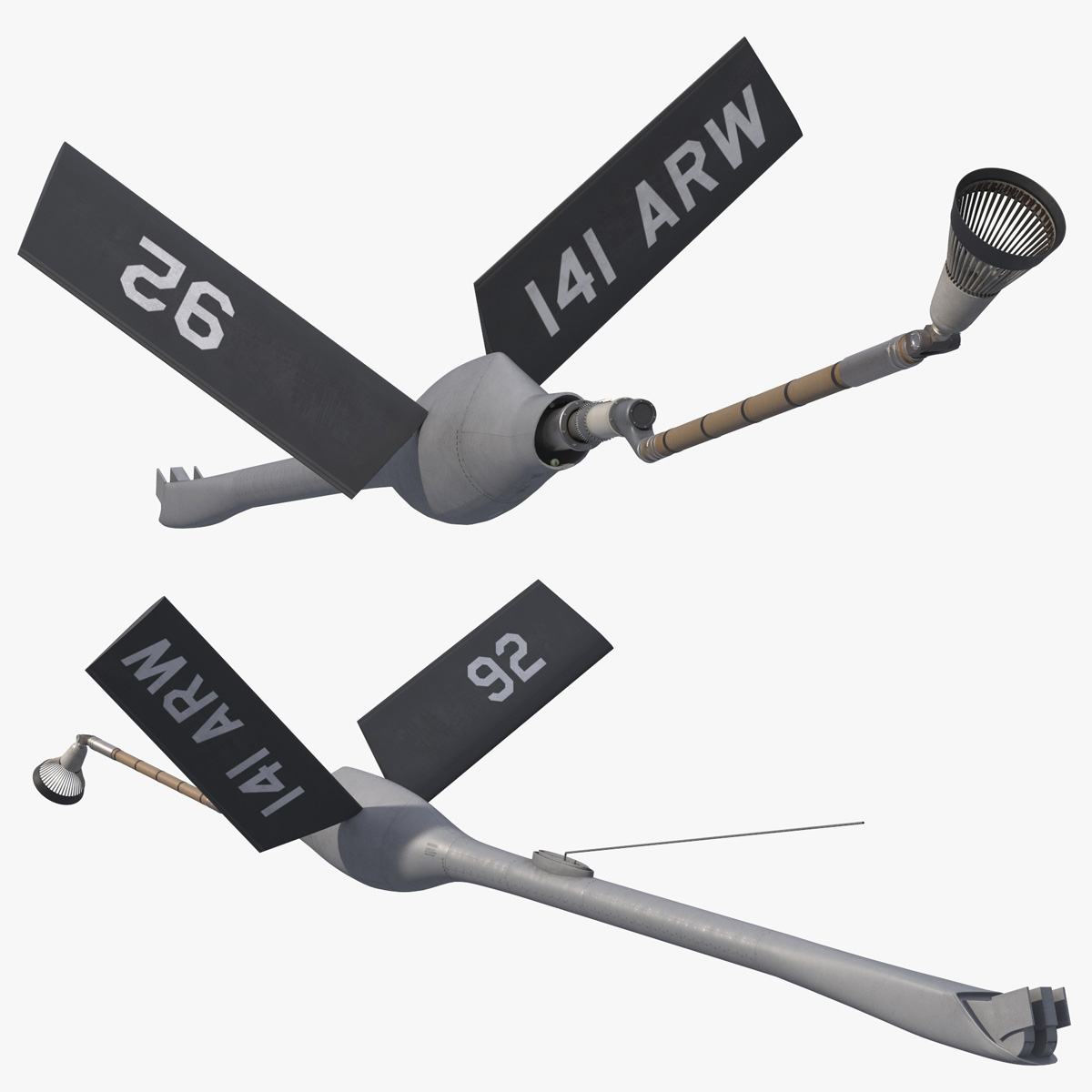
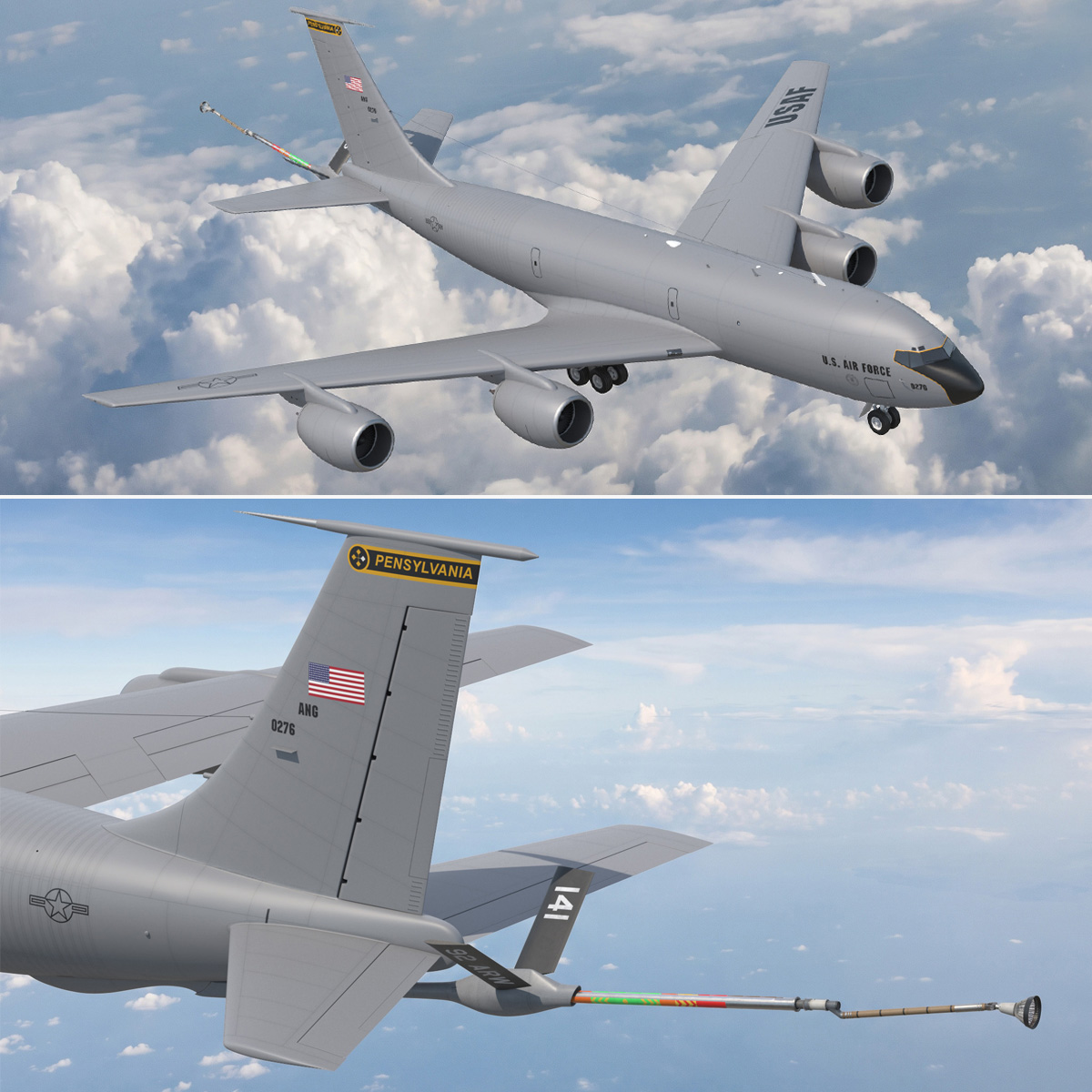
The Refueling Boom Drogue is the telescoping tube and basket that a tanker lowers to pass fuel to another aircraft in flight. Its 124,330 polygons are shaped into the boom fairing, the hose coupling and the ribbed drogue cone at the tip. The assembly is modeled at full scale, long enough to hang convincingly behind the tail of a full-size tanker.
A count of 126,962 vertices keeps the mesh moderate, so it can sit in a flight scene beside two aircraft without strain. The unwrap is mixed rather than fully laid out, and the build passes the CheckMate specification for clean structure and true scale. The drogue basket flares open like a shuttlecock, which gives the receiving pilot a target and gives the camera a readable shape.
Four versions are on the page: this generic unit at $79, a Boeing KC135 Refueling Boom Drogue at $169, and two rigged builds. The rigged pair costs $99 for the tanker boom and $199 for the KC135 boom, ready for extension and swing animation. New in 2026, it suits flight simulators, aerospace explainers and military aviation sequences where mid-air refueling is the story.
See this model in motion
Boeing KC135 Refueling Boom Drogue - 3D Model - from the 3D Molier channel.
Questions About This Model
How clean is the geometry on the Refueling Boom Drogue model?
The mesh uses organized, quad-dominant topology at real-world scale, with objects named and grouped rather than merged into one block.
How much does the Refueling Boom Drogue 3D model cost?
$79 USD, paid once. The Royalty Free license means no recurring cost and no extra payment when the finished work ships.
What file formats does the Refueling Boom Drogue 3D model come in?
The complete list of included formats is shown on the TurboSquid product page, where every file is named and sized before you buy. Native scene files and the common interchange formats are the usual pairing.
What is the Refueling Boom Drogue model typically used for?
The listing names aerospace visualization and flight simulation as the main applications. In practice it also works anywhere a finished aircraft object is needed without modeling it from scratch.