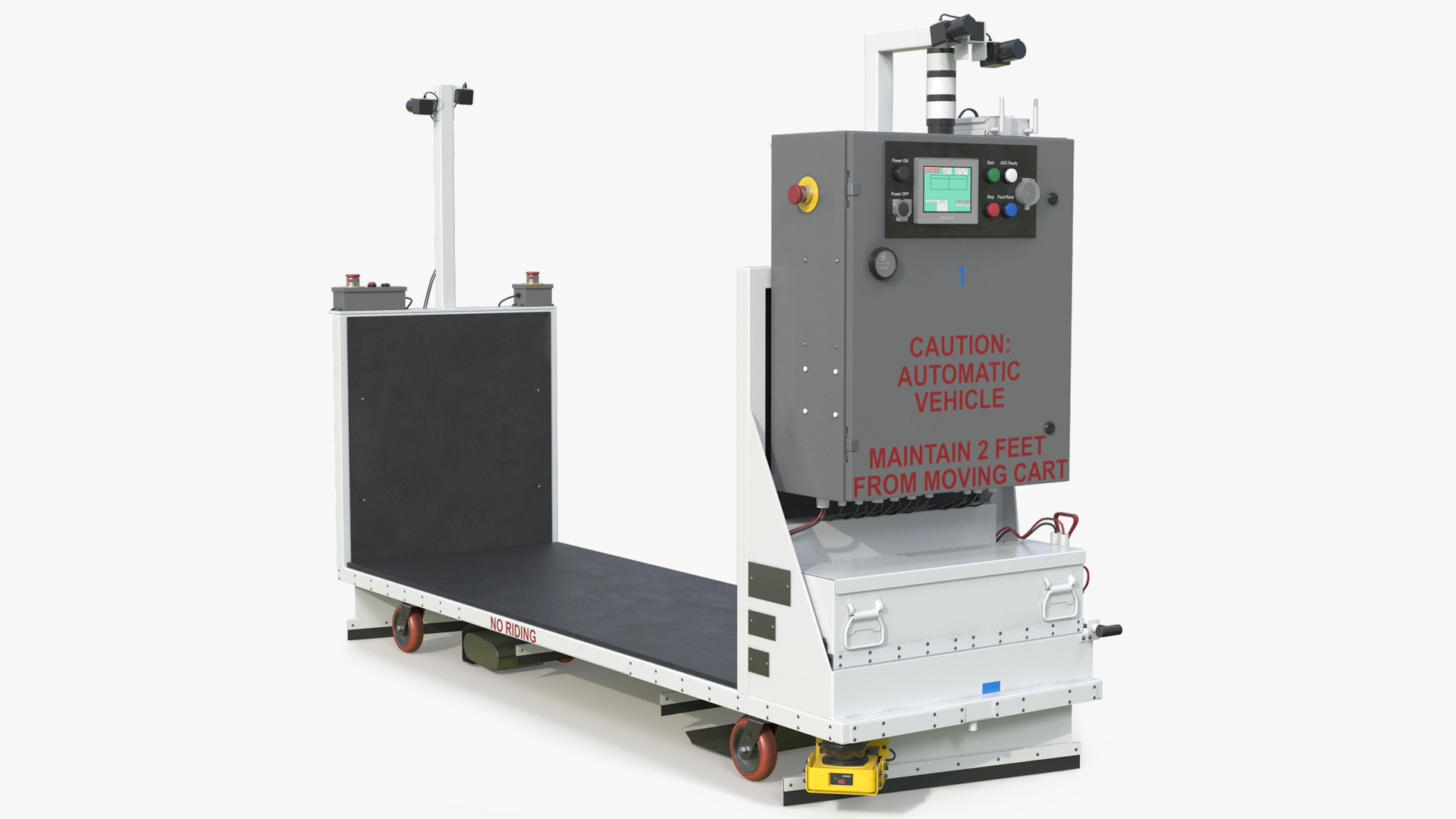
Kermit is an autonomous warehouse vehicle that tows carts of totes along marked routes inside large fulfillment centers. Its 116,636 polygons and 122,002 vertices are built in quads only, covering the low chassis, sensors and tote cart frame. Robots like this show how logistics now blends people and machines on the same busy floor.
The unit spans 337.69 x 108.19 x H219.72 cm, a footprint that fits standard warehouse aisles. StemCell certification supplies PBR materials that hold up in every renderer and game engine without rework. UVs are mixed, so safety stripes or warning decals may need some layout checking first.
This model is licensed for Editorial Uses Only, since the Amazon name and robot design belong to their owner. That suits news stories, supply chain documentaries, logistics courses and technology journalism about automation. Added in 2026, it looks right under cool overhead lights between long rows of yellow storage pods.
Questions About This Model
How much does the Amazon Warehouse Robot Kermit 3D model cost?
$79 USD, paid once. TurboSquid handles payment and delivery. The license is Editorial Uses Only, because the model depicts a real branded product: it covers editorial contexts such as news, commentary and education, but not advertising or products for sale.
Does the Amazon Warehouse Robot Kermit model include materials and textures?
Material and texture contents are listed per file on the TurboSquid product page. As a StemCell asset it ships with PBR materials that stay consistent across the delivered formats.
What is the Amazon Warehouse Robot Kermit model typically used for?
It is cataloged for industrial visualization, operator training and architectural visualization - the sort of work where the object needs to look right on camera but is not the subject of the shot.
Which industries use the Amazon Warehouse Robot Kermit model?
Hardware, Simulation, Architecture and Event Management are the primary industries on this listing. The license, however, is Editorial Uses Only: the model depicts a real branded product, so it may appear in editorial work in those fields, but not in advertising or in products for sale.