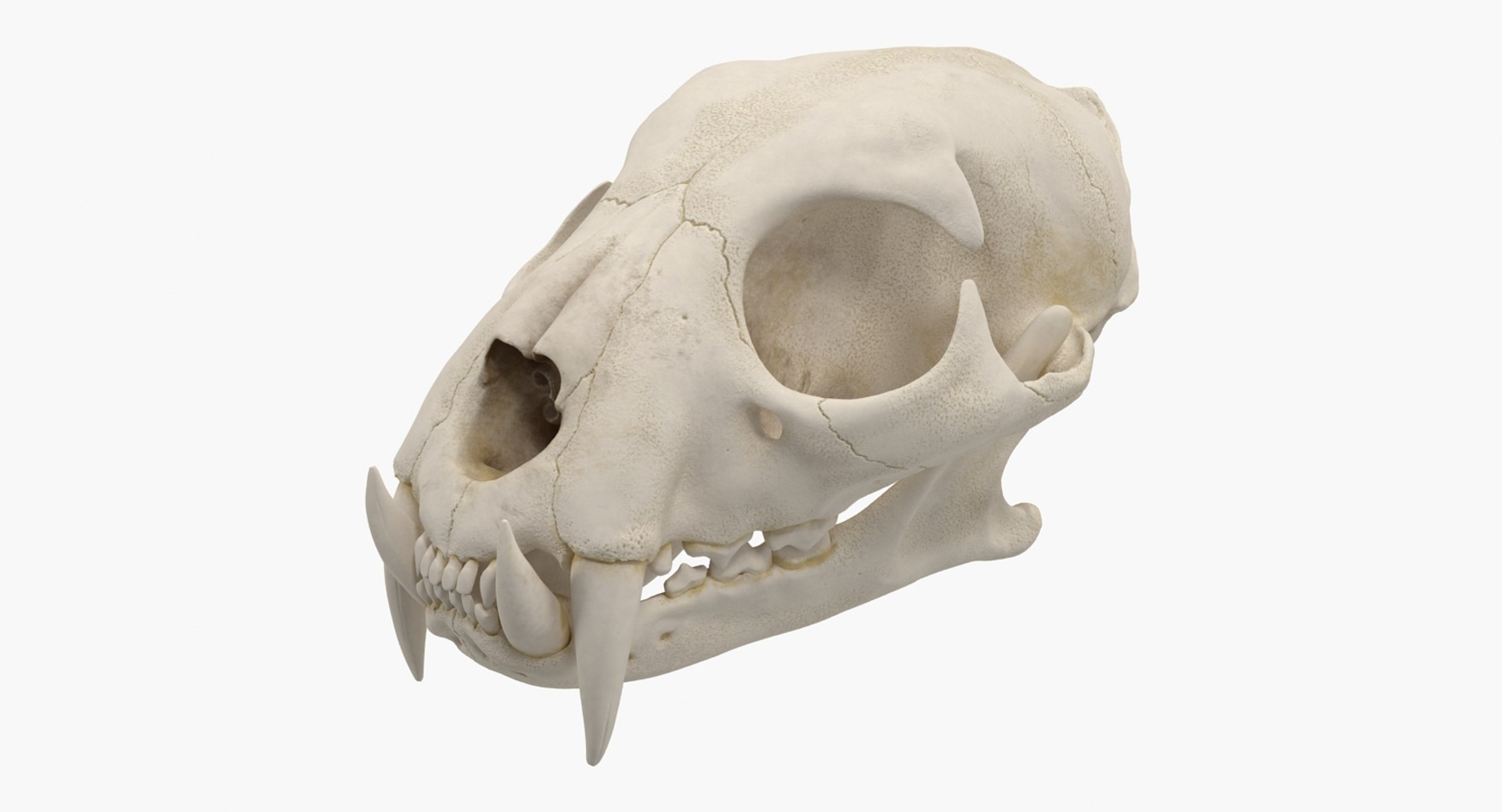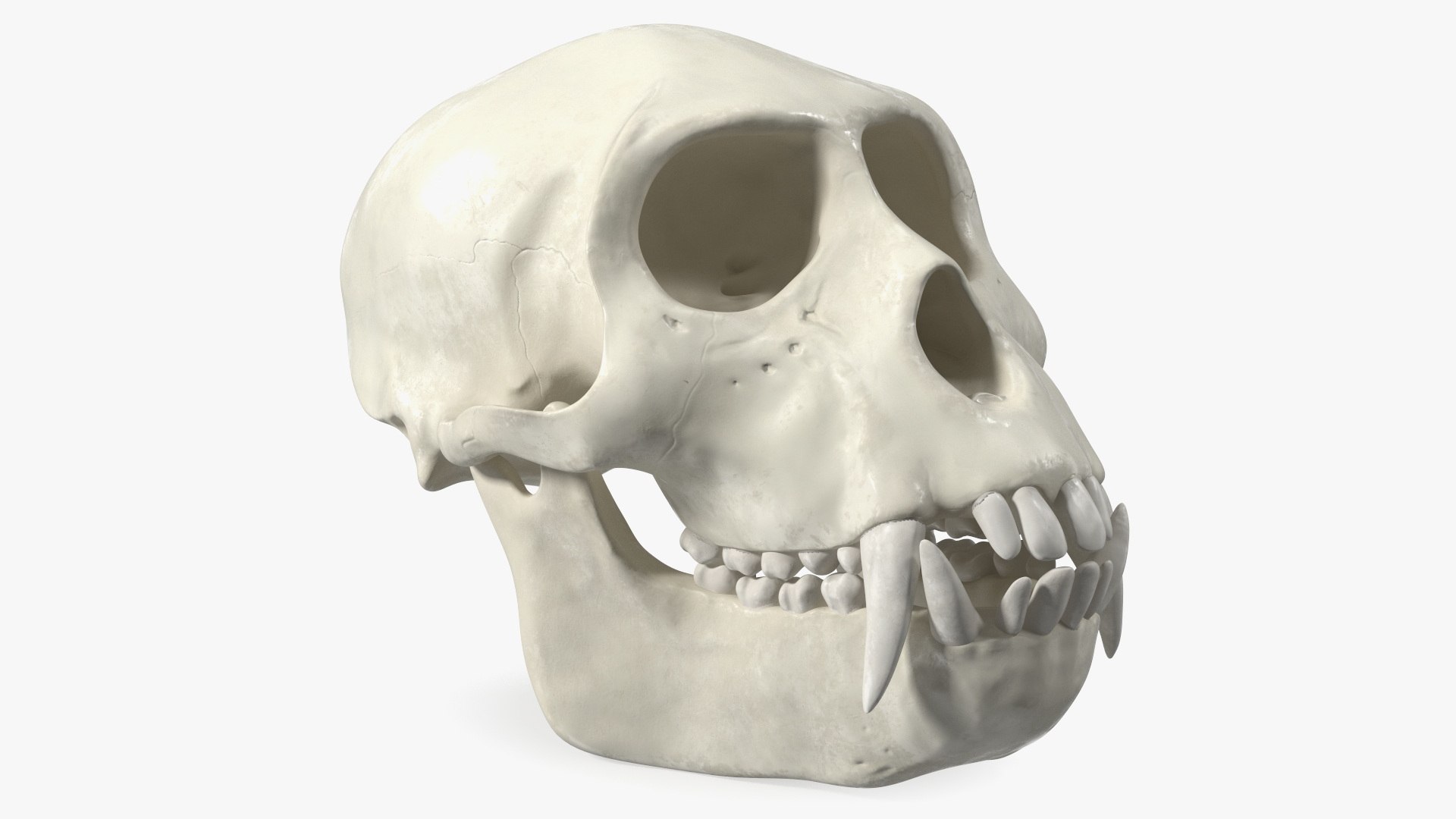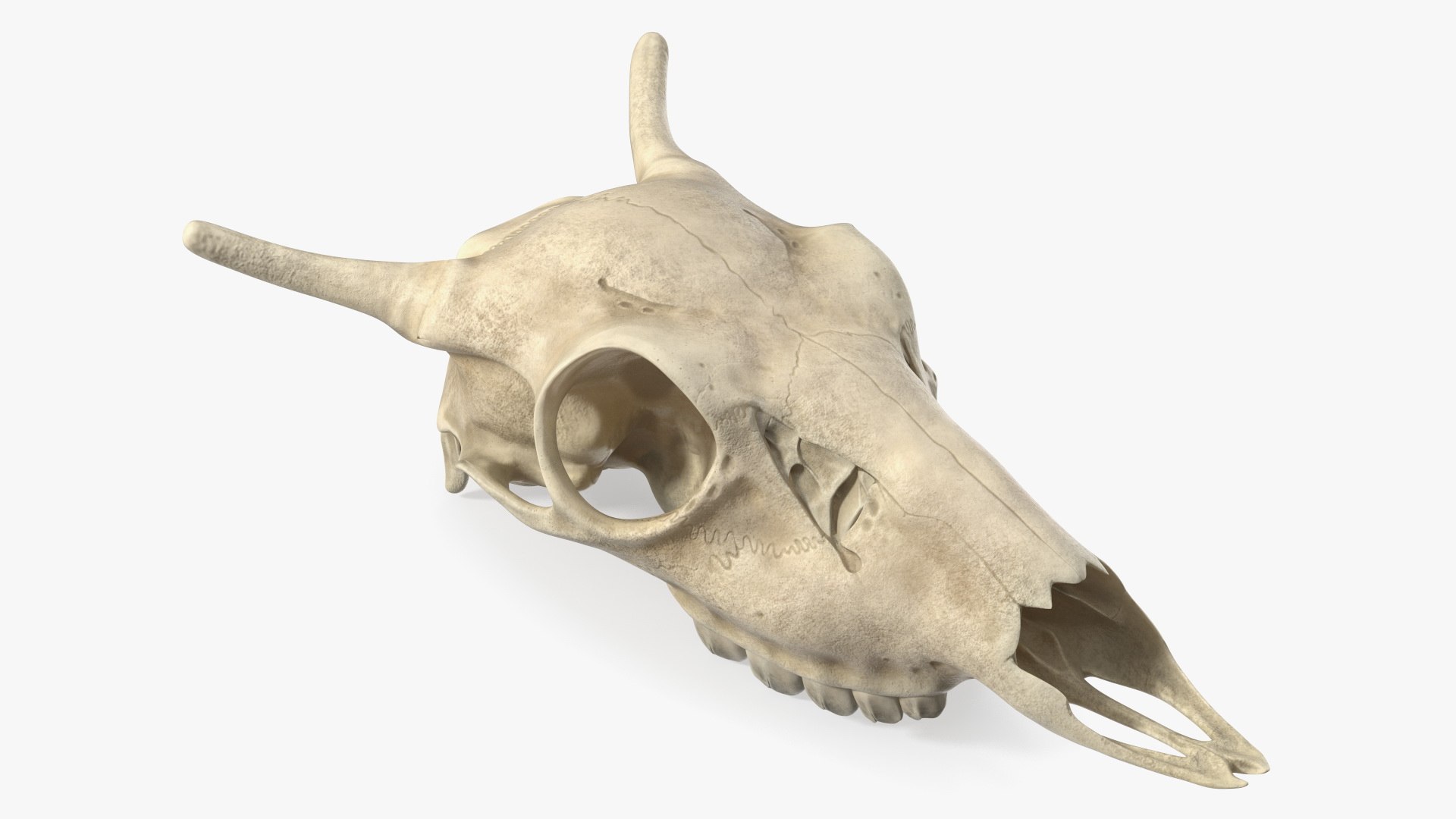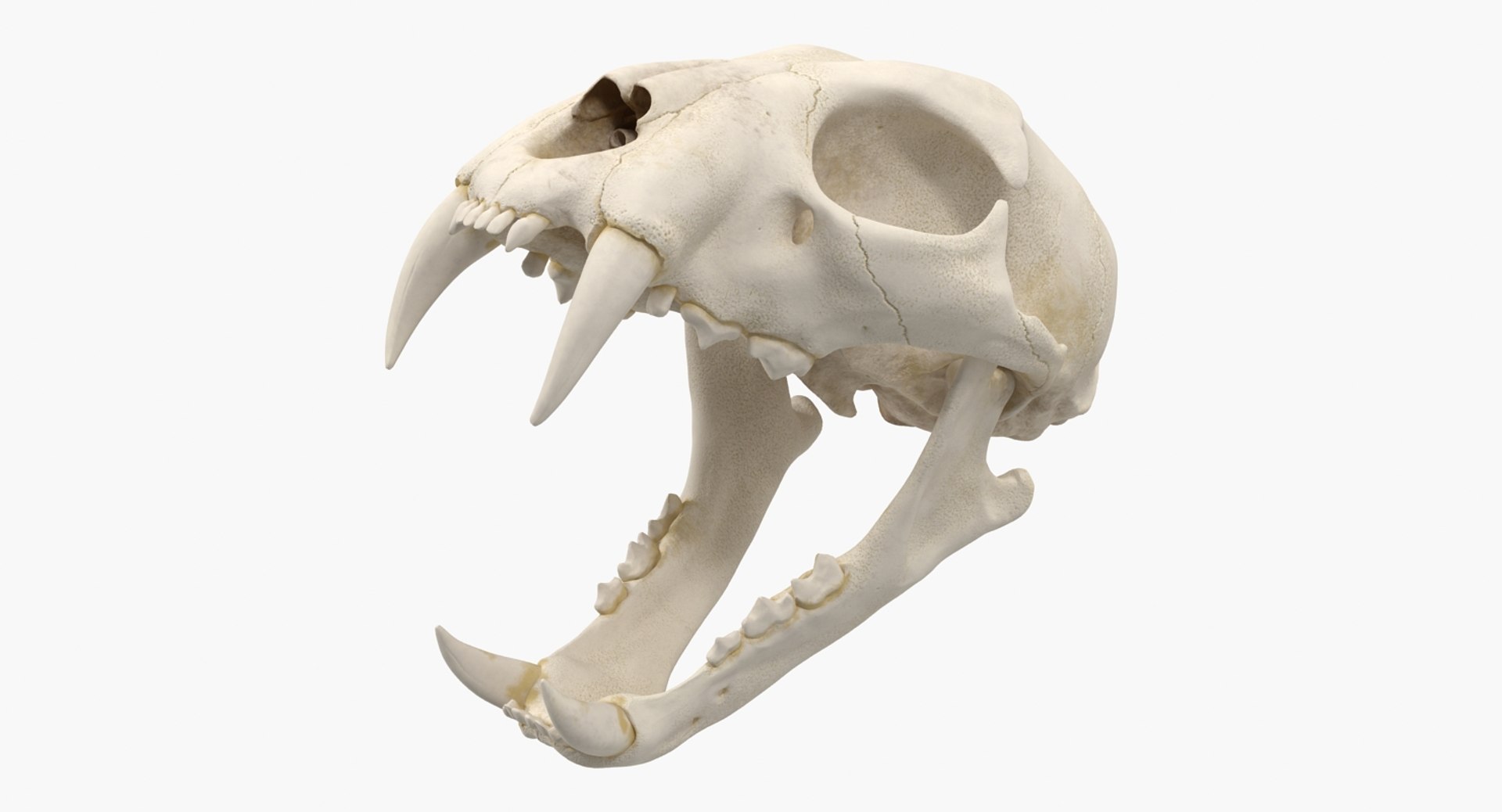
A big cat skull is defined by its teeth and its cheekbones. The canines are enormous relative to the jaw, the zygomatic arches flare wide to anchor the bite muscles, and the sagittal crest runs along the top of the cranium. Those three features are what make a tiger skull unmistakably a predator's, and a generic mammal skull will not stand in for it.
The mesh is 14,186 polygons and 14,190 vertices in quads and tris with non-overlapping UVs, and ships with 4 texture maps at 4096x4096 carrying the bone surface, the suture lines and the staining.
At $44 and built to StemCell specification, it suits natural history and museum material, zoology and comparative anatomy education, wildlife documentary, decorative and set dressing use, and games. On sale since 2018.
Questions About This Model
Does the Tiger Skull model include materials and textures?
Material and texture contents are listed per file on the TurboSquid product page. As a StemCell asset it ships with PBR materials that stay consistent across the delivered formats.
How much does the Tiger Skull 3D model cost?
It is listed at $44 USD on TurboSquid. That is a one-off purchase under the Royalty Free license - there is no subscription and no per-project fee afterwards.
Can the Tiger Skull model be modified after purchase?
Yes, modification is covered by the license. Most buyers adjust materials or decimate the mesh for their engine; only redistribution of the source file is off-limits.
How heavy is the Tiger Skull mesh?
14,186 polygons and 14,190 vertices, built as polygonal quads/tris. Its suitability for real-time use depends on the target platform, scene complexity and the number of instances.