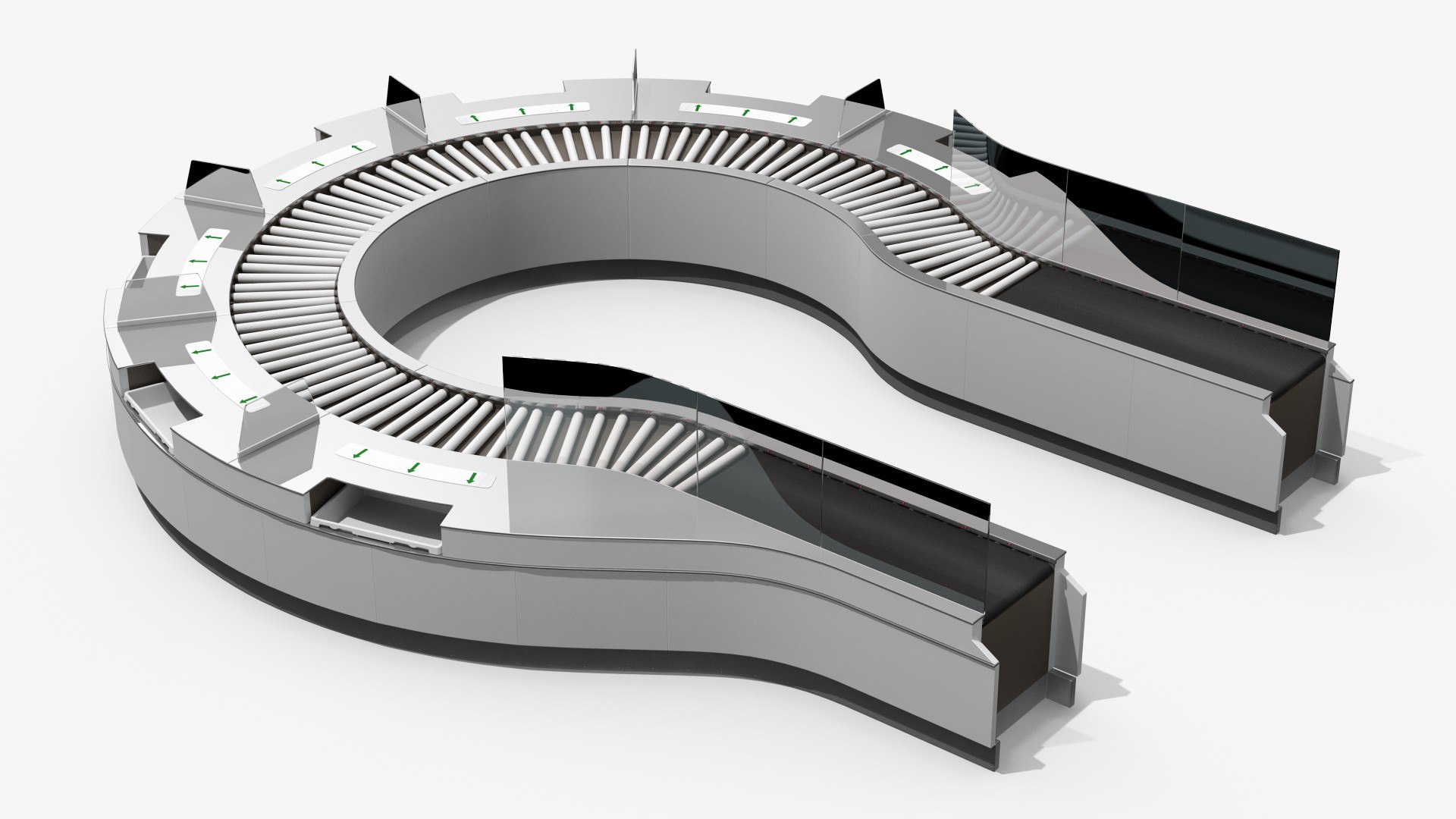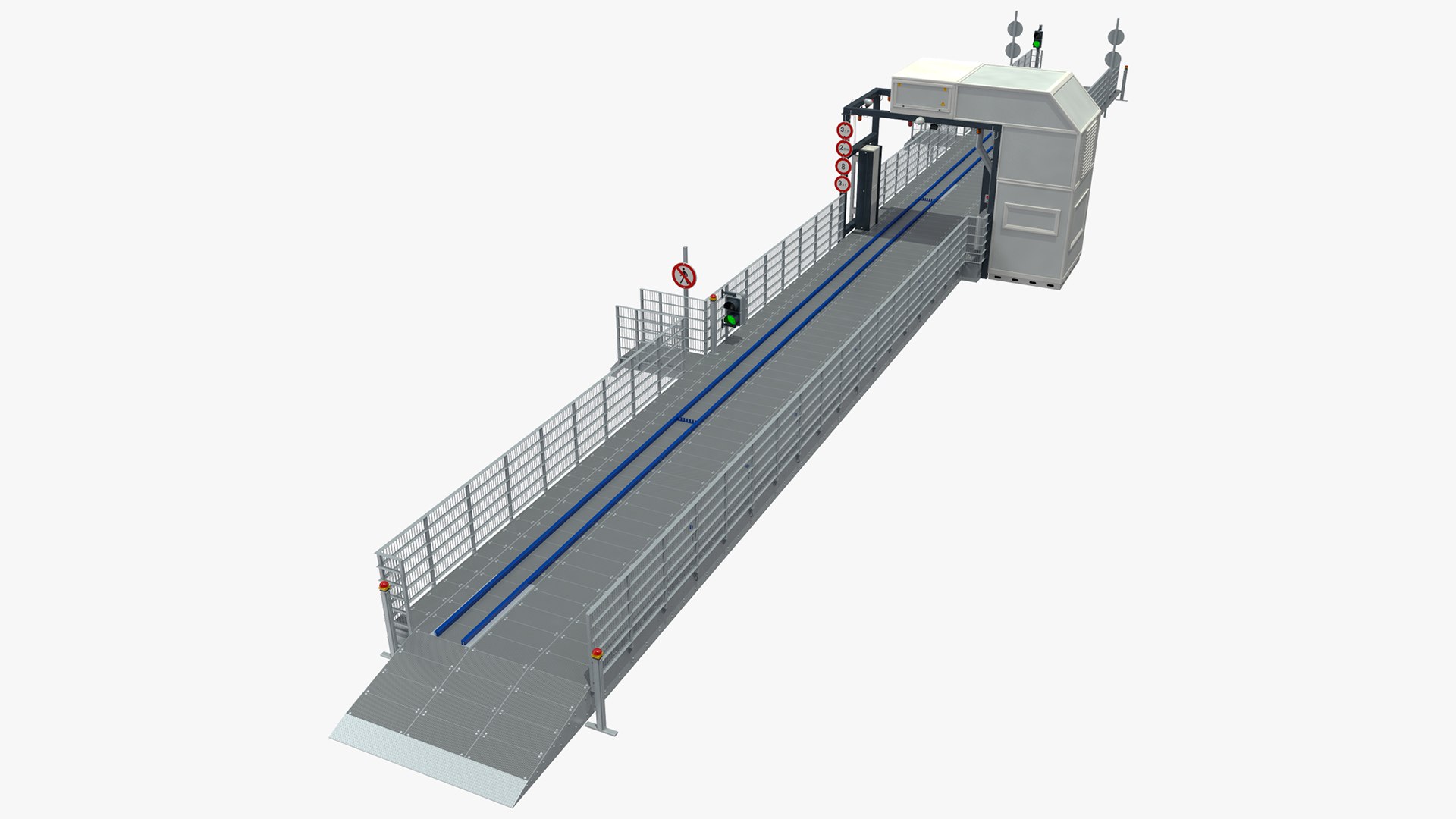
A cargo scanner is a portal rather than a machine: a shielded tunnel large enough for a pallet or a vehicle, with a conveyor through it, an operator cabin alongside and warning barriers around the approach. The scale is the point, and it is what distinguishes cargo screening from the baggage scanners at a passenger checkpoint.
The mesh runs 227,649 polygons and 259,034 vertices in quads and tris with non-overlapping UVs, with the density in the tunnel structure, the conveyor and the control equipment.
At $99 and built to StemCell specification, it suits border control and customs visualization, port and logistics presentation, security industry marketing, airport cargo scenes, training material and games. On sale since 2021.
Questions About This Model
What is the Cargo and Vehicle Inspection Conveyor System model typically used for?
The listing names architectural visualization, game assets and film & TV VFX as the main applications. In practice it also works anywhere a finished architecture & landmarks object is needed without modeling it from scratch.
Can the Cargo and Vehicle Inspection Conveyor System model be used in a commercial project?
It ships with TurboSquid's Royalty Free license, so a single purchase covers commercial delivery - you do not pay again per project or per seat of the finished work.
Can the Cargo and Vehicle Inspection Conveyor System model be modified after purchase?
Yes. The Royalty Free license allows editing the geometry, retopologising, changing materials and adapting the asset to a project. What it does not allow is reselling or redistributing the model file itself.
Which industries use the Cargo and Vehicle Inspection Conveyor System model?
This listing is cataloged for Architecture, Game Development, Film & Video Production, Advertising and Simulation. Those are the sectors the model was tagged for on TurboSquid, based on how comparable assets in the Architecture & Landmarks range are bought.