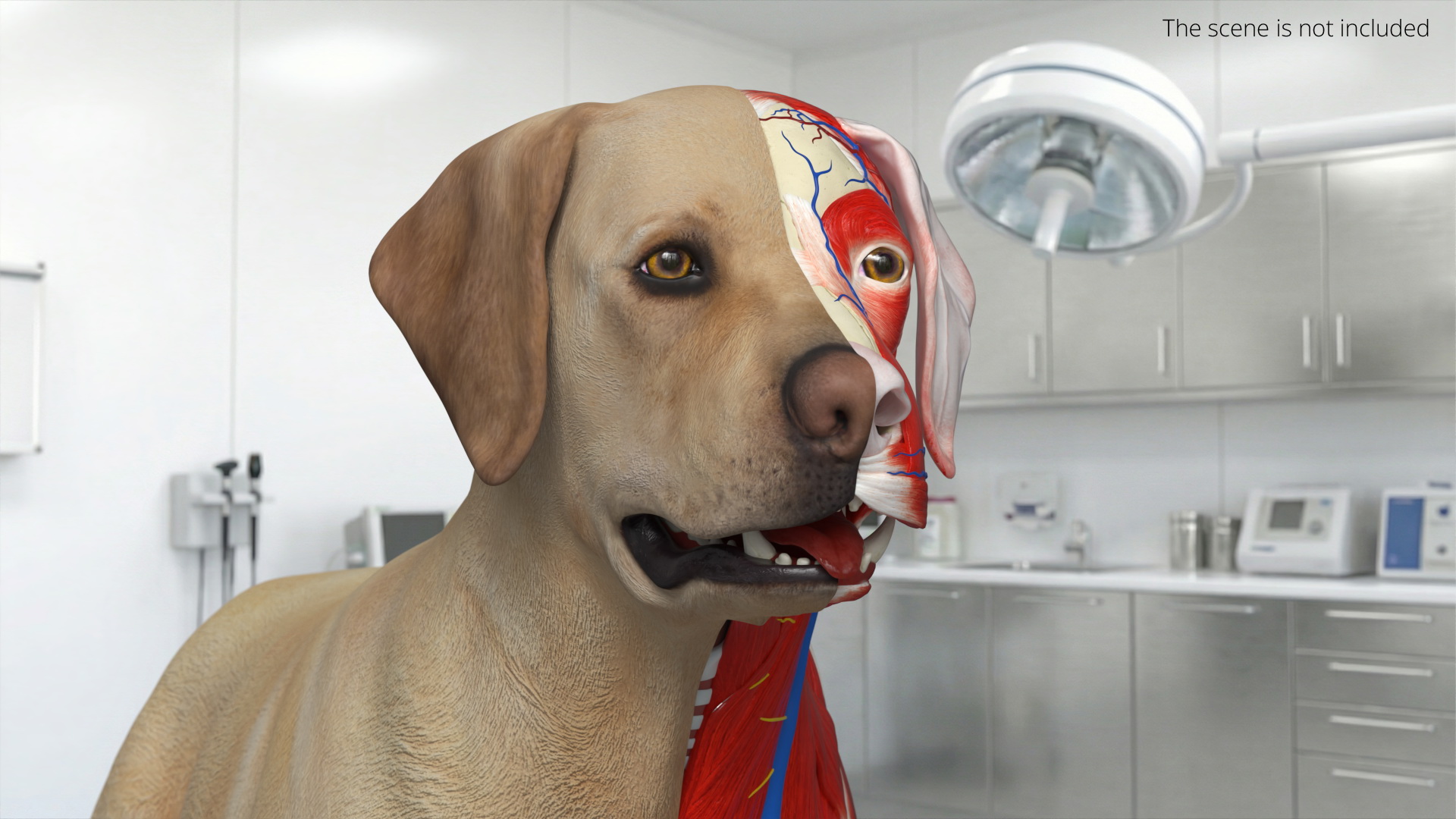
Cat Internal Organs Vascular Nervous Anatomy
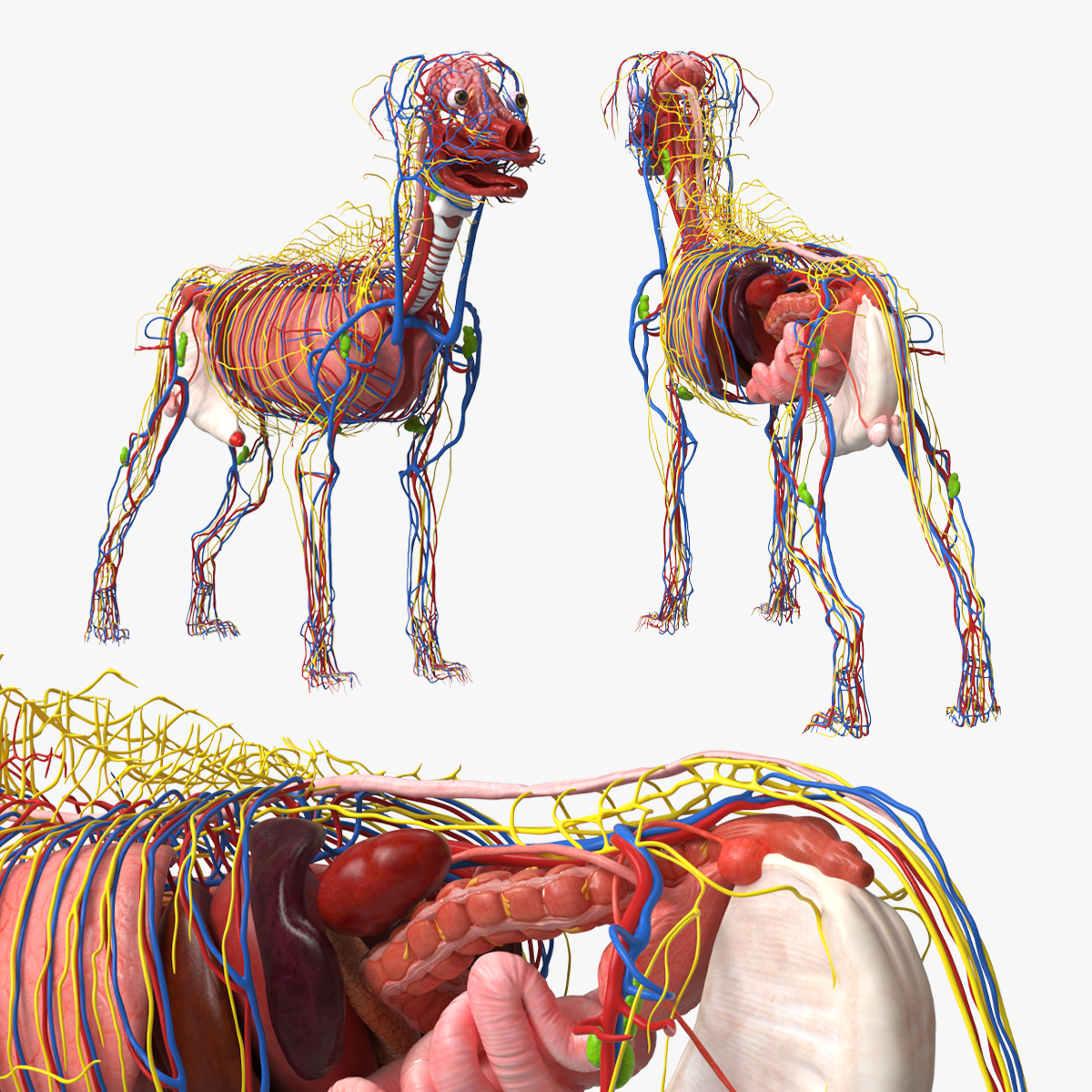
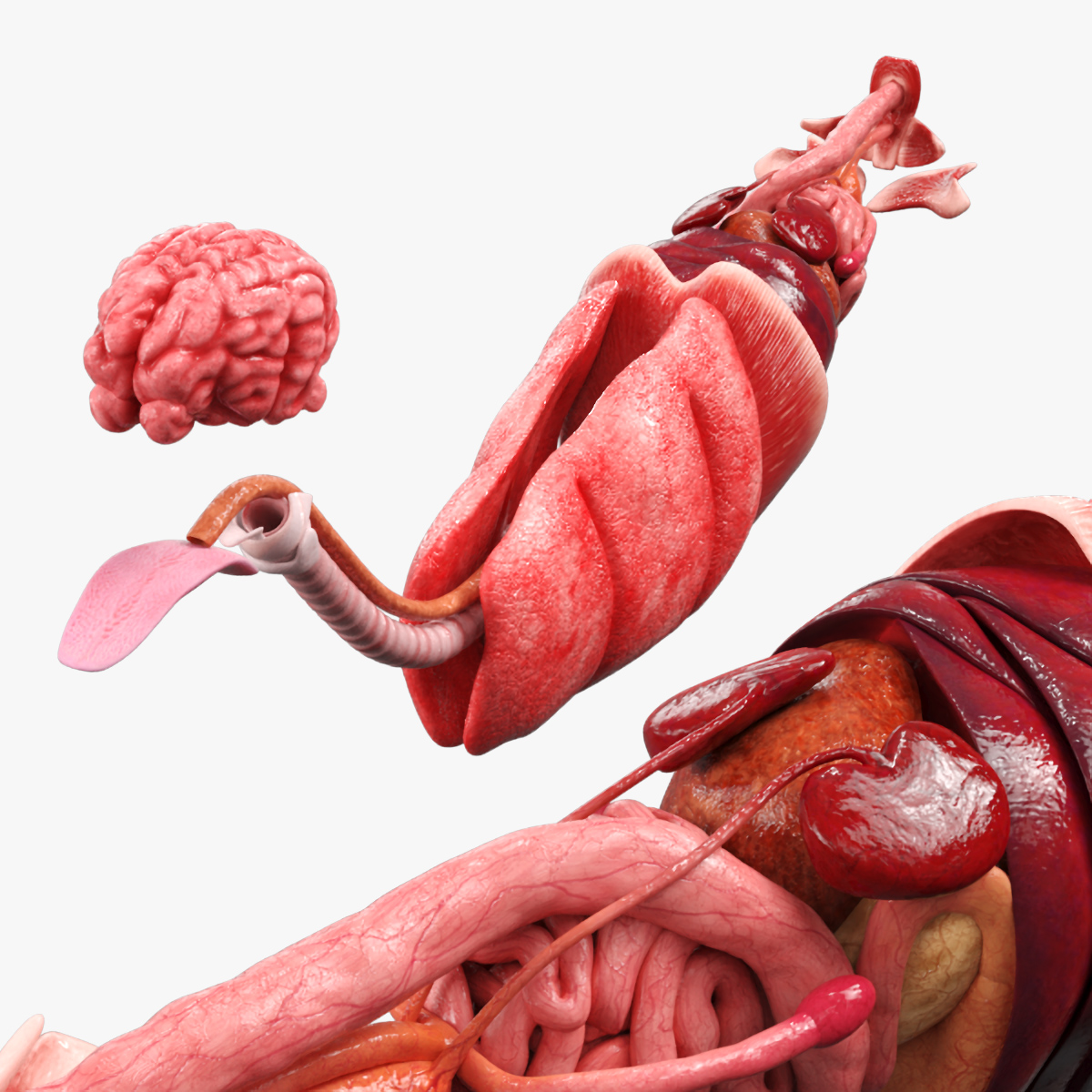
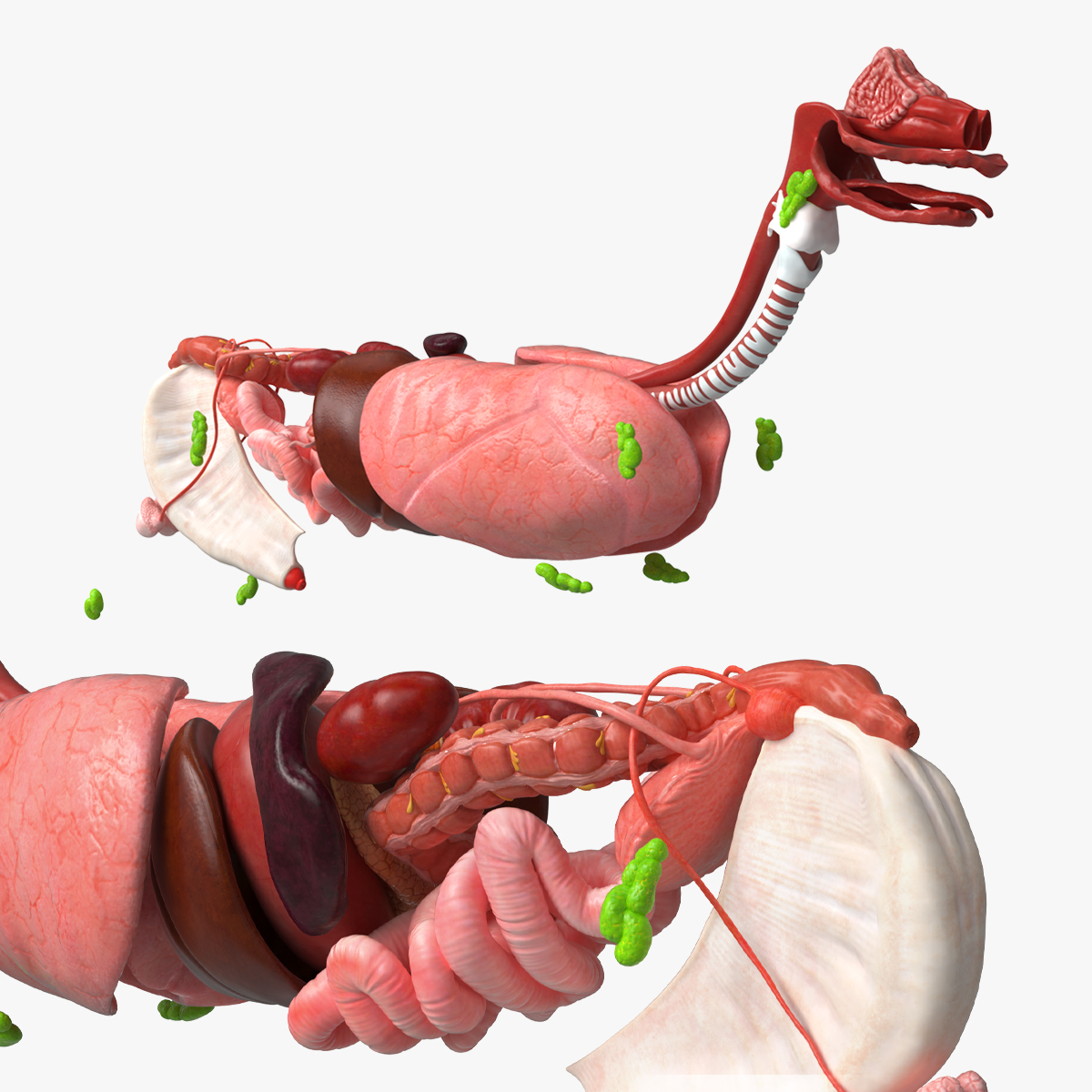
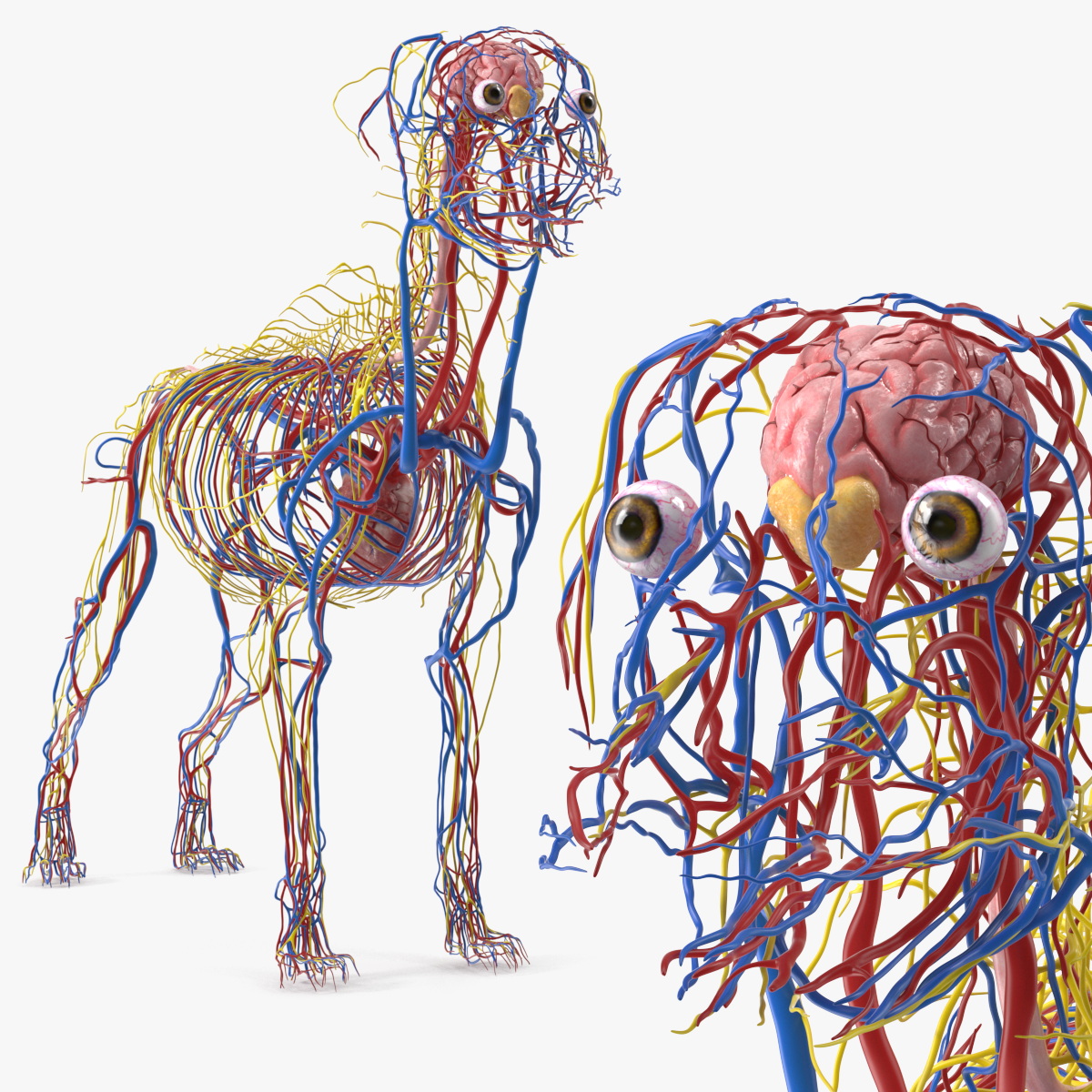
This cat anatomy model reveals internal organs, blood vessels and the nervous system for veterinary education and medical illustration. The model holds 82,465 polygons and 83,267 vertices, dividing detail among the organs, the branching vessels and the nerve paths. At 8.83 x 54.4 x H27.3 cm, the body matches the proportions of a real domestic cat standing in profile.
The UV layout is mixed, so some systems use unique space while repeated vessel segments share texture areas. TurboSquid checked the anatomy against CheckMate specification, confirming clean geometry, logical naming and accurate scale. Color coding arteries red, veins blue and nerves yellow follows the convention students expect in anatomy atlases.
Released in 2026, the model suits veterinary school lectures, pet health apps, clinic waiting room displays and textbooks. Hiding layers one by one lets a lecturer move from the skin inward to the heart, kidneys and spinal cord. Pet owners also understand diagnoses better when a vet can point to the affected organ on a clear model.
Questions About This Model
What is the Cat Internal Organs Vascular Nervous Anatomy model typically used for?
Stated applications are film & TV VFX and game assets. Because the asset is finished rather than a base mesh, it also holds up as set dressing in scenes it was not specifically built for.
What file formats does the Cat Internal Organs Vascular Nervous Anatomy 3D model come in?
The complete list of included formats is shown on the TurboSquid product page, where every file is named and sized before you buy. Native scene files and the common interchange formats are the usual pairing.
How much does the Cat Internal Organs Vascular Nervous Anatomy 3D model cost?
It is listed at $199 USD on TurboSquid. That is a one-off purchase under the Royalty Free license - there is no subscription and no per-project fee afterwards.
How clean is the geometry on the Cat Internal Organs Vascular Nervous Anatomy model?
Geometry is modelled at true scale with a tidy edge flow, and the scene is split into named objects so partial reuse and material swaps stay simple.