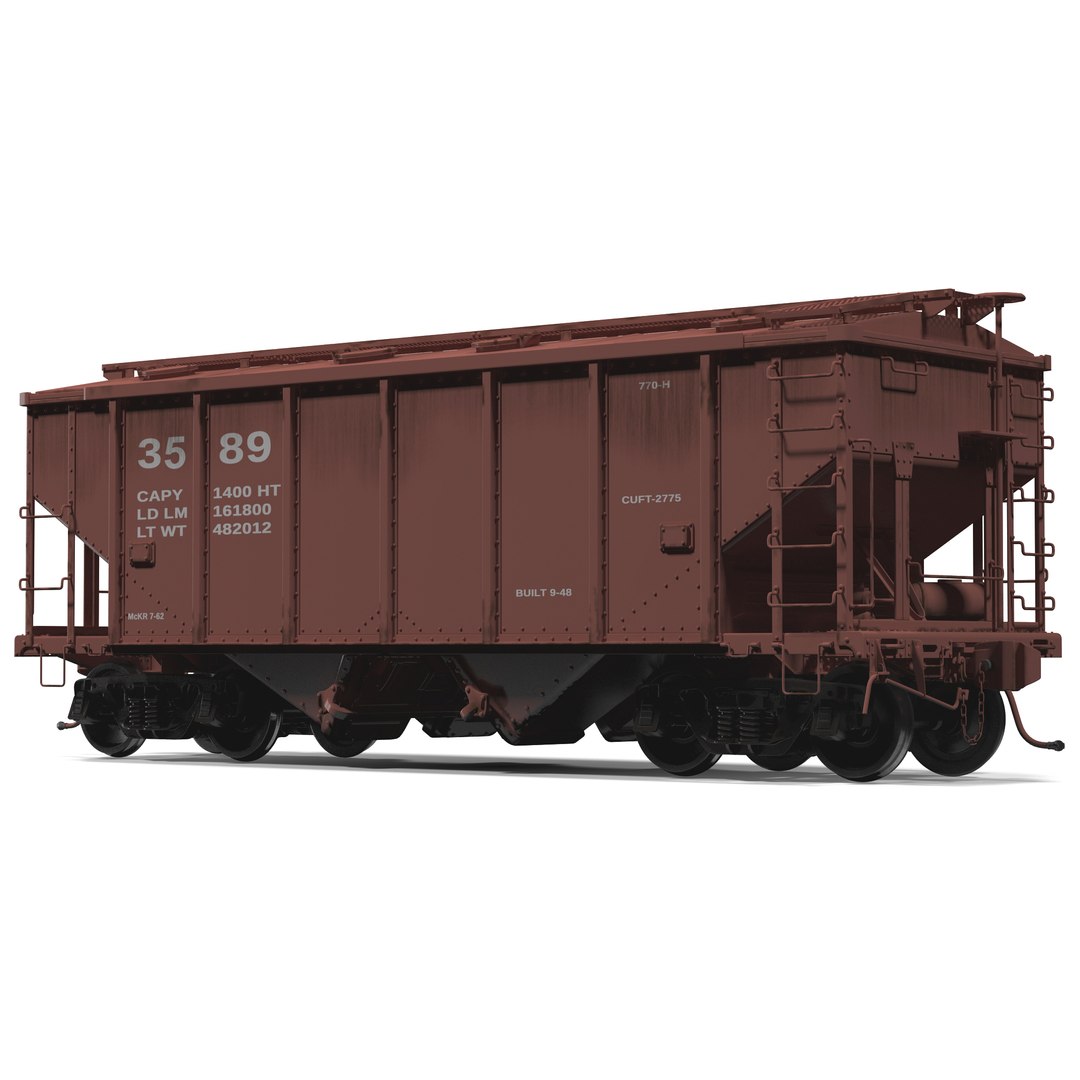
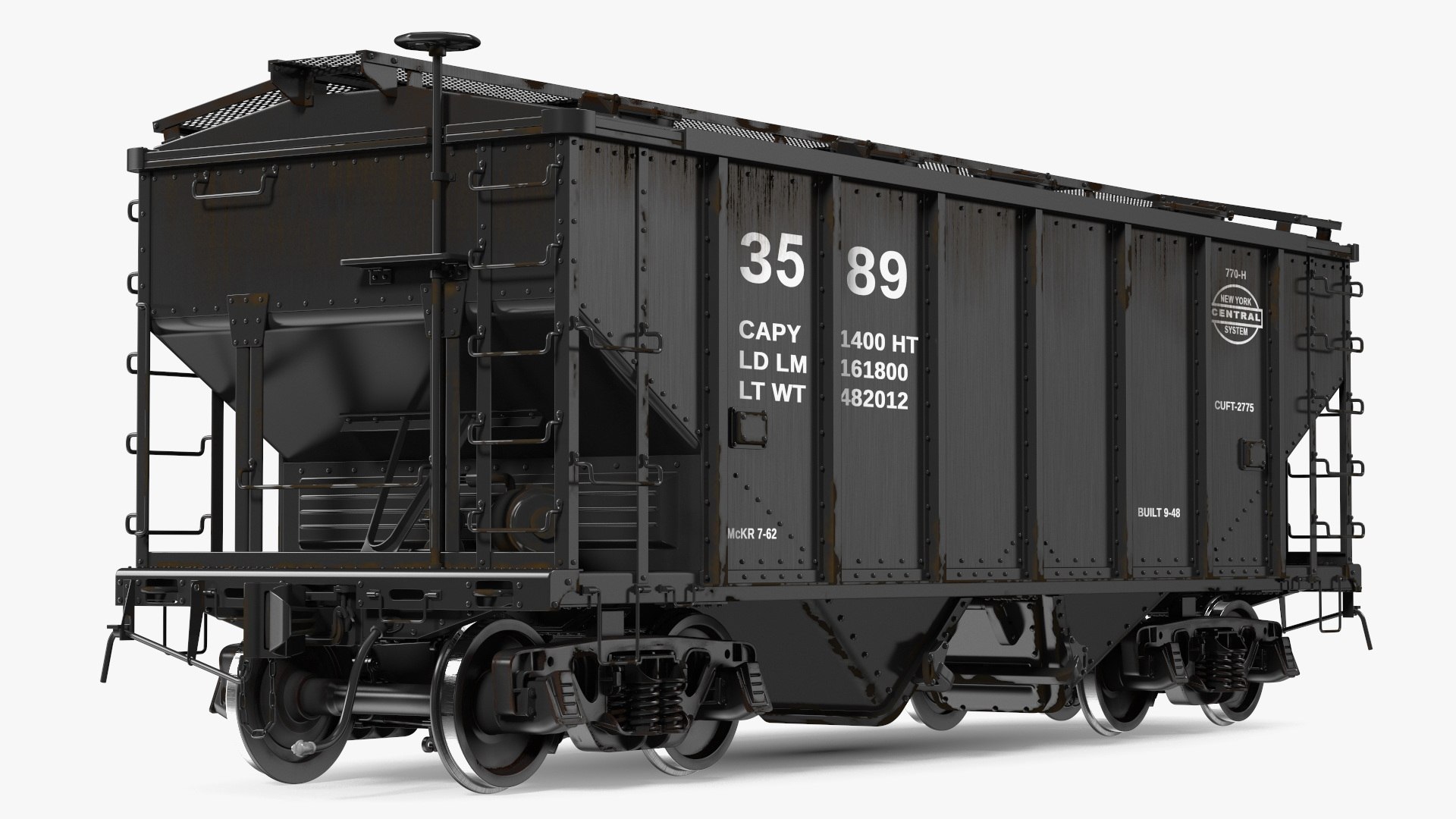
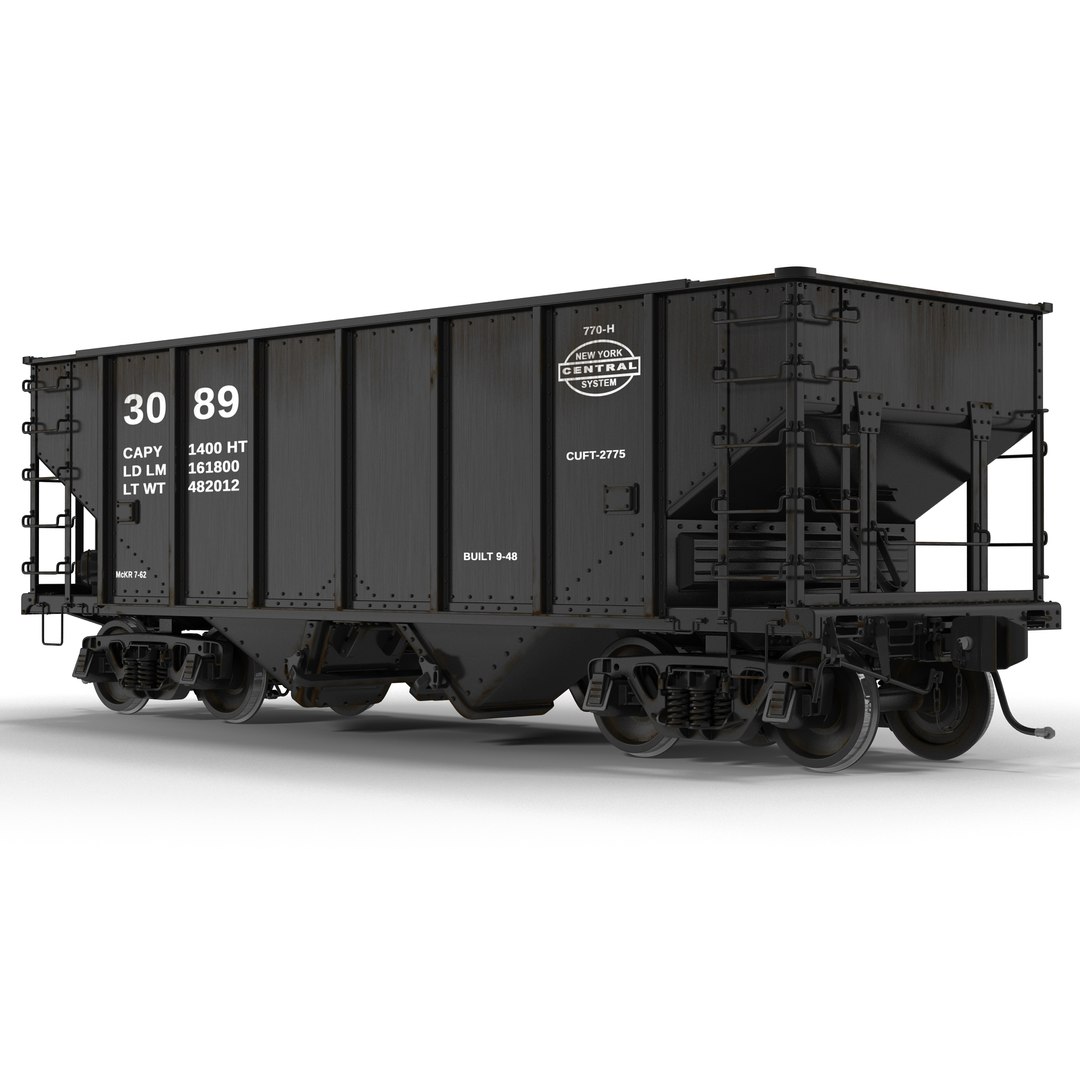
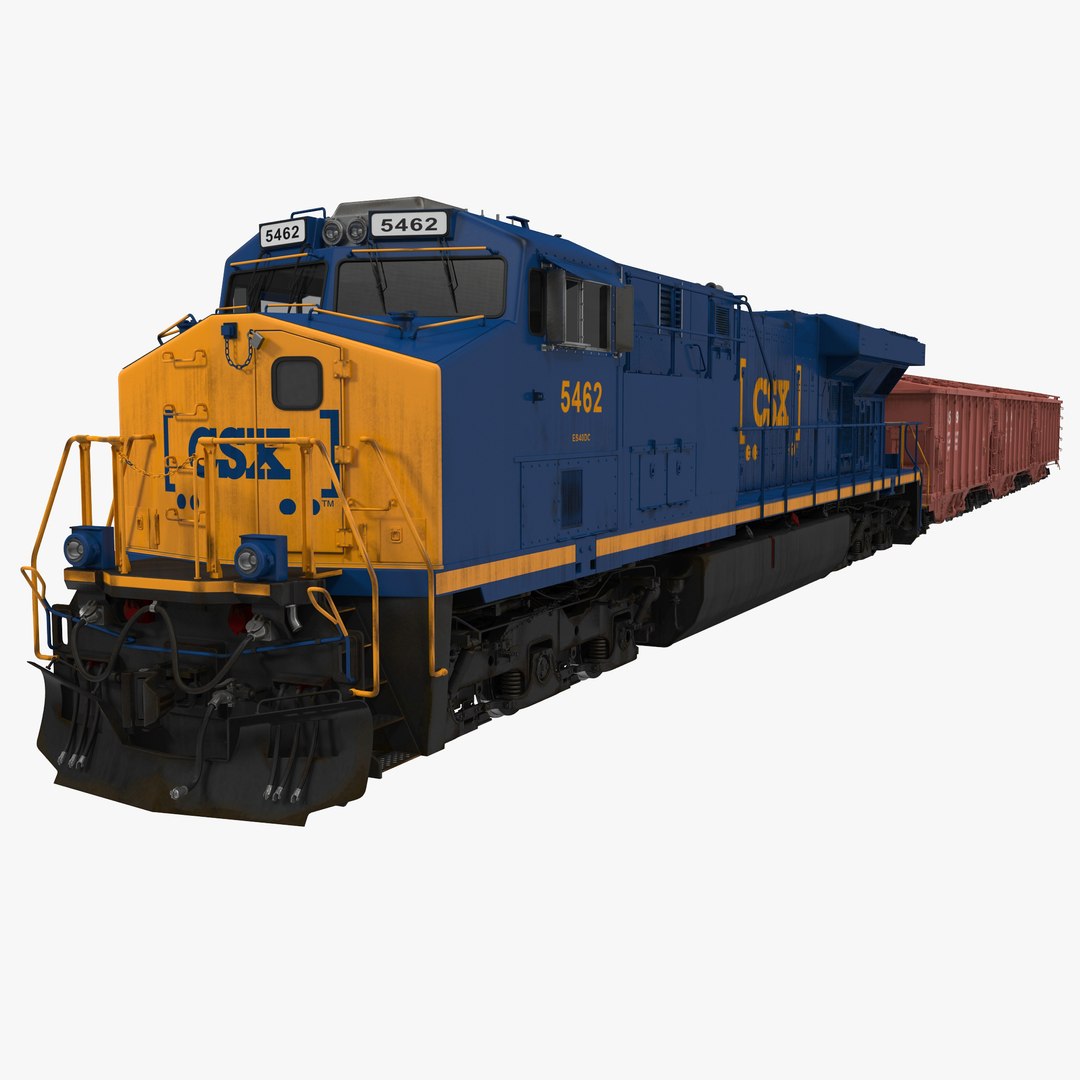
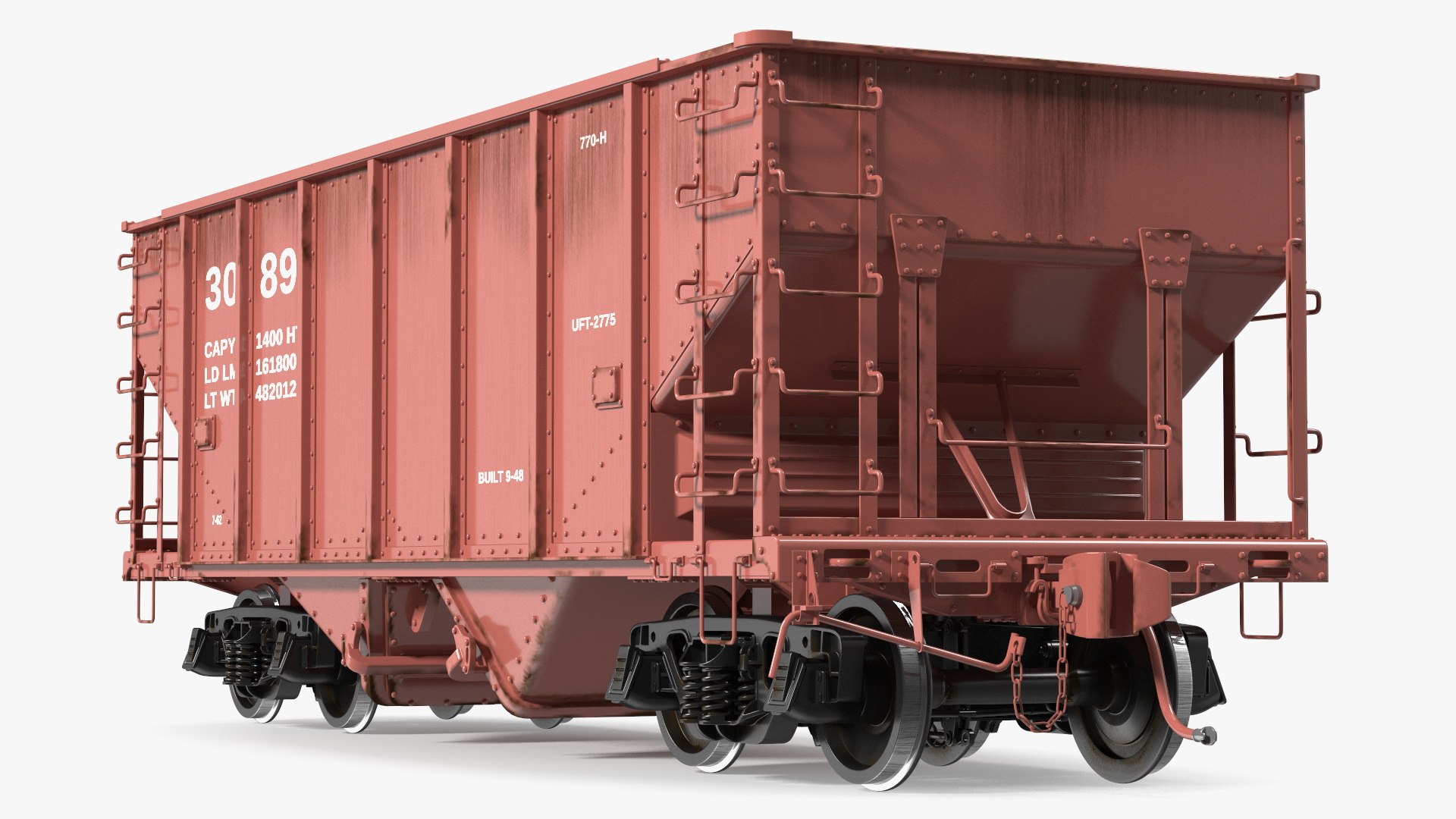
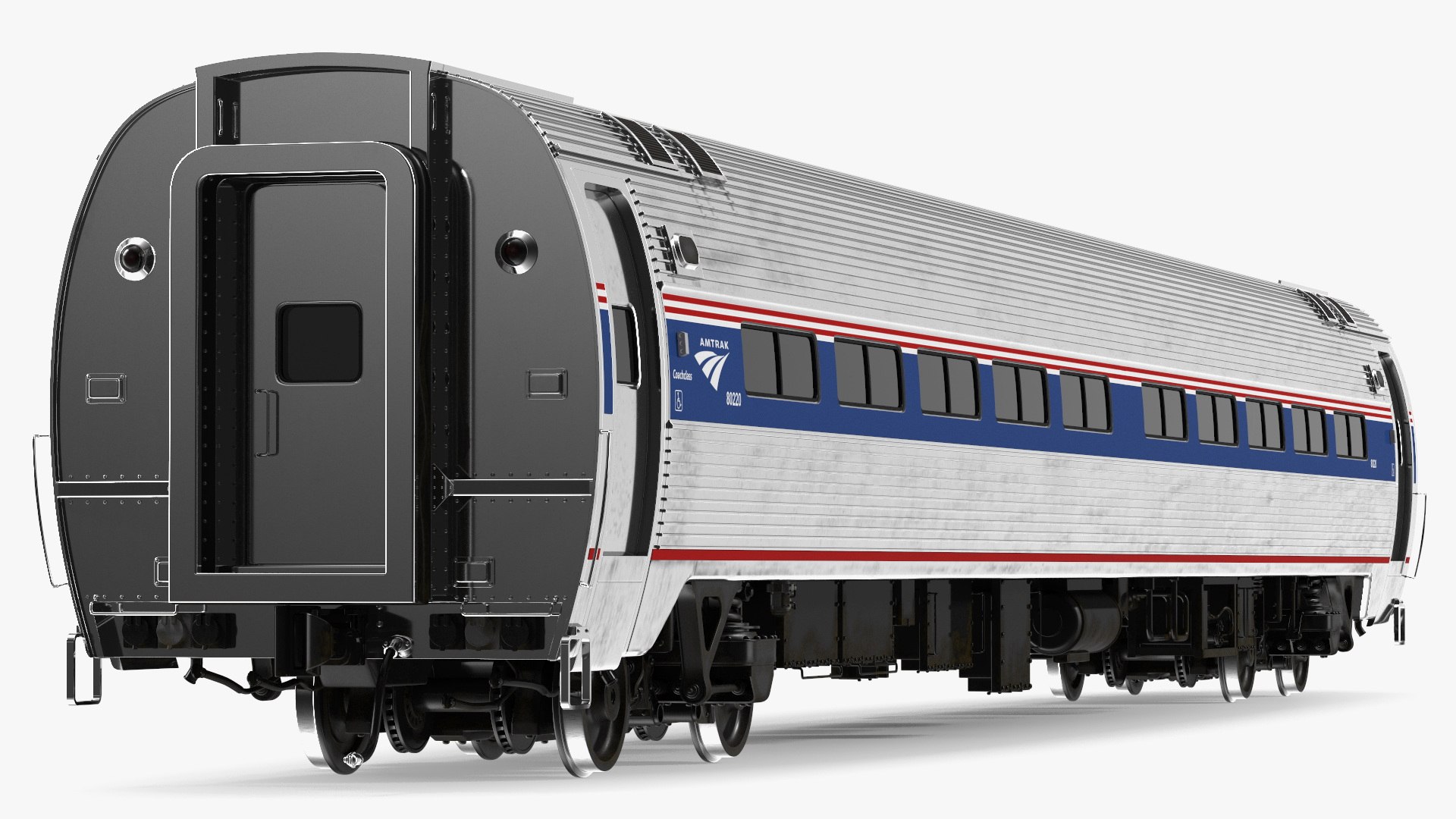
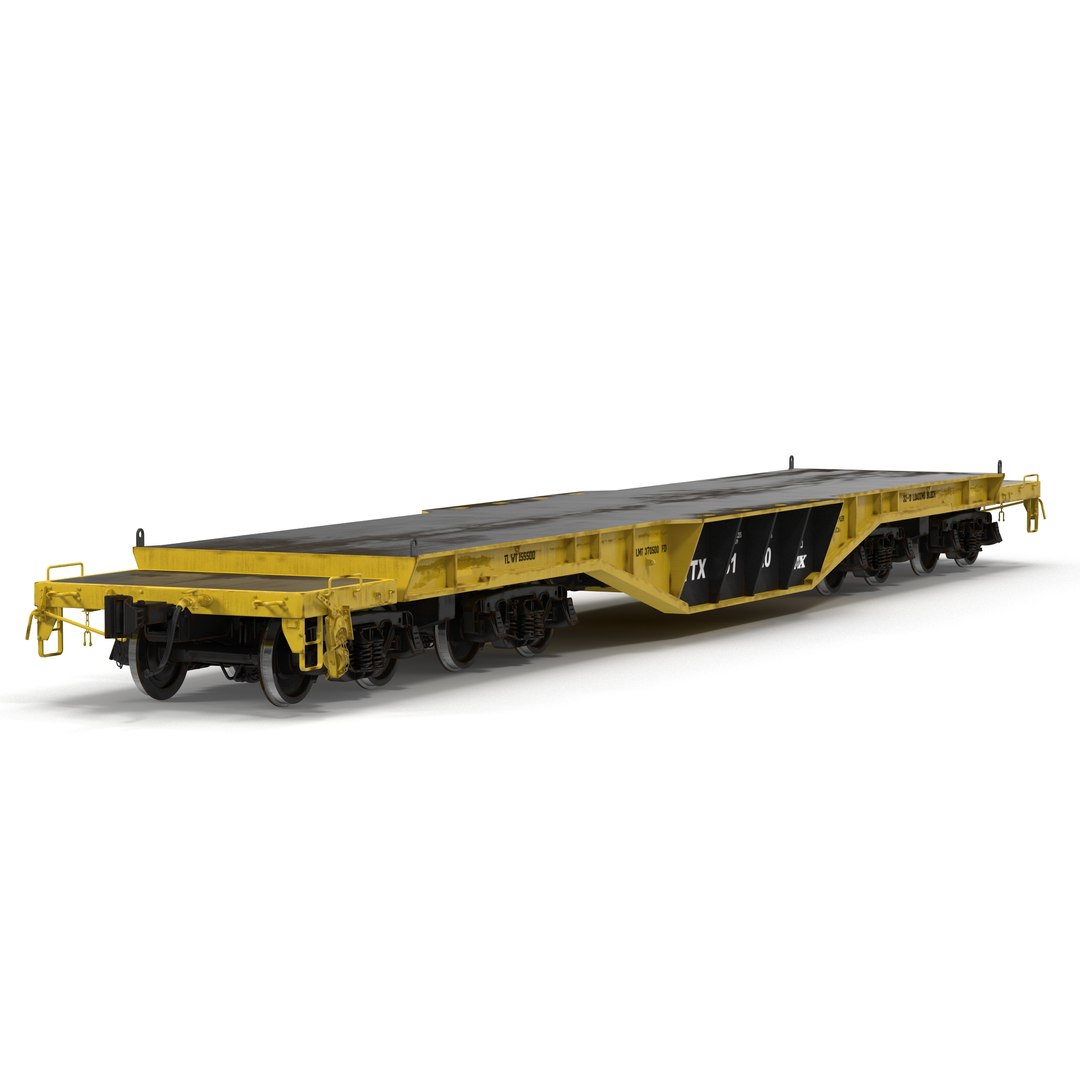
A covered hopper carries anything that must stay dry: grain, cement, plastic pellets, sand. That gives it a distinctive shape - roof hatches along the top for loading, sloped internal walls, and outlet gates underneath between the trucks so the load runs out by gravity. Those gates are the detail that separates a hopper from a boxcar.
The mesh runs 585,950 polygons and 601,645 vertices in quads and tris with non-overlapping UVs, and ships with 14 texture maps at 4096x4096, carrying the reporting marks, the rust and the dust that these cars accumulate.
A generic variant sits on this page at the same $79. Both suit rail and logistics visualization, industrial and agricultural transport scenes, simulators, film and television, and games. On sale since 2015.
Questions About This Model
Which industries use the Covered Hopper model?
It is tagged for Simulation, Advertising, Game Development, Film & Video Production and Architecture. The categorisation reflects where similar Vehicles assets end up rather than a hard restriction - the license does not limit the field of use.
How heavy is the Covered Hopper mesh?
585,950 polygons and 601,645 vertices, built as polygonal quads/tris. The same count is comfortable in an offline render and demanding in a mobile game, so judge it against your own budget.
How clean is the geometry on the Covered Hopper model?
Geometry is modelled at true scale with a tidy edge flow, and the scene is split into named objects so partial reuse and material swaps stay simple.
How much does the Covered Hopper 3D model cost?
$79 USD, paid once. The Royalty Free license means no recurring cost and no extra payment when the finished work ships.