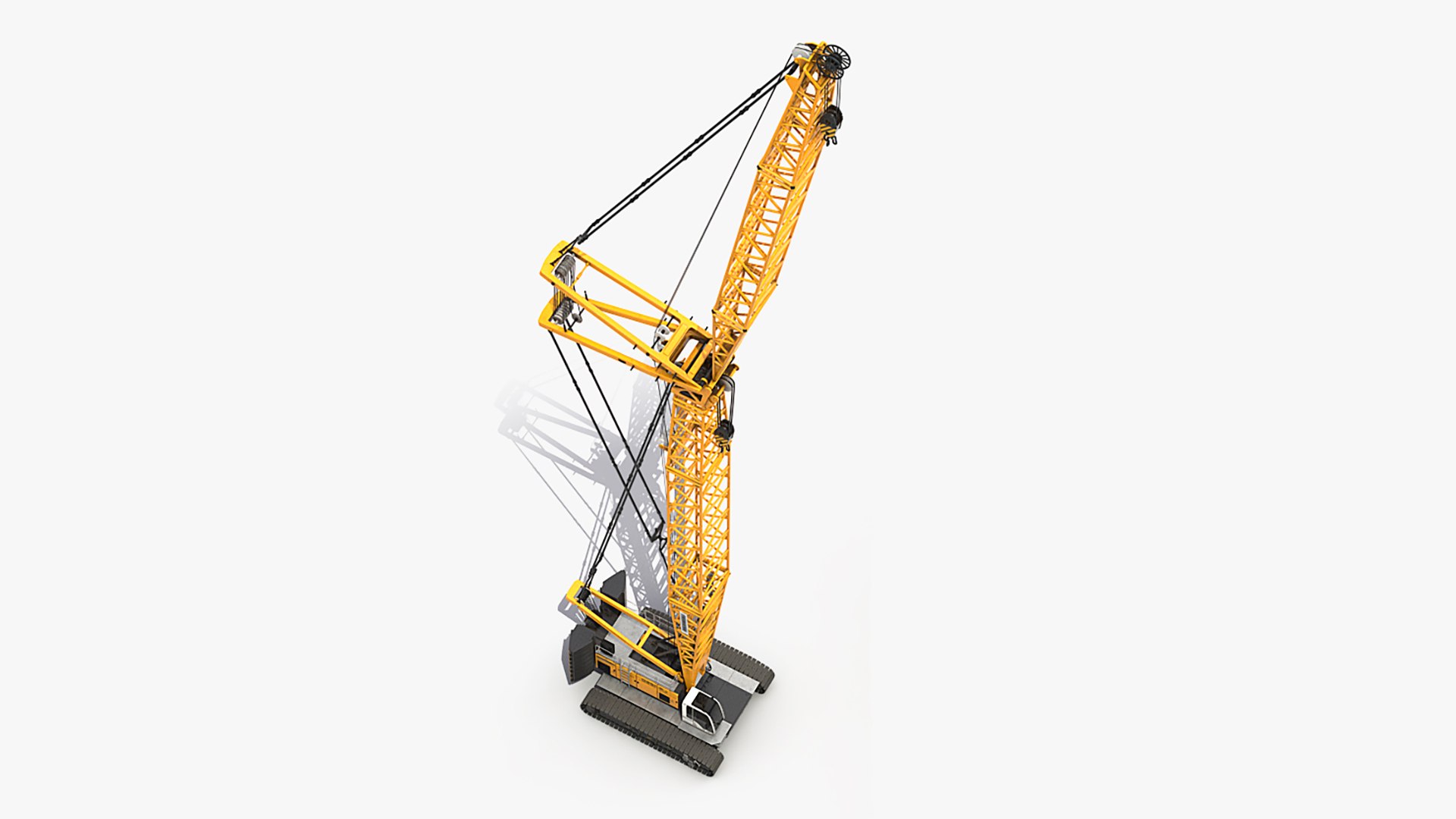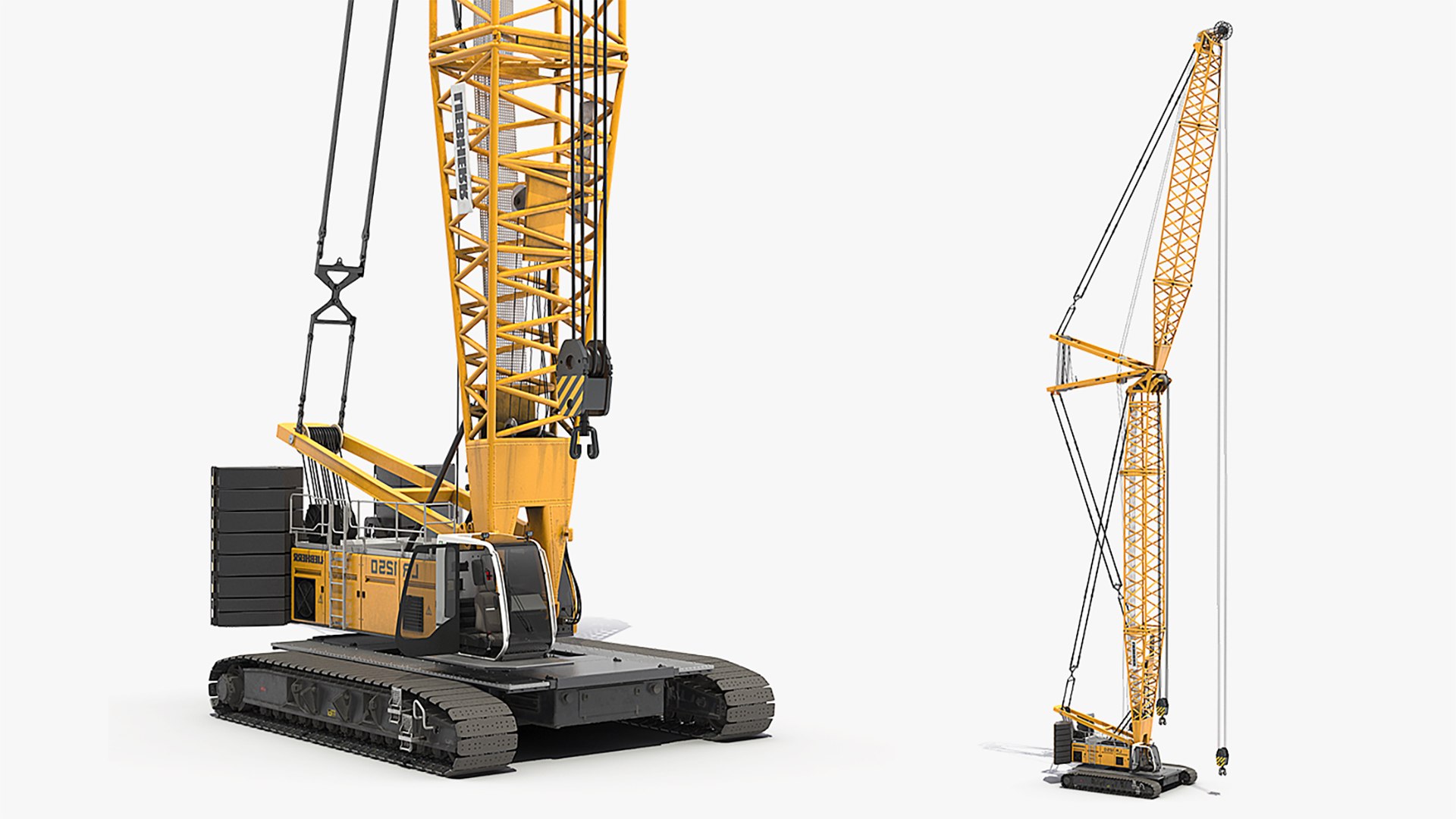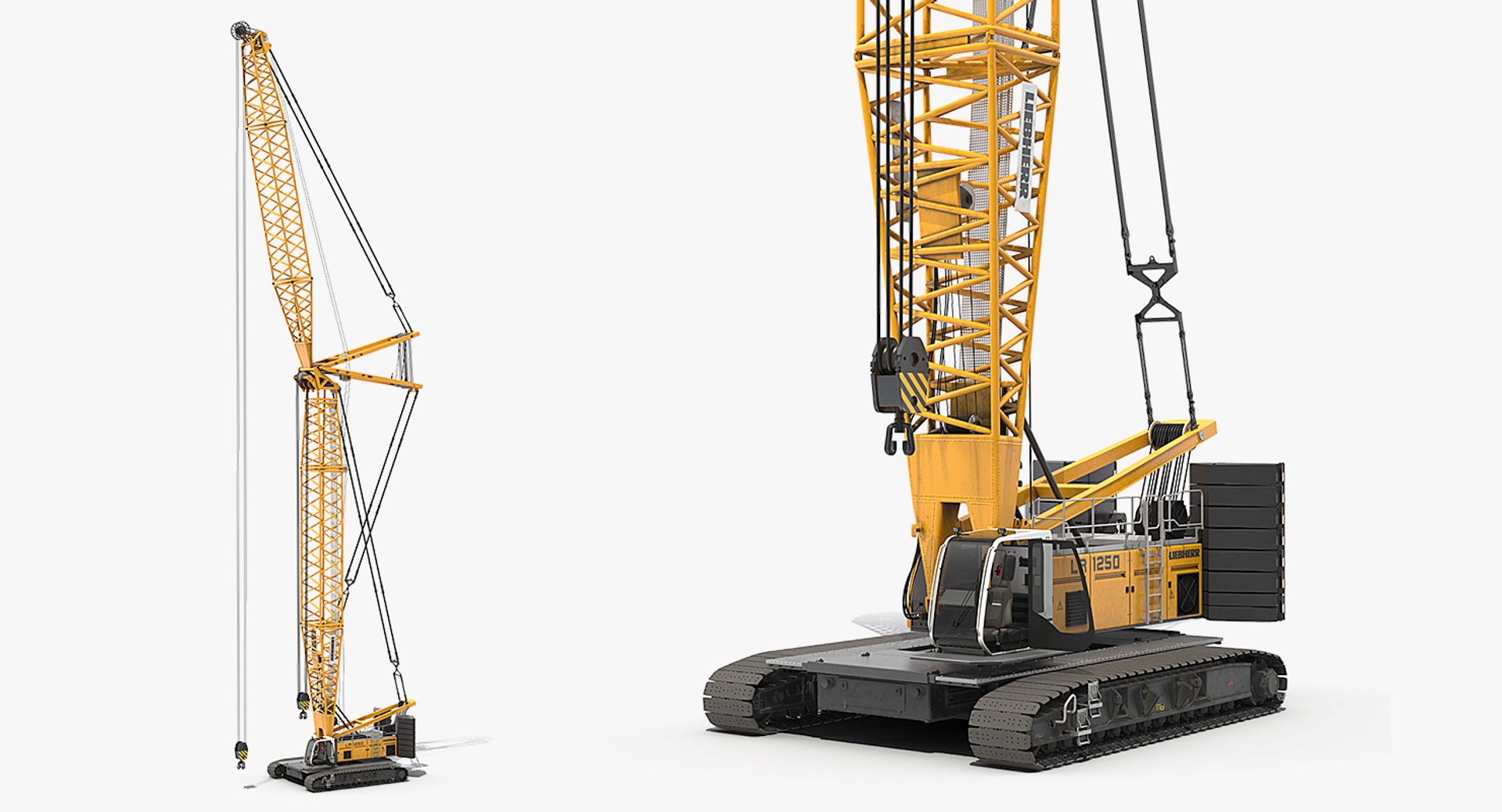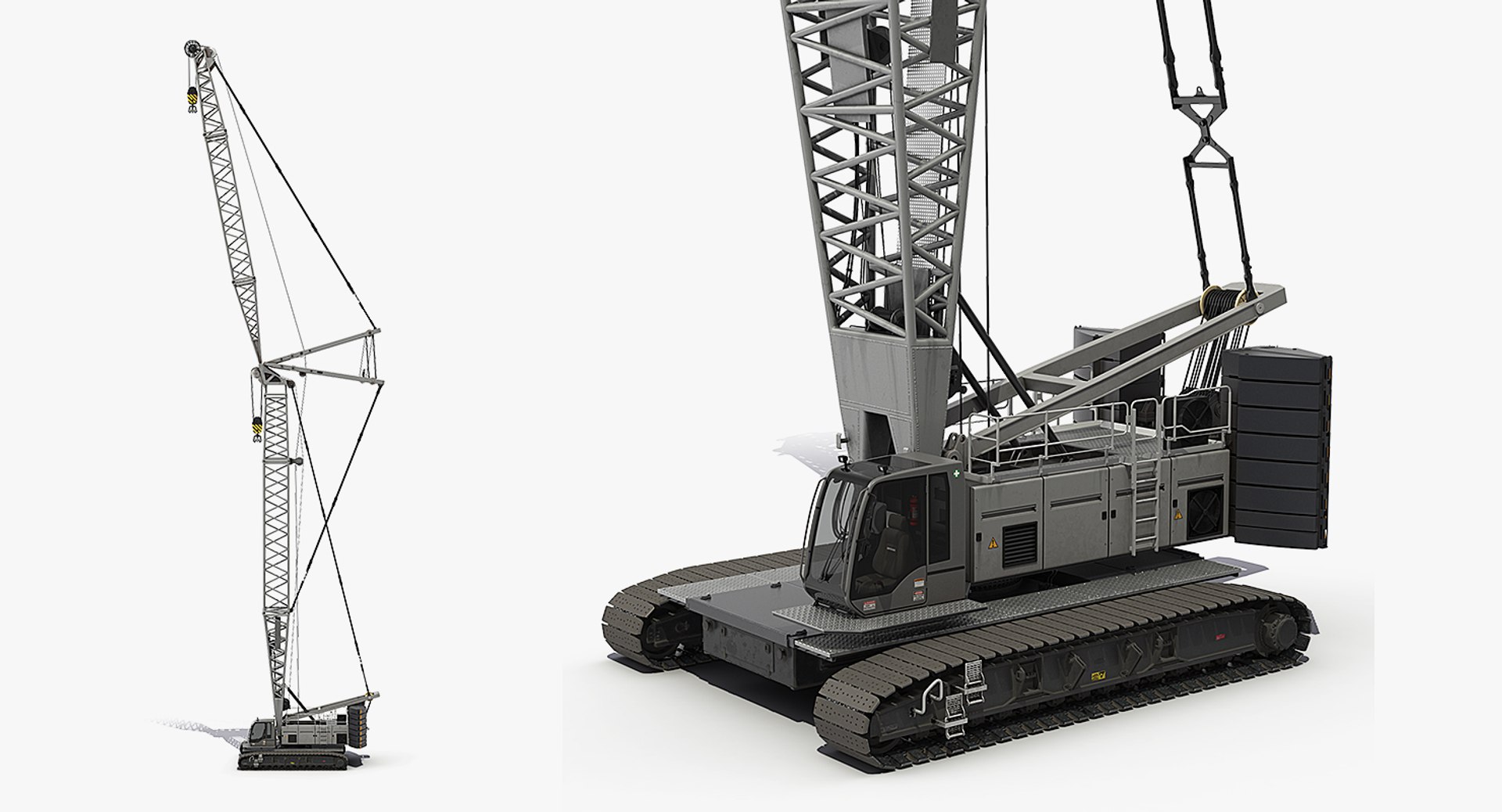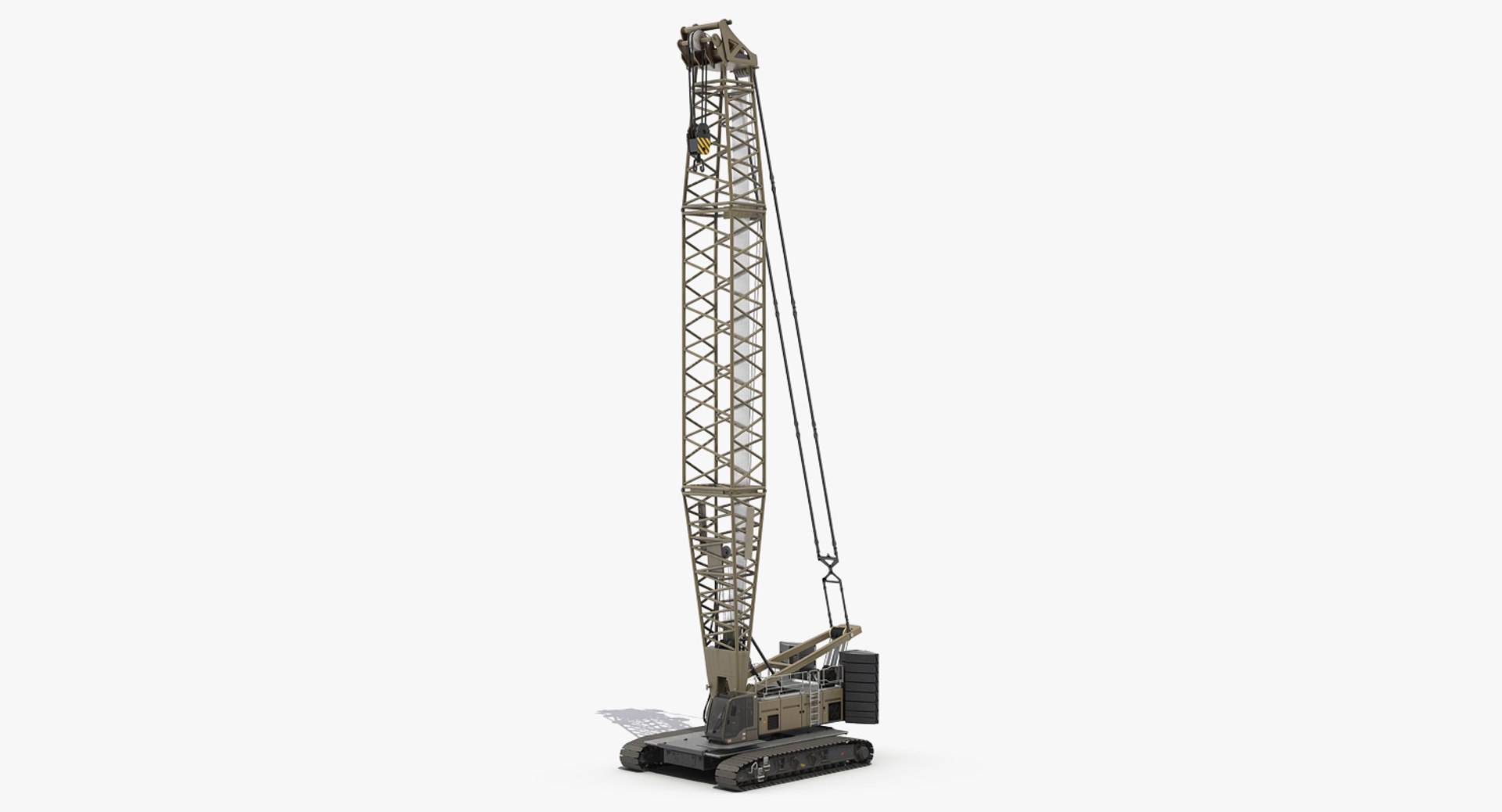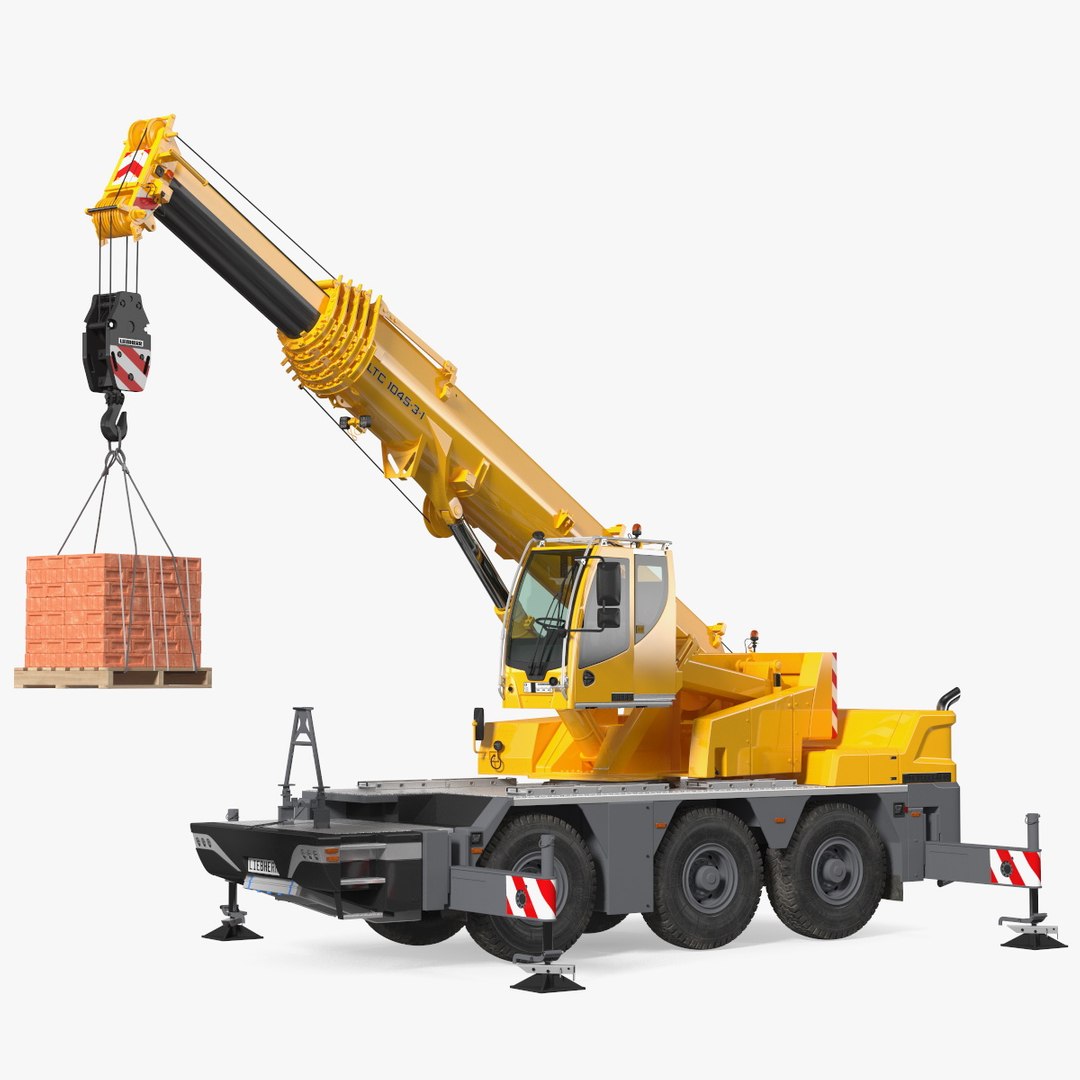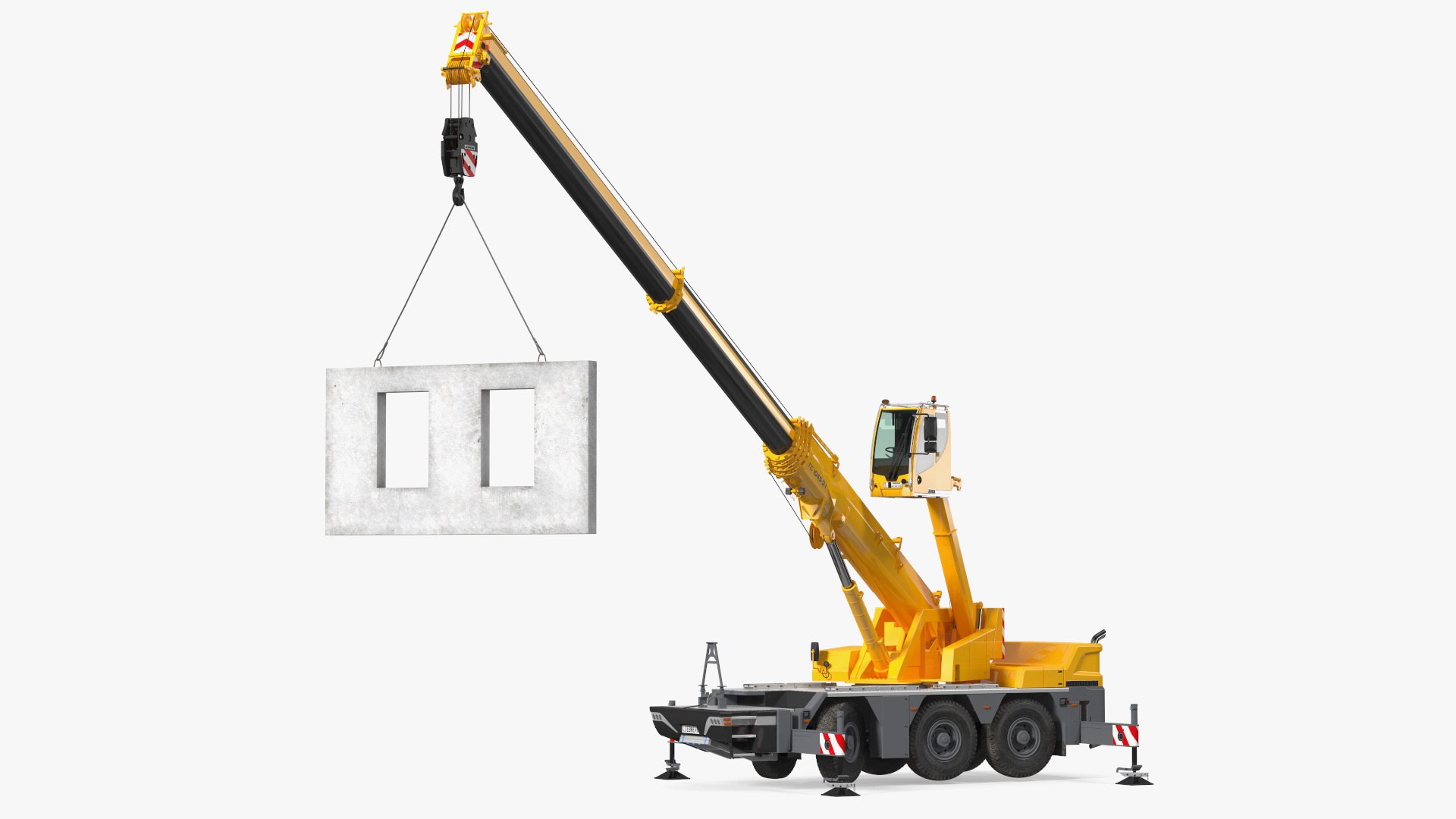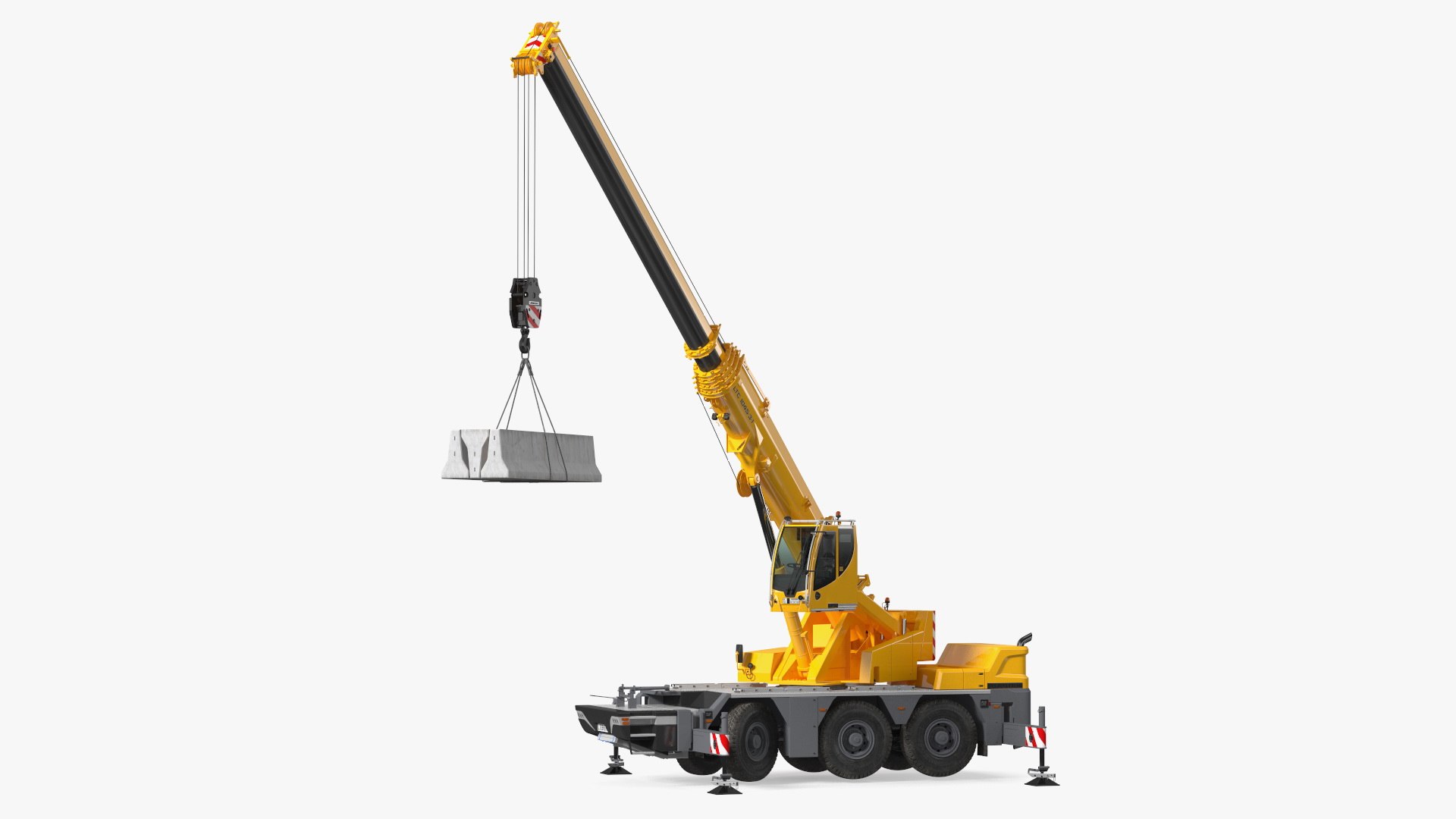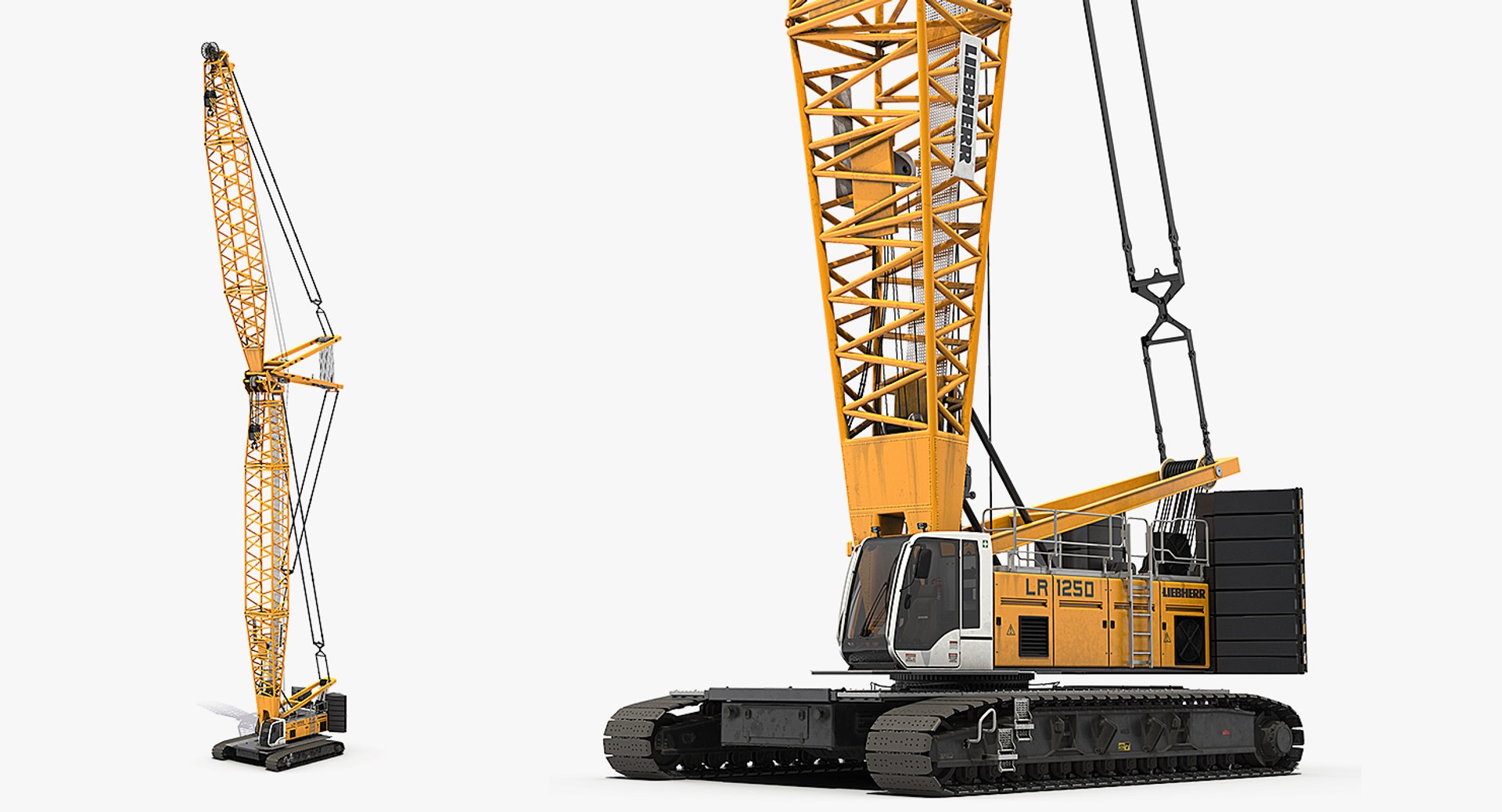
A lattice boom crawler crane is built to be assembled on site: the tracks arrive separately, the boom comes in sections, and the counterweight is stacked on once the machine is standing. That modularity is visible in the finished crane, in the pin joints along the boom and the stacked slabs at the rear.
The mesh runs 506,056 polygons and 534,848 vertices in quads and tris with non-overlapping UVs, and ships with 23 texture maps at a mix of sizes up to 8192x8192, carrying the paint, the safety markings and the wear on the tracks.
Three rigged builds share this page at $199, including versions prepared for Cinema 4D and for Maya. Aimed at construction and infrastructure visualization, equipment marketing, lift planning presentation, site scenes and games. On sale since 2018.
Questions About This Model
What file formats does the Crawler Crane Liebherr LR1250 3D model come in?
The complete list of included formats is shown on the TurboSquid product page, where every file is named and sized before you buy. Native scene files and the common interchange formats are the usual pairing.
How much does the Crawler Crane Liebherr LR1250 3D model cost?
$149 USD, paid once. TurboSquid handles payment and delivery. The license is Editorial Uses Only, because the model depicts a real branded product: it covers editorial contexts such as news, commentary and education, but not advertising or products for sale.
How clean is the geometry on the Crawler Crane Liebherr LR1250 model?
The mesh uses organized, quad-dominant topology at real-world scale, with objects named and grouped rather than merged into one block.
How heavy is the Crawler Crane Liebherr LR1250 mesh?
506,056 polygons and 534,848 vertices, built as polygonal quads/tris. Whether that fits depends on where it lands - an architectural still and a real-time walkthrough tolerate very different counts.