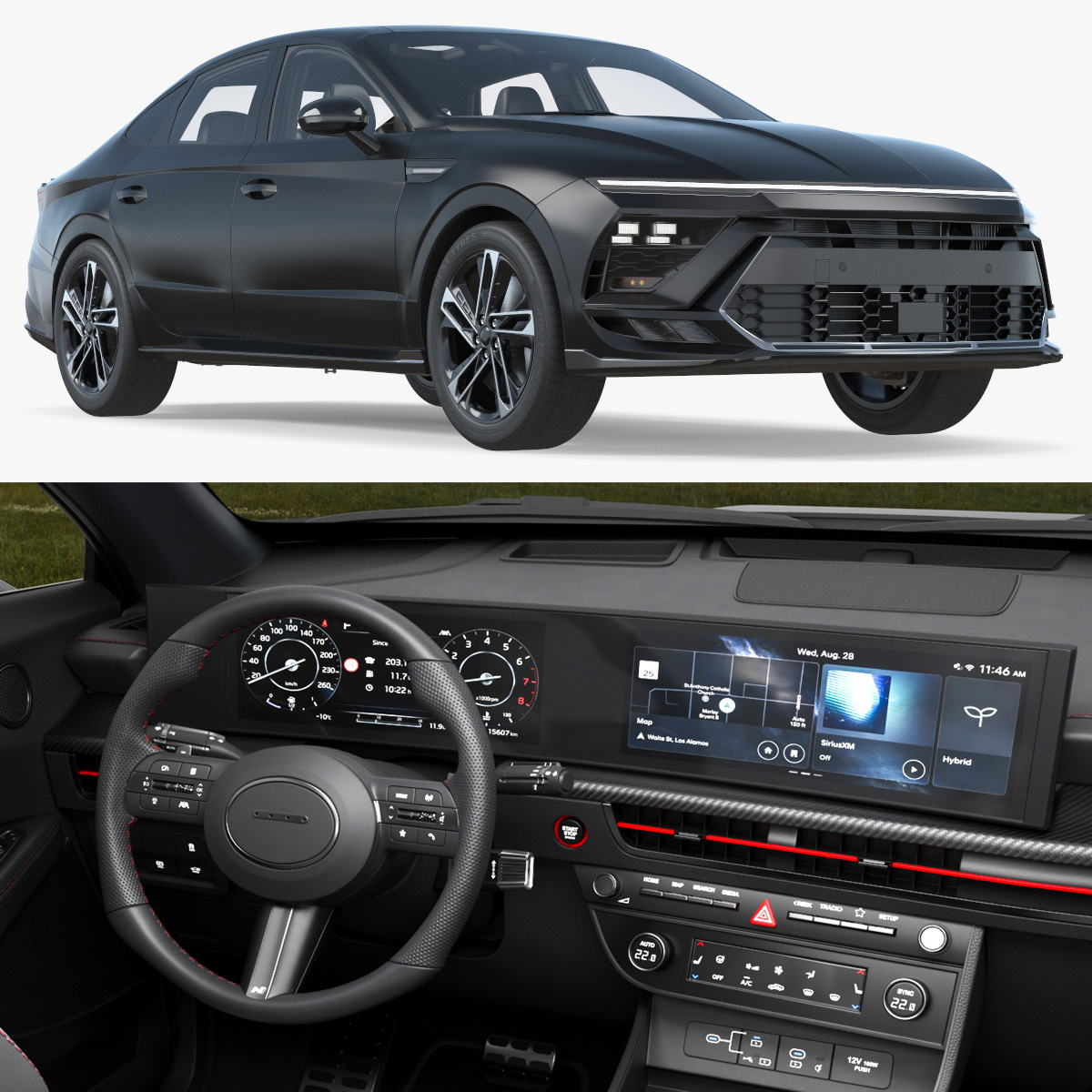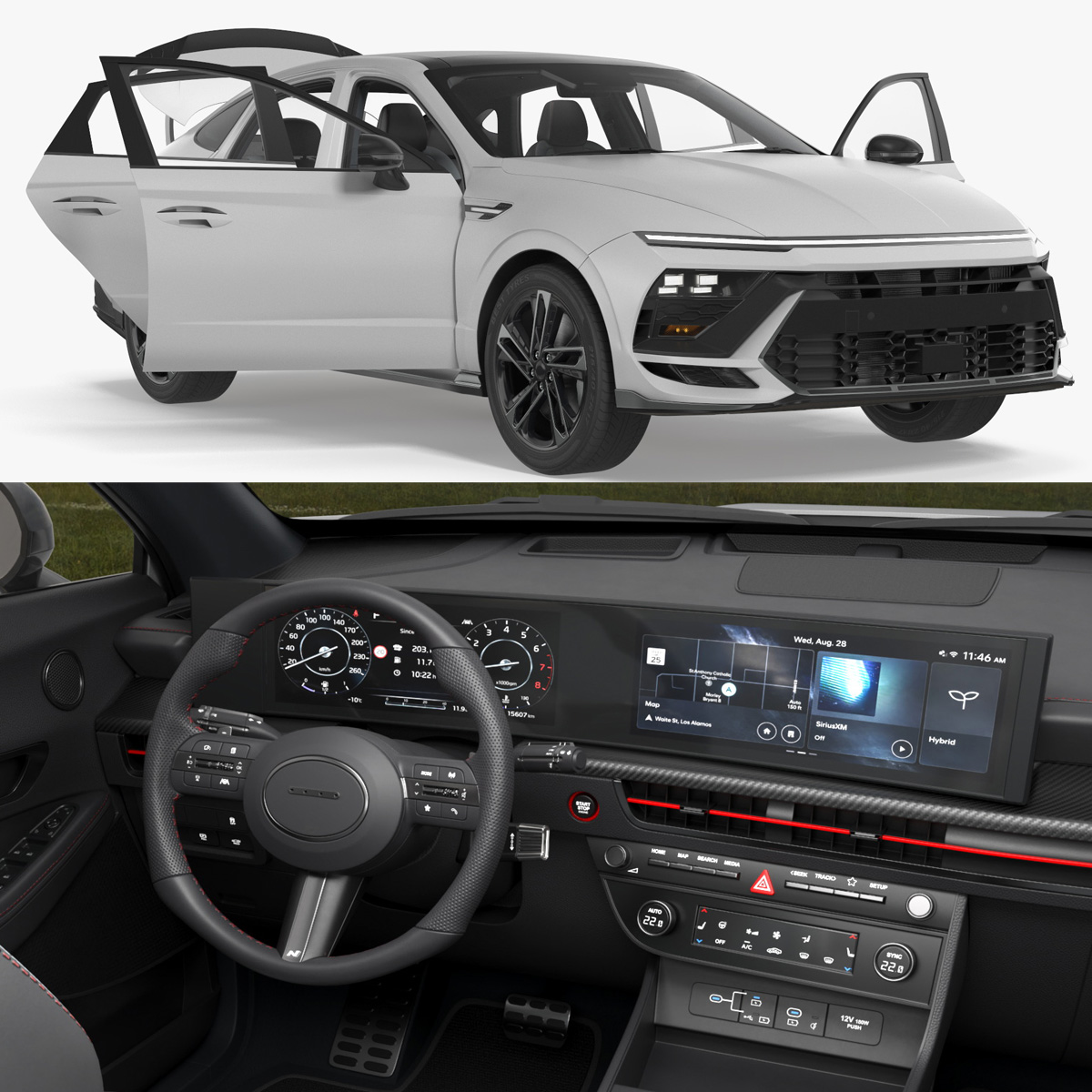
Hyundai Sonata 2024
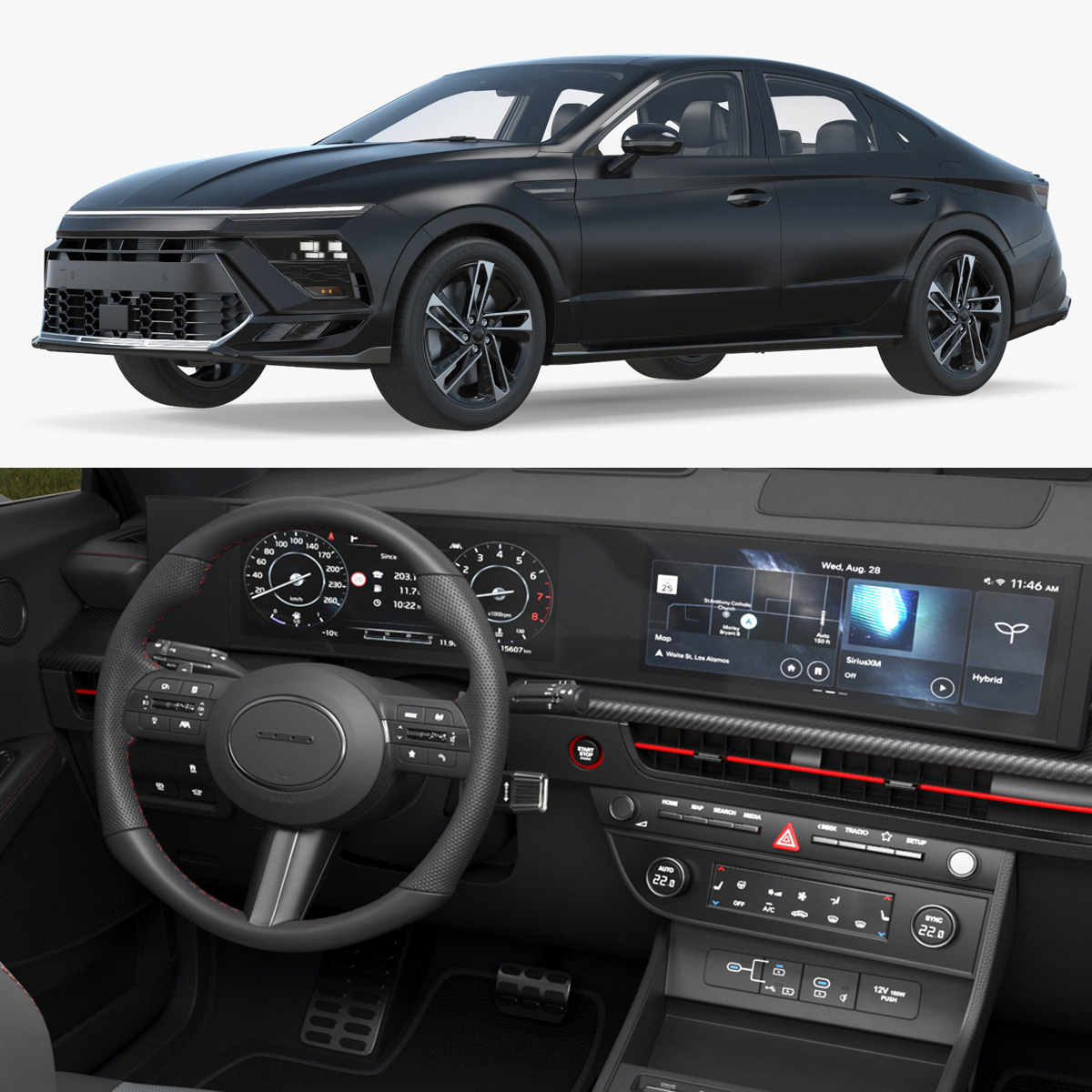
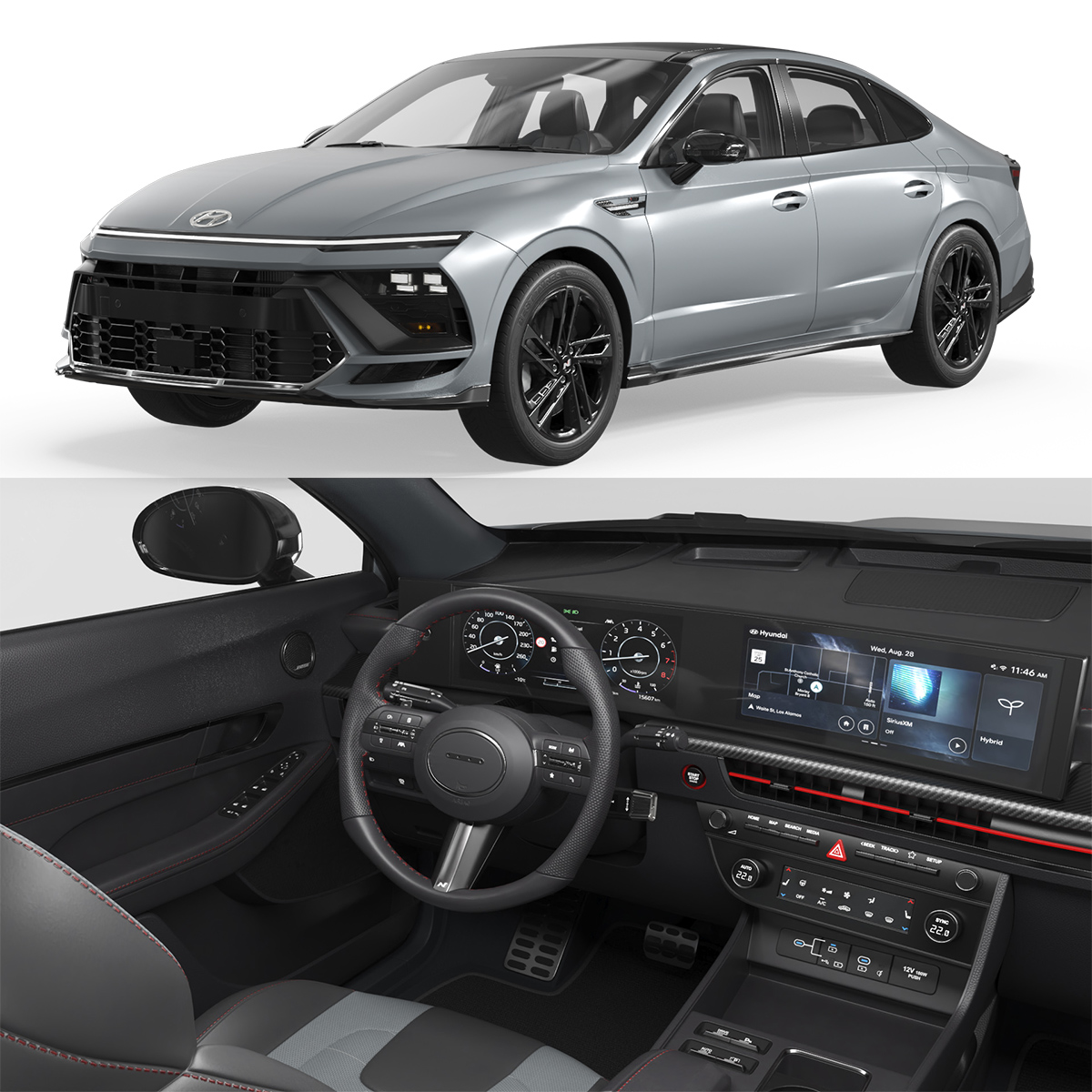
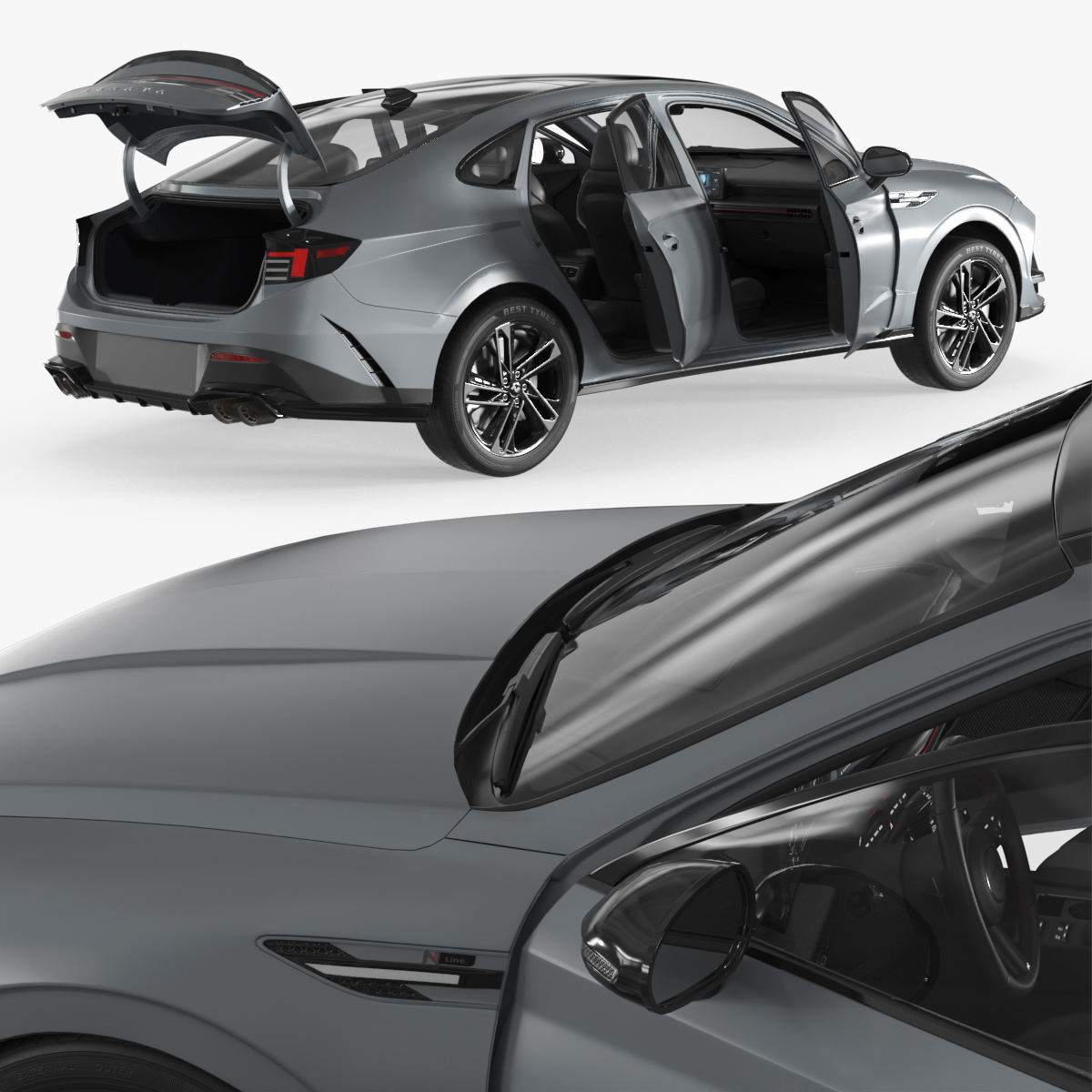
A current Hyundai midsize sedan with a long sloping roof, a full-width light bar and smooth flanks, modeled for automotive renders. The 256,445 polygons and 269,887 vertices capture the wheel spokes, the grille pattern and the tight panel gaps. At 210.91 x 496.08 x H148.56 cm, the body matches the footprint of a real family car on any street.
The UV layout is mixed, pairing unique islands on the body with shared space on repeated parts like tire treads. Built to CheckMate specification, the car is named part by part and sized correctly for scenes with other vehicles. Glass, chrome trim and the dark lower bumper are separate materials, so paint color changes never spill onto them.
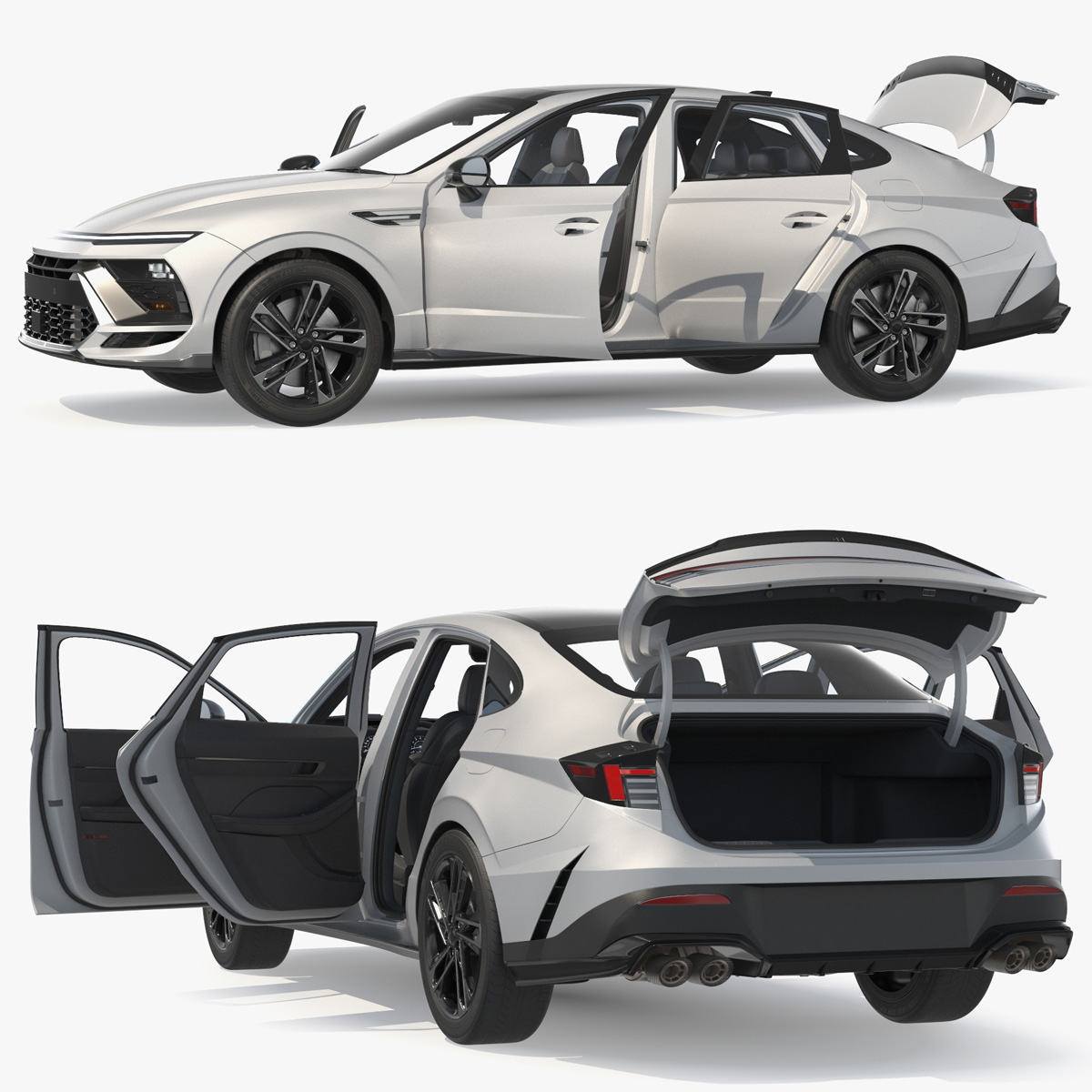
Five versions sit on the page, including this one at $129, a plain sedan build and a second Sonata variant. Two of the five versions are rigged with controls prepared for animation, and the unbranded ones carry no badges at all. Added in 2026 under Editorial Uses Only, the branded car suits motoring news, reviews and educational driving content.
Questions About This Model
What should I search for to find models like the Hyundai Sonata 2024?
Useful search terms are hyundai, sonata and sedan. Browsing the Vehicles category shows the closest alternatives at a range of prices.
What file formats does the Hyundai Sonata 2024 3D model come in?
Format availability differs by model, so the authoritative list sits on the TurboSquid listing - each download is named with its size. Check it first if a specific renderer is required.
Can the Hyundai Sonata 2024 model be used in a commercial project?
No. The model depicts a real branded product, so TurboSquid lists it under the Editorial Uses Only license. It may be used in news, commentary, education, personal projects and similar editorial contexts, but not in advertising, on merchandise or in any product offered for sale. See our license guide.
How clean is the geometry on the Hyundai Sonata 2024 model?
Geometry is modelled at true scale with a tidy edge flow, and the scene is split into named objects so partial reuse and material swaps stay simple.