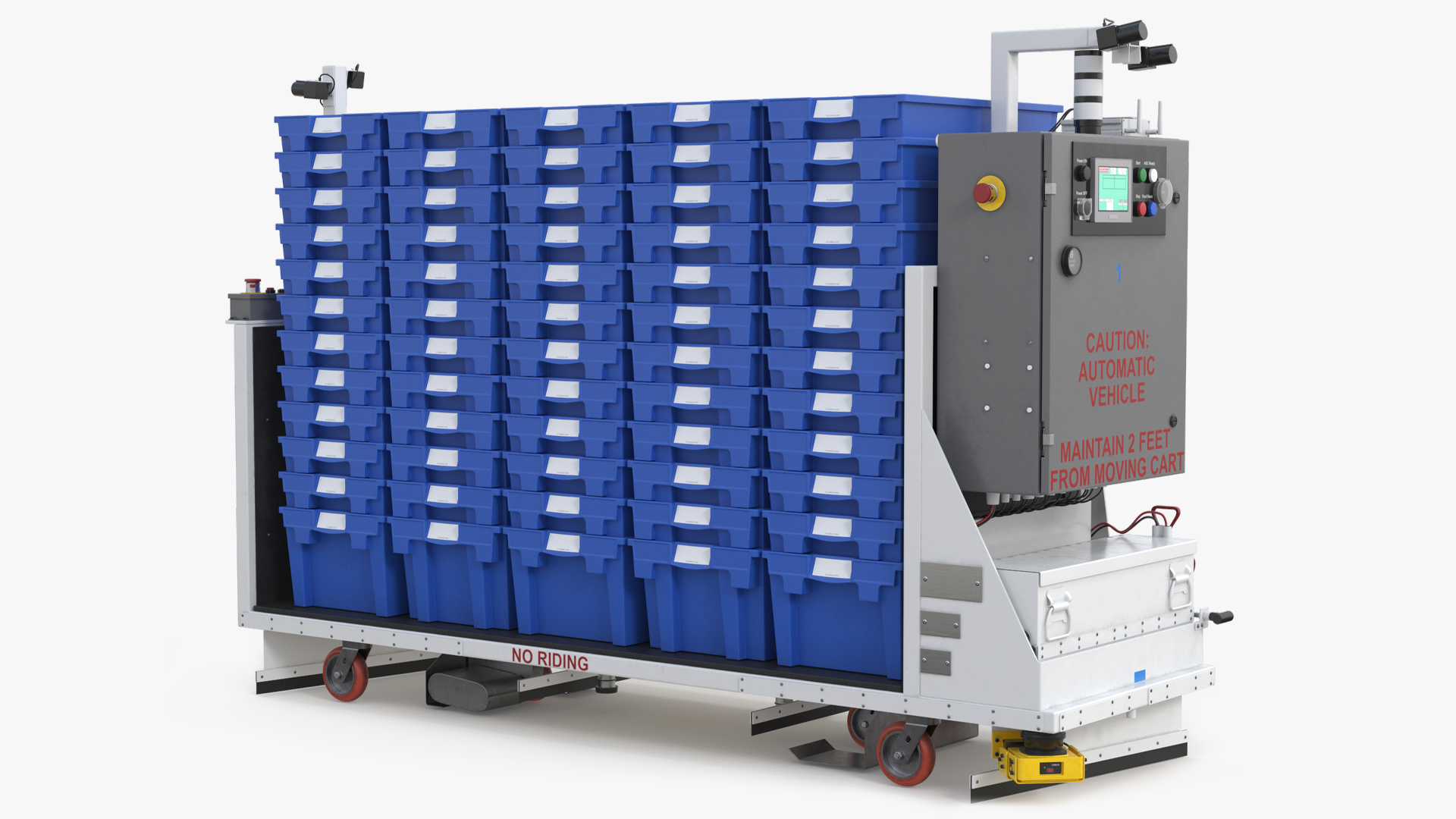
A medical service robot rolls through hospital corridors delivering medicine, checking on patients and helping staff save time. The Medical Service Robot model builds this assistant from 63,328 polygons and 64,390 vertices.
A tall rounded body hides storage compartments, while a screen on the head shows faces, instructions or patient data. A wheeled base lets it travel smoothly over hospital floors and into elevators without help. Its CheckMate Lite rating confirms geometry that is ready to use and scaled to stand beside nurses and beds.
Introduced in 2020, the robot suits healthcare technology presentations, hospital planning renders and near-future medical drama. Visualizers park it outside a patient room with a tray of medicine on its shelf. Healthcare startups use it to pitch automated delivery systems to hospital managers. Animators guide the robot down a quiet night corridor, its screen glowing softly as it passes the nursing station.
Questions About This Model
How heavy is the Medical Service Robot mesh?
63,328 polygons and 64,390 vertices, built as subdivision. Our Kitchen & Tableware listings sit at a median of about 11,000 polygons, so 63,328 is heavier than the typical one.
What is the Medical Service Robot model typically used for?
The listing names architectural visualization, product rendering and medical visualization as the main applications. In practice it also works anywhere a finished kitchen & tableware object is needed without modeling it from scratch.
Can the Medical Service Robot model be used in a commercial project?
Yes. It is sold under TurboSquid's Royalty Free license, which covers commercial use in games, film, advertising and visualization without per-use fees.
Can the Medical Service Robot model be modified after purchase?
Editing is allowed - remesh it, strip detail for real-time use, or rebuild the shaders. The one restriction is that the model file cannot be resold or given away as an asset.