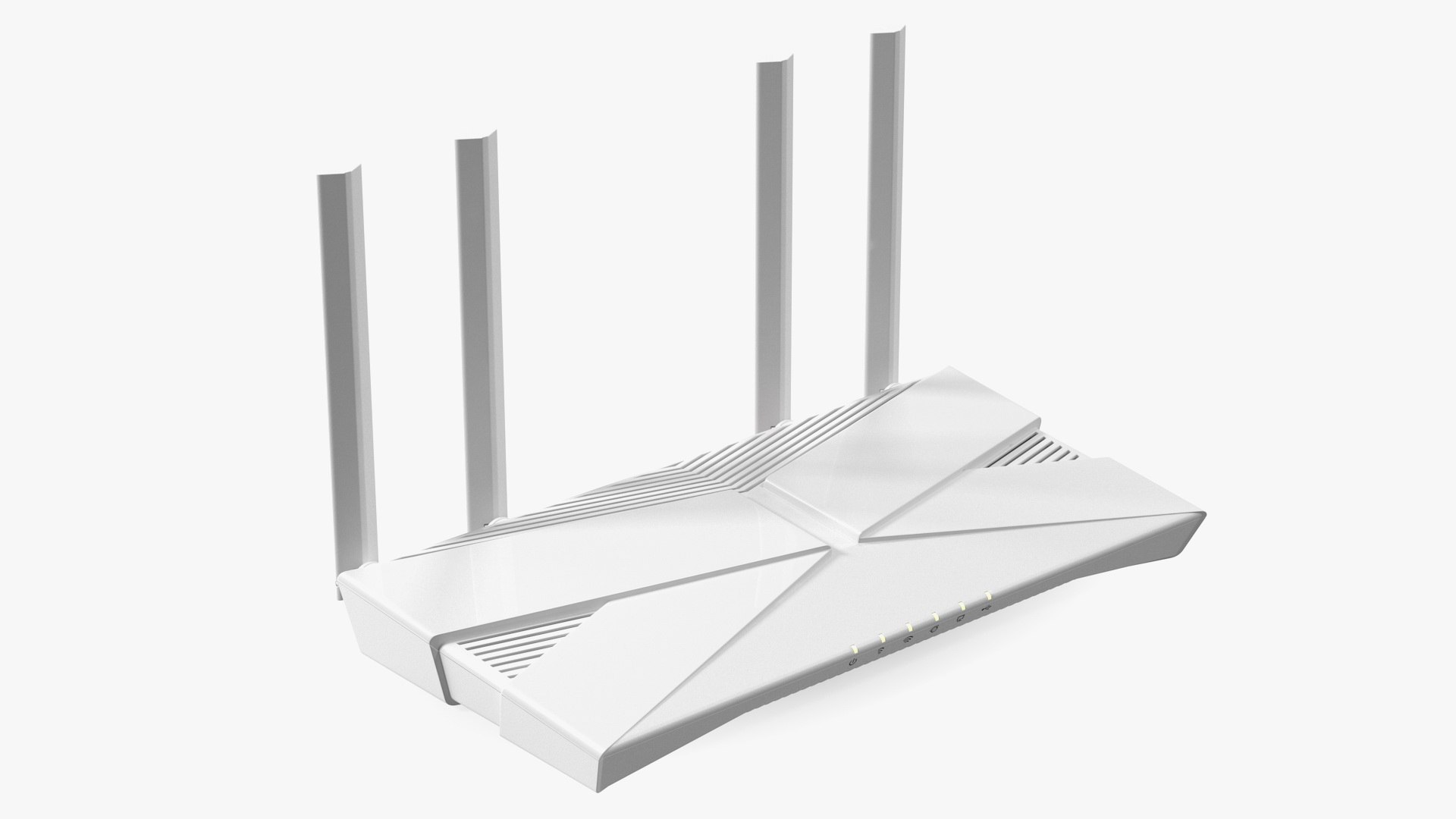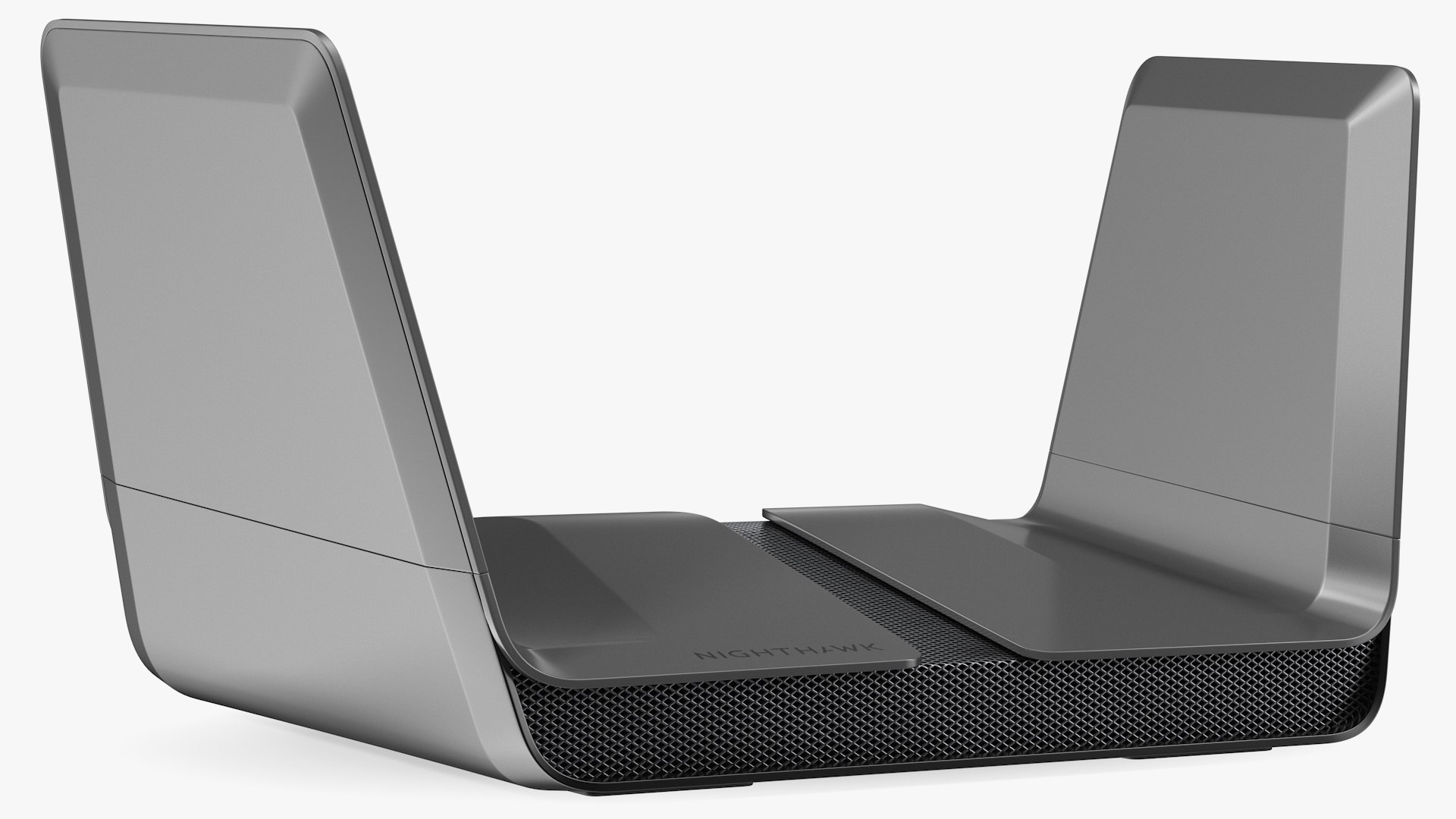
Consumer router design went somewhere strange in the last decade: angular faceted shells, swept wings and antenna arrays that look like they belong on a spacecraft. This one carries that language, and the faceting is exactly what makes it hard to fake with a texture - the shape has to be there.
The mesh is efficient at 22,650 polygons and 24,658 vertices in quads and tris with non-overlapping UVs, with the geometry in the vent slots, the facet edges and the antenna wings.
At $49 it suits consumer electronics advertising, home and office interior visualization, network and connectivity marketing, retail and e-commerce renders, and games. On sale since 2021.
Questions About This Model
Does the Wifi Router model include materials and textures?
Material and texture contents are listed per file on the TurboSquid product page. Where textures are included they are packaged with the download rather than linked externally.
How clean is the geometry on the Wifi Router model?
Geometry is modelled at true scale with a tidy edge flow, and the scene is split into named objects so partial reuse and material swaps stay simple.
How heavy is the Wifi Router mesh?
22,650 polygons and 24,658 vertices, built as polygonal quads/tris. The same count is comfortable in an offline render and demanding in a mobile game, so judge it against your own budget.
What is the Wifi Router model typically used for?
It is cataloged for technical visualization, software demos and product rendering - the sort of work where the object needs to look right on camera but is not the subject of the shot.