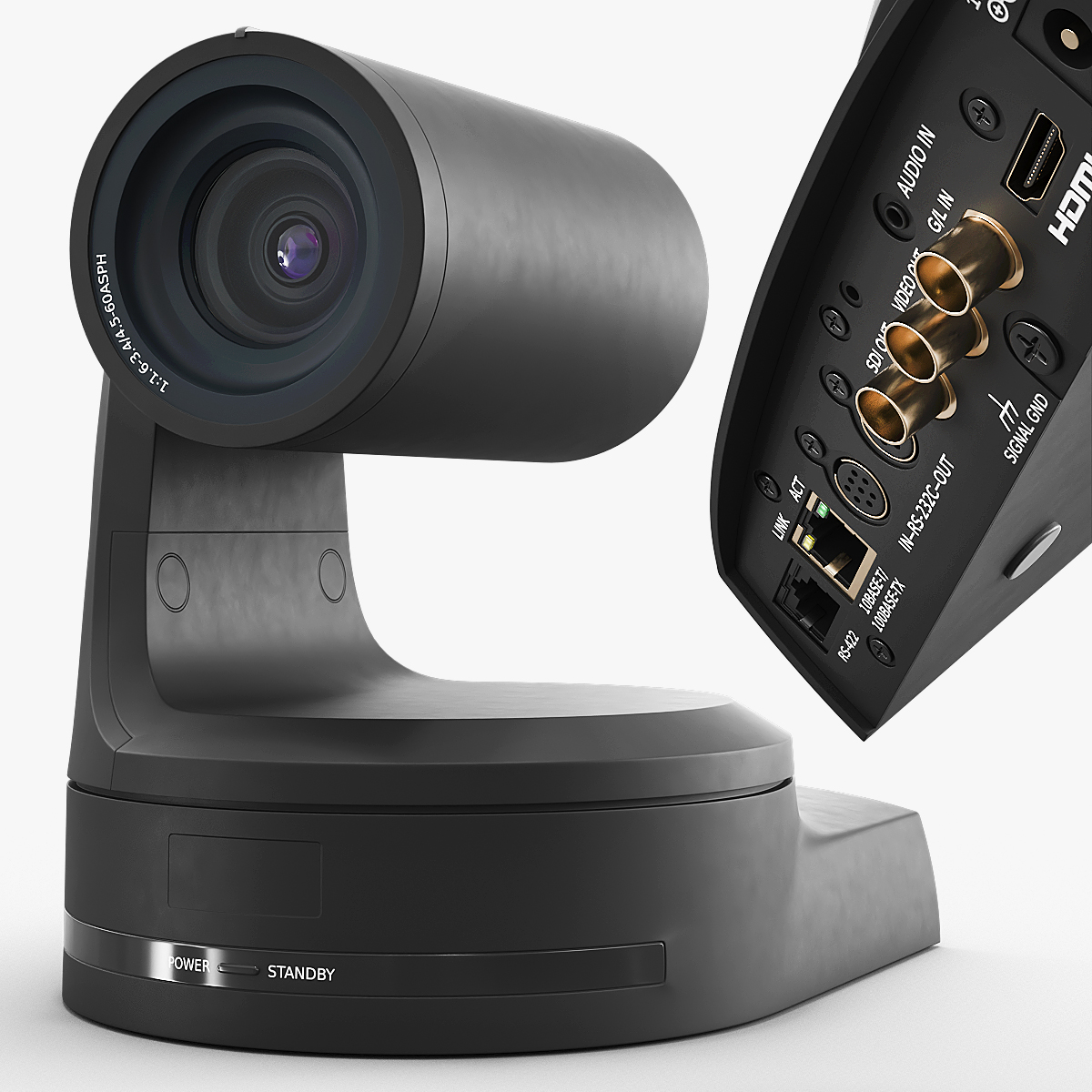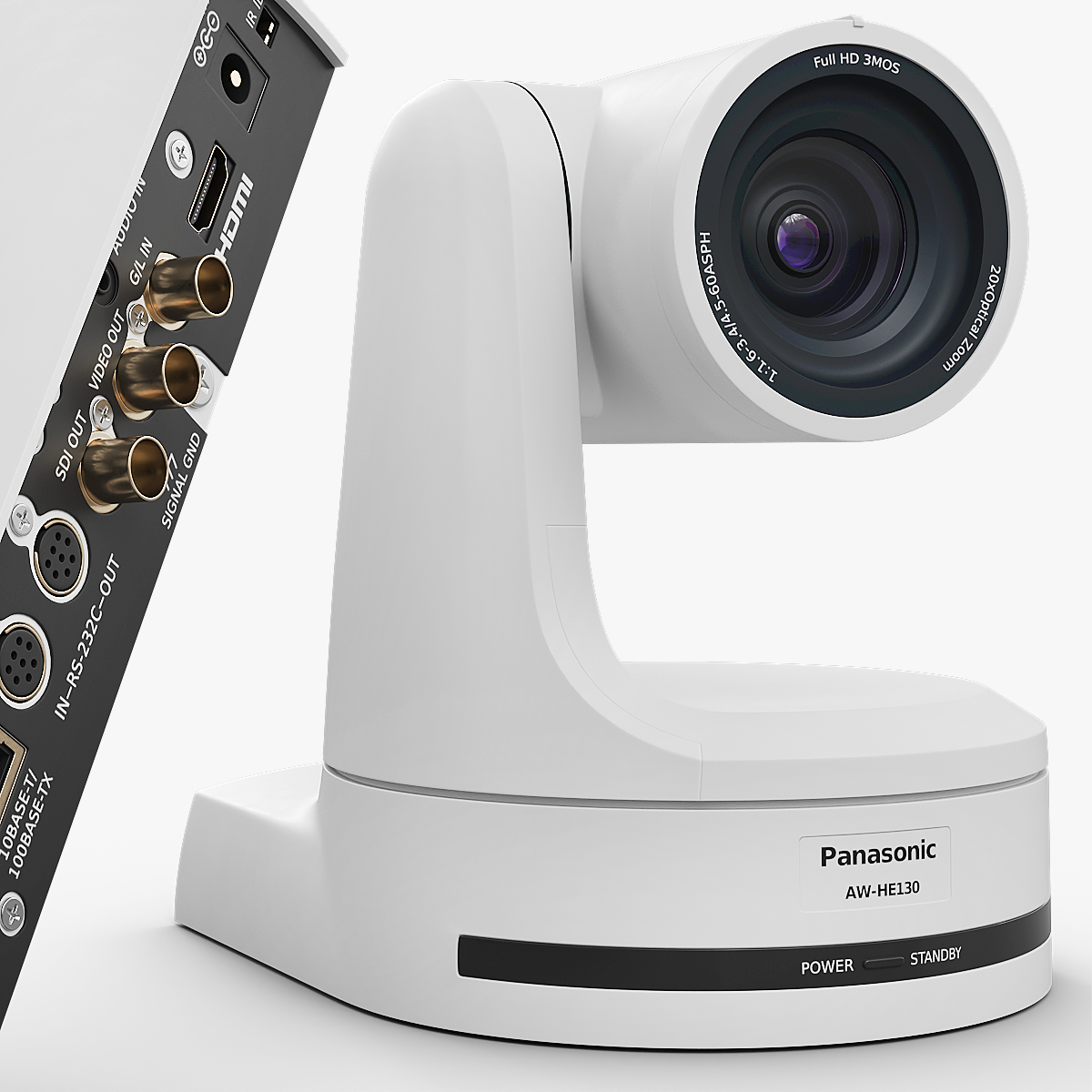
The Panasonic AW HE130 Broadcast Camera is a robotic pan-tilt-zoom head that television studios mount on walls and ceilings for remote shots. Its 24,794 polygons and 25,515 vertices shape the rounded camera pod, the yoke arms, the lens window and the base. At 18.0 x 22.03 x H22.36 cm it is compact enough to sit on a shelf above a news desk.
A mixed UV layout gives the lens and body logo space of their own while smaller parts share. StemCell packaging supplies PBR materials so the camera looks consistent in real-time engines and path tracers. Pointed at an empty presenter chair, it suggests a studio moments before going live.
Licensed for Editorial Uses Only, the model fits newsroom features, broadcast education and documentary scenes. Two versions cost $29 each, this branded unit and a generic Robotic PTZ Broadcast Camera. Released in 2026, it serves television studio design, streaming setup guides and conference room technology visuals.
Questions About This Model
What size is the Panasonic AW HE130 Broadcast Camera in real-world units?
18.0 x 22.03 x H22.36 cm. The model is built at true scale, so it lands at the right size next to other objects instead of needing a unit fix on import.
How heavy is the Panasonic AW HE130 Broadcast Camera mesh?
24,794 polygons and 25,515 vertices, built as polygonal quads/tris. Against a median of about 28,000 polygons across our Electronics & Gadgets models, 24,794 puts this one below the middle of the category.
Can the Panasonic AW HE130 Broadcast Camera model be modified after purchase?
Yes. The license allows editing the geometry, retopologising, changing materials and adapting the asset to a project. What it does not allow is reselling or redistributing the model file itself, or using the result commercially: this listing is Editorial Uses Only.
How much does the Panasonic AW HE130 Broadcast Camera 3D model cost?
$29 USD, paid once. TurboSquid handles payment and delivery. The license is Editorial Uses Only, because the model depicts a real branded product: it covers editorial contexts such as news, commentary and education, but not advertising or products for sale.