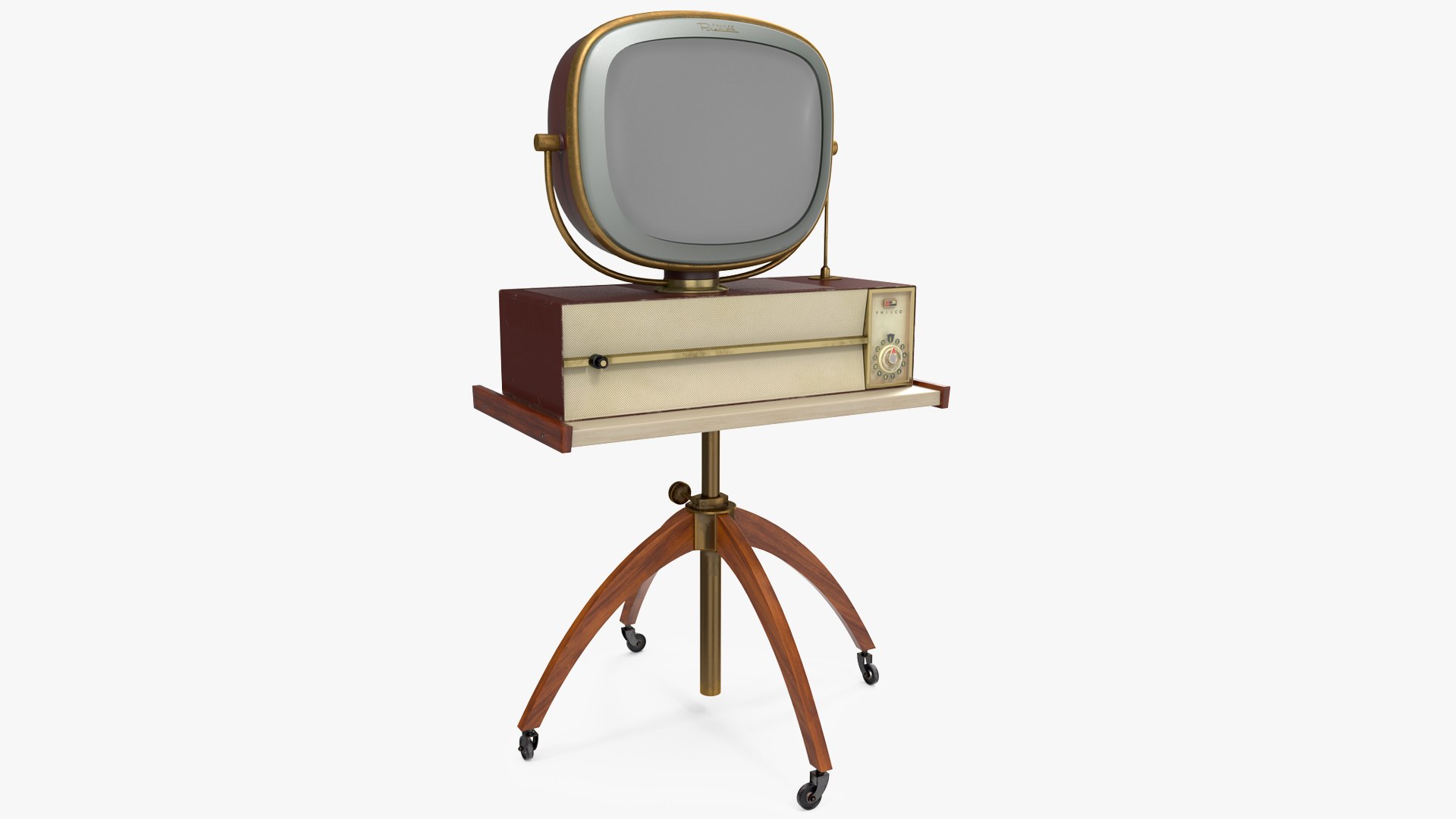
Retro 1959 Philco Predicta Princess Swivel TV with Stand
Retro 1959 Philco Predicta Princess Swivel TV with Stand is a detailed Electronics & Gadgets asset built for professional 3D pipelines, available at $59. Measured geometry: 71,648 polygons, 74,546 vertices - no rounding, no estimate. Its suitability for real-time use depends on the target platform, scene complexity and the number of instances.
Texturing runs to 11 maps at 4096 x 4096. StemCell certification means the asset was authored once and delivered across formats with consistent PBR shading, which saves the conversion step when moving between renderers. The file is organised for someone else to pick up: predictable names, predictable pivots, no hidden surprises.
It is cataloged for technical visualization, software demos and film & TV VFX. Listed since 2020 - old enough to have been used in real projects, current enough to still be supported. It is aimed at product rendering, advertising, UI and app mockups, and game and film props.
Questions About This Model
Does the Retro 1959 Philco Predicta Princess Swivel TV with Stand model include materials and textures?
Material and texture contents are listed per file on the TurboSquid product page. As a StemCell asset it ships with PBR materials that stay consistent across the delivered formats.
What should I search for to find models like the Retro 1959 Philco Predicta Princess Swivel TV with Stand?
Useful search terms are television, retro and vintage. Browsing the Electronics & Gadgets category shows the closest alternatives at a range of prices.
Which industries use the Retro 1959 Philco Predicta Princess Swivel TV with Stand model?
Hardware, Software Development, Film & Video Production and Advertising are the primary industries on this listing, though the Royalty Free license puts no limit on where the model is actually used.
How heavy is the Retro 1959 Philco Predicta Princess Swivel TV with Stand mesh?
71,648 polygons and 74,546 vertices, built as polygonal quads/tris. Its suitability for real-time use depends on the target platform, scene complexity and the number of instances.