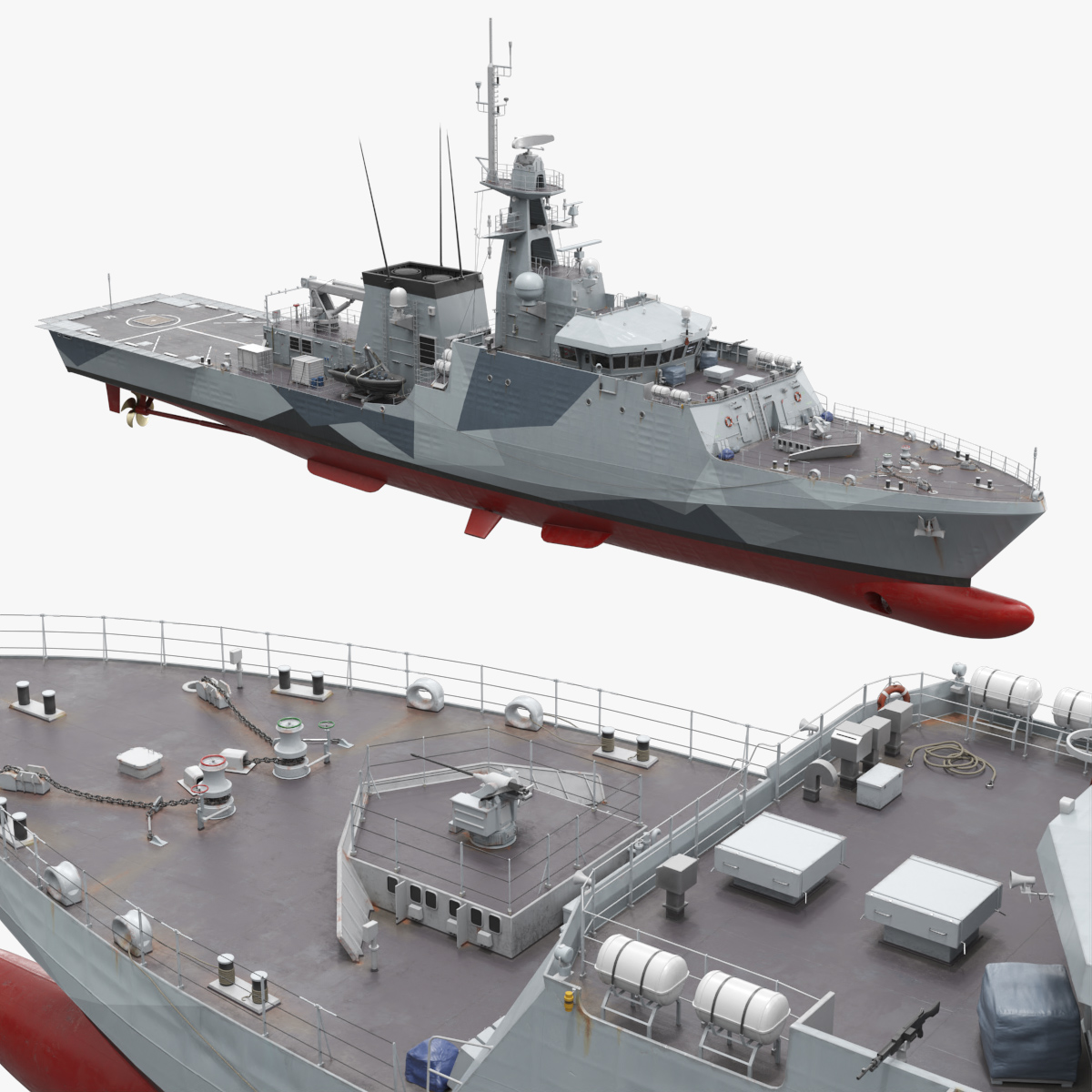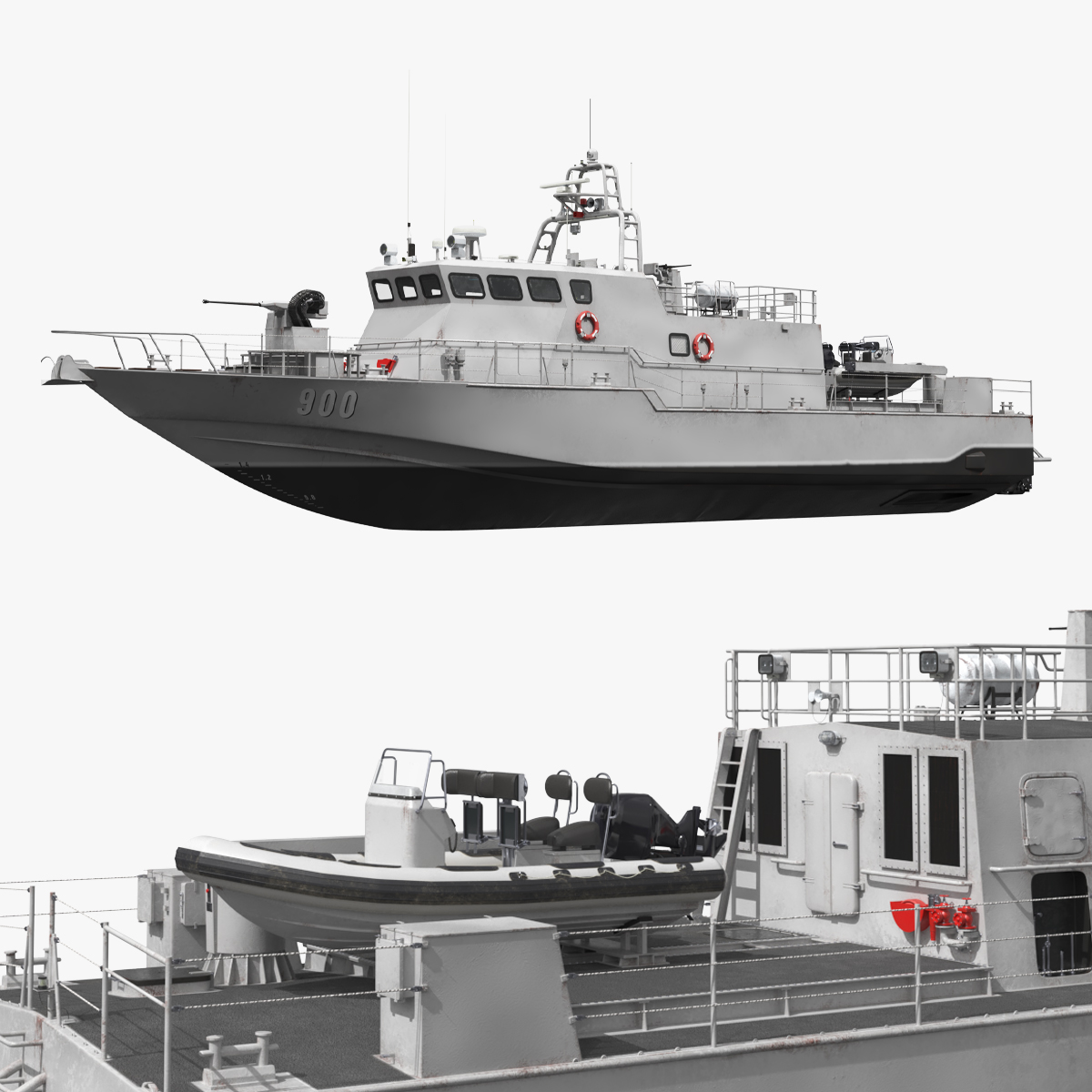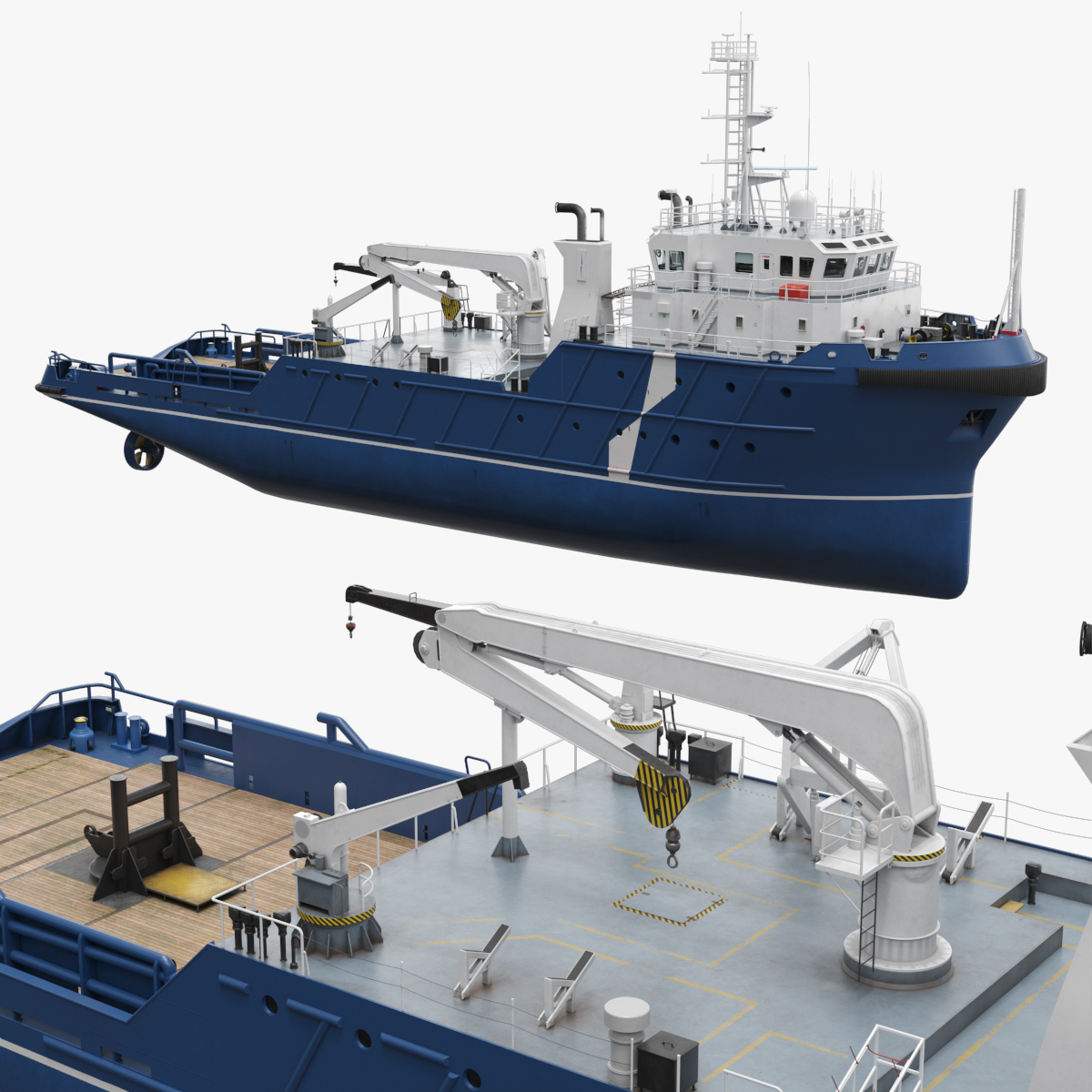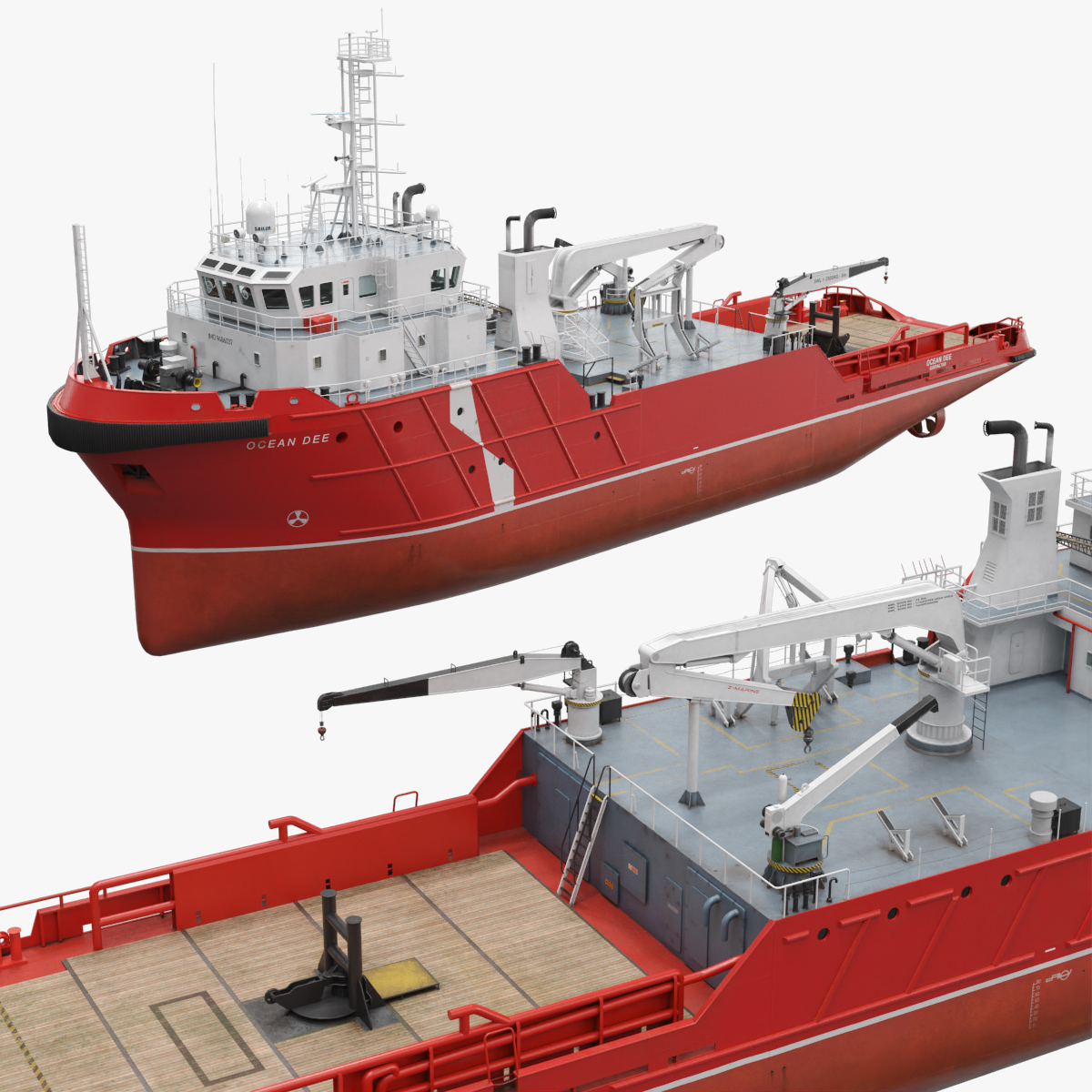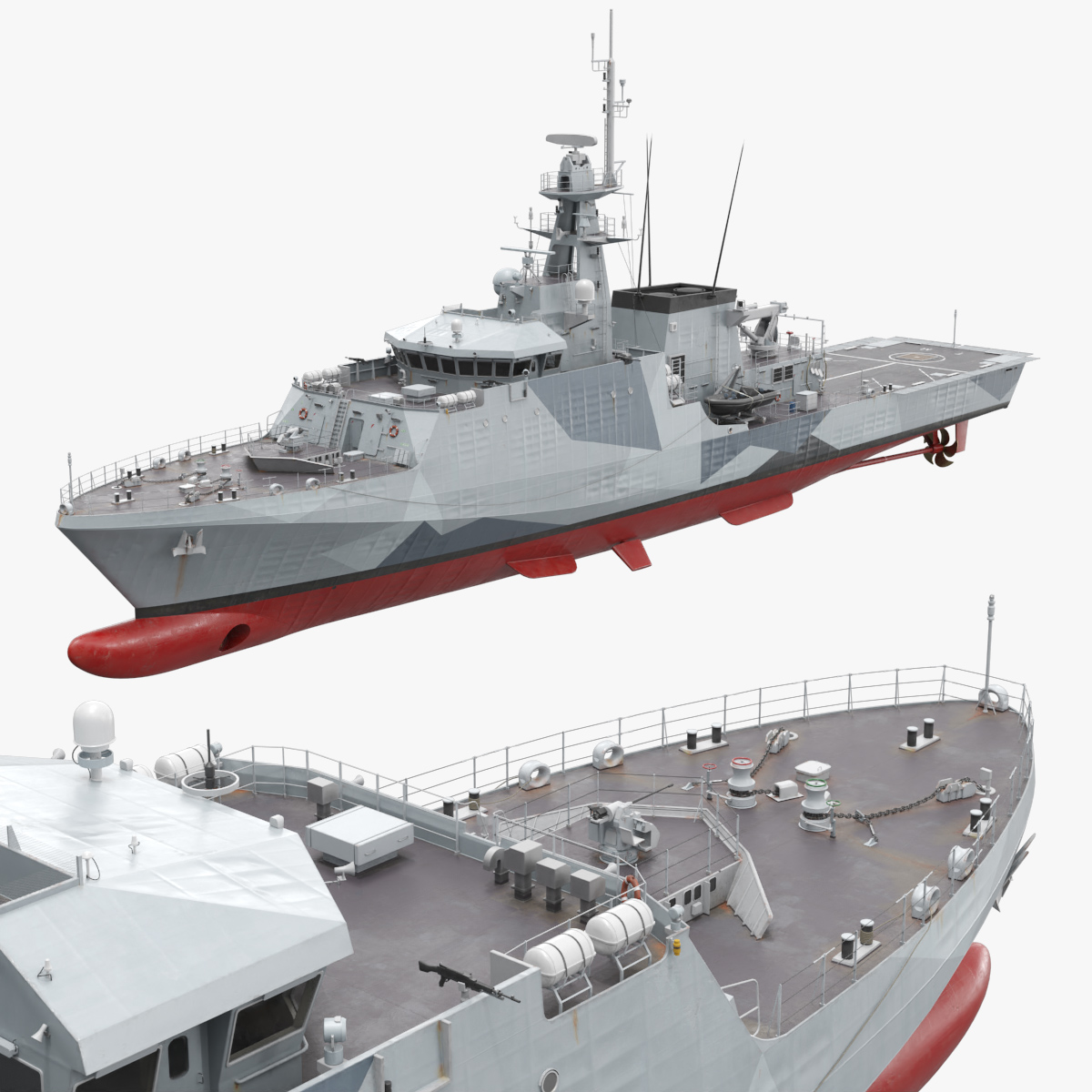
A gray offshore patrol vessel with a raised bridge, flight deck and deck gun, built for naval, coast guard and maritime scenes. The River Class Offshore Patrol Ship Simplified uses 301,918 polygons, balancing a detailed superstructure with a smooth, clean hull.
With 322,639 vertices, masts, railings and radar domes keep their outlines against open sky. This StemCell vessel comes in several native formats that all derive from one carefully prepared scene. The long flat stern gives the ship a working profile, unlike the sharper lines of a frigate or destroyer.
Priced at $219 the 2026 patrol ship suits naval simulations, fisheries protection stories and documentary visuals. Place it on a calm sea with a wake behind it, or alongside a harbor wall for a port visit. The simplified approach keeps it efficient enough for a flotilla while the silhouette stays recognizable. Defense analysts and maritime museums can illustrate offshore patrol work without sourcing restricted photography.
Questions About This Model
What should I search for to find models like the River Class Offshore Patrol Ship Simplified?
Useful search terms are river, class and offshore. Browsing the Ships & Boats category shows the closest alternatives at a range of prices.
What file formats does the River Class Offshore Patrol Ship Simplified 3D model come in?
The complete list of included formats is shown on the TurboSquid product page, where every file is named and sized before you buy. Native scene files and the common interchange formats are the usual pairing.
Can the River Class Offshore Patrol Ship Simplified model be used in a commercial project?
It ships with TurboSquid's Royalty Free license, so a single purchase covers commercial delivery - you do not pay again per project or per seat of the finished work.
What does StemCell mean for the River Class Offshore Patrol Ship Simplified model?
StemCell is TurboSquid's multi-format standard. The model was authored once and delivered in several formats with matching PBR materials, so shading survives the move between a game engine and an offline renderer.