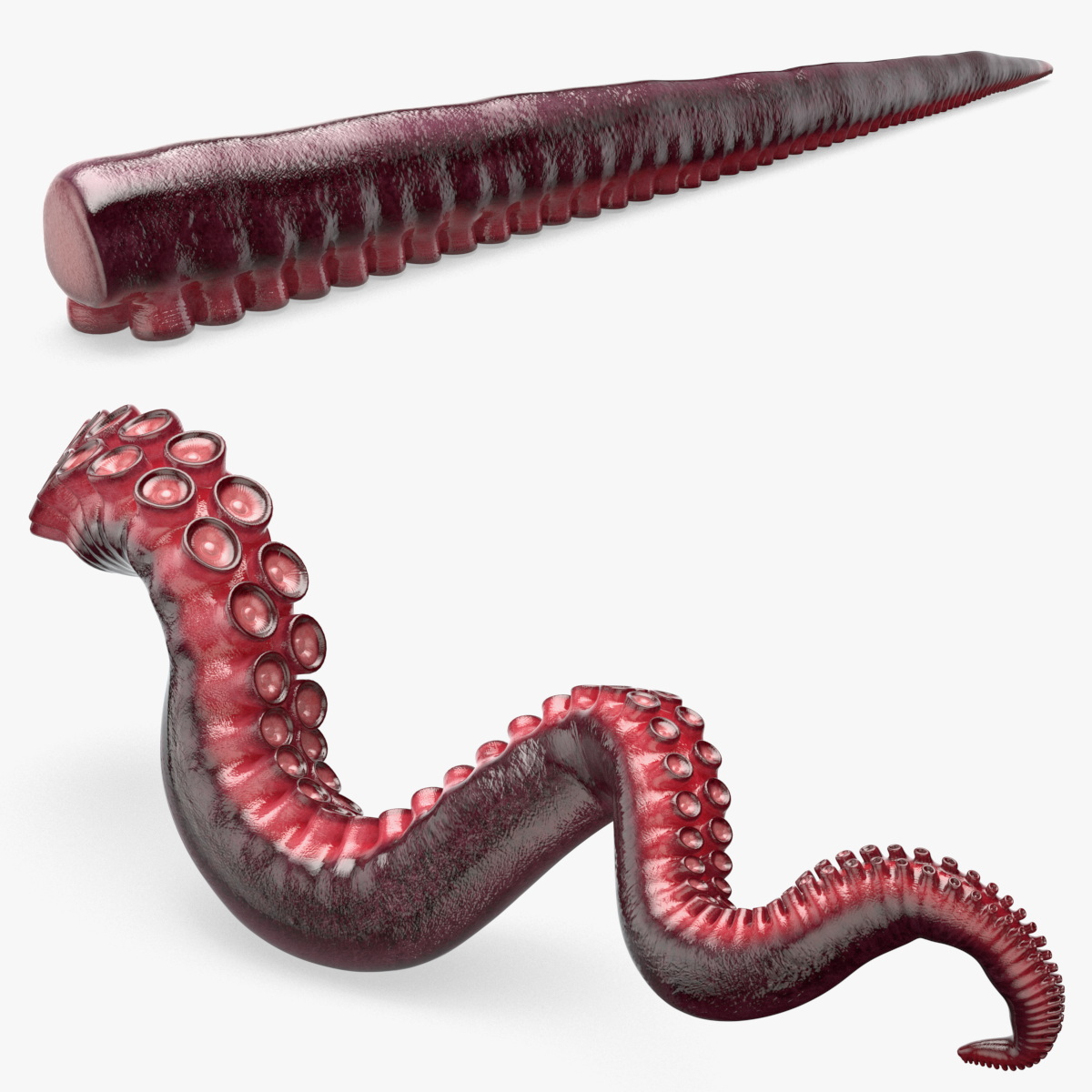
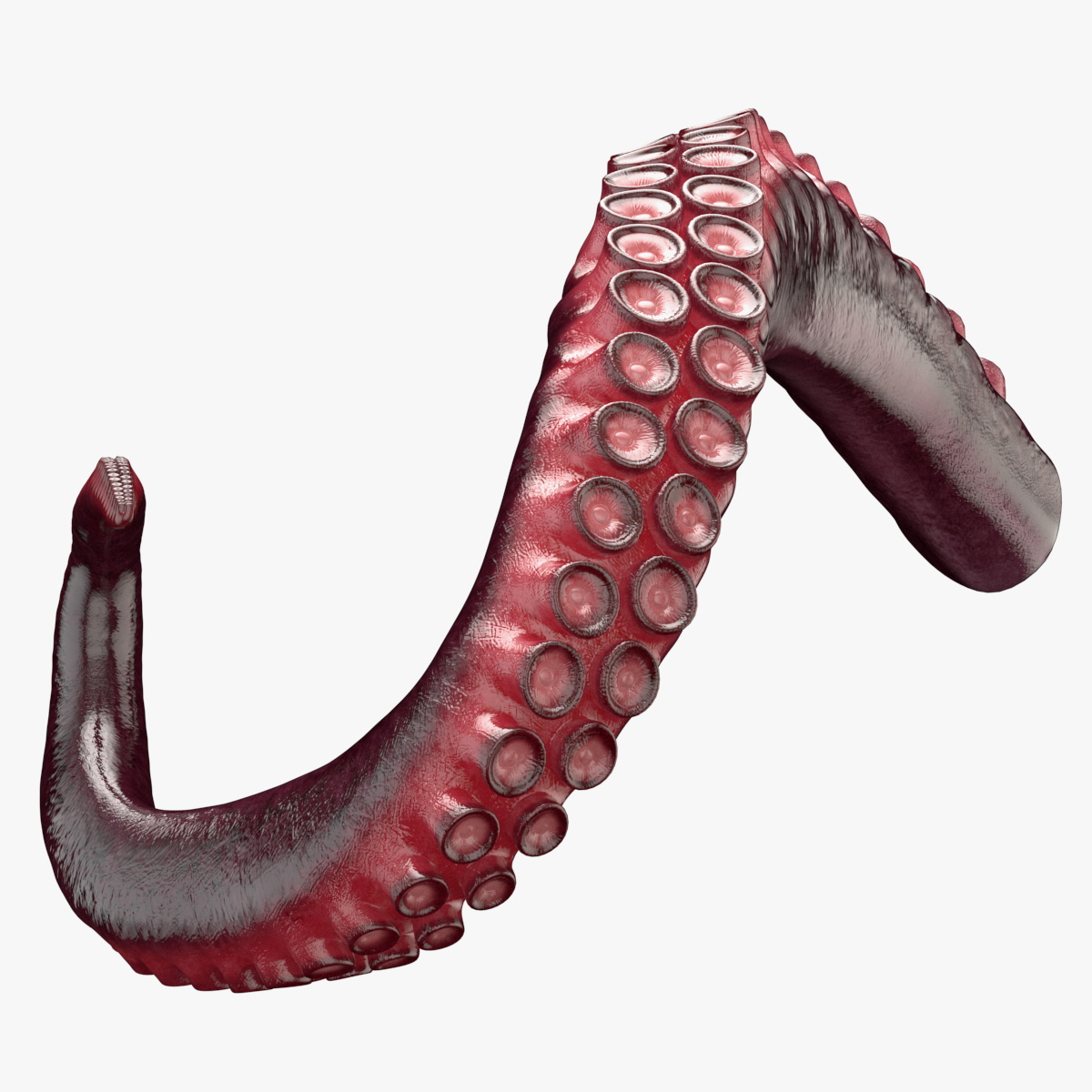
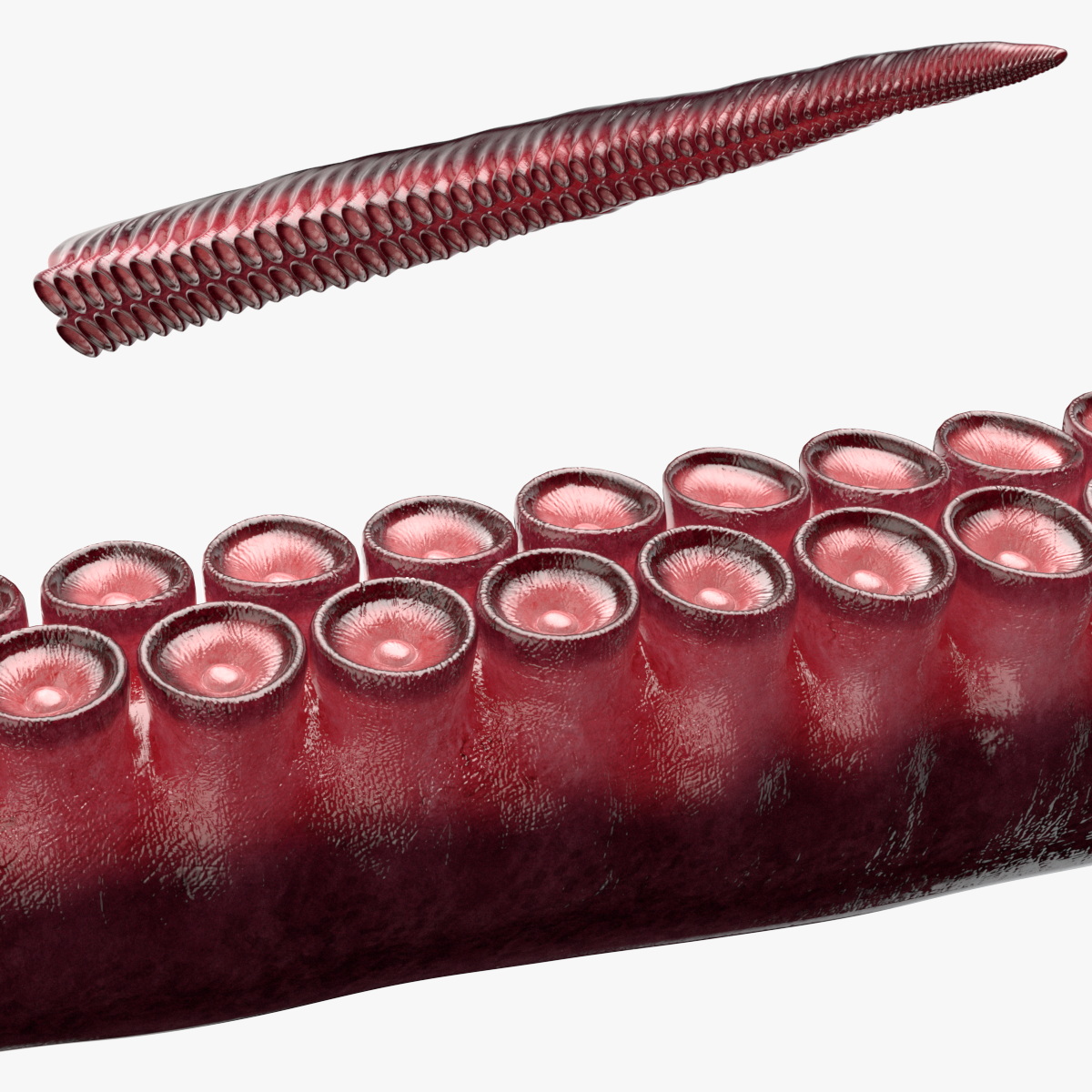
A single octopus arm with suckers along the underside, perfect when only one limb needs to reach into the frame. Its 12,163 polygons model each sucker as real geometry, growing smaller from the base toward the curling tip. That changing sucker size matters, because a texture alone falls apart the moment the arm curls toward camera.
Four maps at 4096 x 4096 hold the mottled skin, pale sucker rims and the color shift from top to underside. StemCell status brings uniform PBR shading, so the wet look carries across engines without tweaking. Non-overlapping UVs leave room for slime masks or extra wetness passes in close shots.
Fourteen versions are gathered here, from static orange, red and brown arms to rigged and animated builds. The Octopus Tentacle Rigged and the animated build reach 13,271 polygons, about 9% more, while dedicated Maya and Cinema 4D rigs are also included. Since 2016 the arm has served horror films, aquarium visuals, seafood dishes and creature encounters in games.
Questions About This Model
What is the Tentacle model typically used for?
It is cataloged for film & TV VFX, game assets and product rendering - the sort of work where the object needs to look right on camera but is not the subject of the shot.
Which industries use the Tentacle model?
It is tagged for Film & Video Production, Game Development and Advertising. The categorisation reflects where similar Animals & Creatures assets end up rather than a hard restriction - the license does not limit the field of use.
Where can I buy the Tentacle 3D model?
It is sold through TurboSquid, where this listing has been available since 2016. Purchase, download and licensing are handled by TurboSquid; delivery is immediate after checkout.
What does StemCell mean for the Tentacle model?
It means one source asset, several delivered formats, and a PBR material setup designed to read consistently across them - no rebuilding shaders after import.