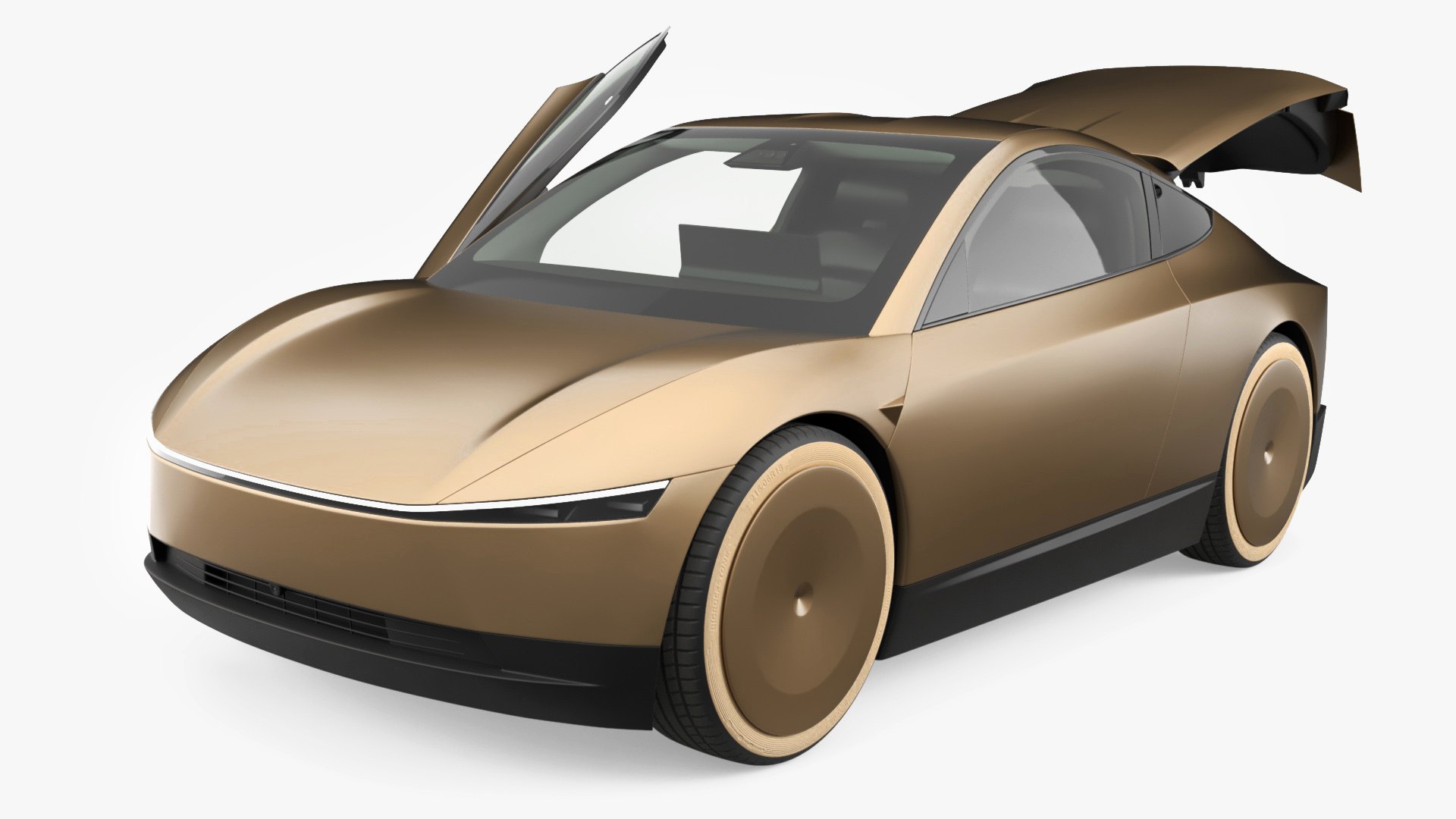
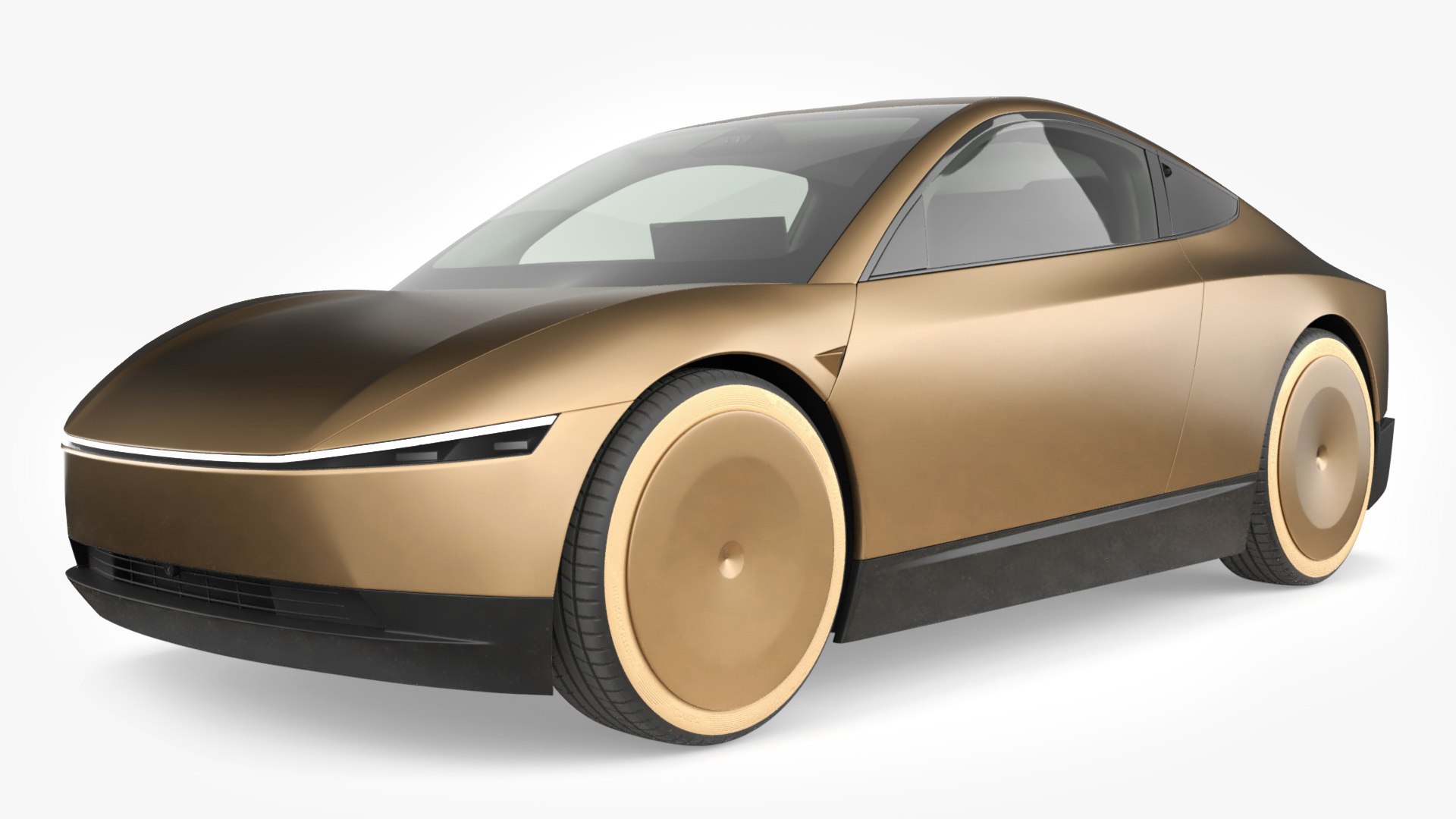
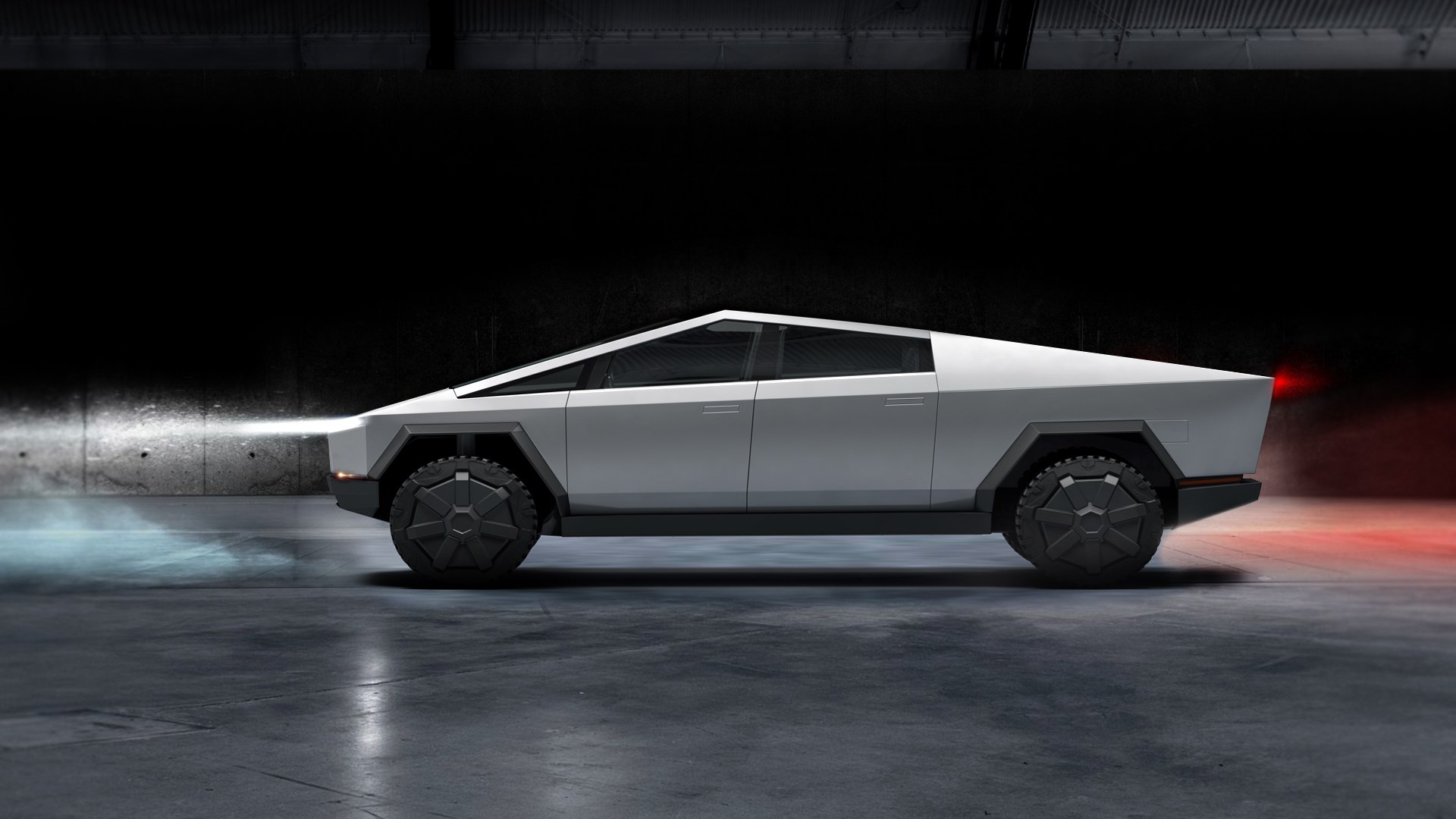
The Cybercab drops the parts a driver would need. No steering wheel, no pedals, two seats, butterfly doors and a body reduced to a wedge with a full-width light bar at each end. That absence is the whole design argument, and the model keeps it: the cabin reads as a lounge rather than a cockpit, which is the thing a robotaxi render has to communicate in one frame.
The mesh is economical at 63,250 polygons and 70,814 vertices in quads and tris with non-overlapping UVs, built to the StemCell specification so it goes into a real-time engine, a configurator or a browser scene without a rebuild.
This page carries four other builds: rigged at $149, simplified at $99, and rigged versions prepared for Maya and for Cinema 4D at $149 each. Take the static model at $99 for stills and background traffic; take a rigged one when the doors open or the car has to drive.
Questions About This Model
Can the Tesla Cybercab Robotaxi model be used in a commercial project?
No. The model depicts a real branded product, so TurboSquid lists it under the Editorial Uses Only license. It may be used in news, commentary, education, personal projects and similar editorial contexts, but not in advertising, on merchandise or in any product offered for sale. See our license guide.
How heavy is the Tesla Cybercab Robotaxi mesh?
63,250 polygons and 70,814 vertices, built as polygonal quads/tris. What matters is not the number itself but how many copies of the object your scene has to carry at once.
Does the Tesla Cybercab Robotaxi model include materials and textures?
The product page states what ships with each format. StemCell delivery means a PBR material set that reads the same across renderers. See the listing for the exact contents.
Where can I buy the Tesla Cybercab Robotaxi 3D model?
It is sold through TurboSquid, where this listing has been available since 2024. Purchase, download and licensing are handled by TurboSquid; delivery is immediate after checkout.