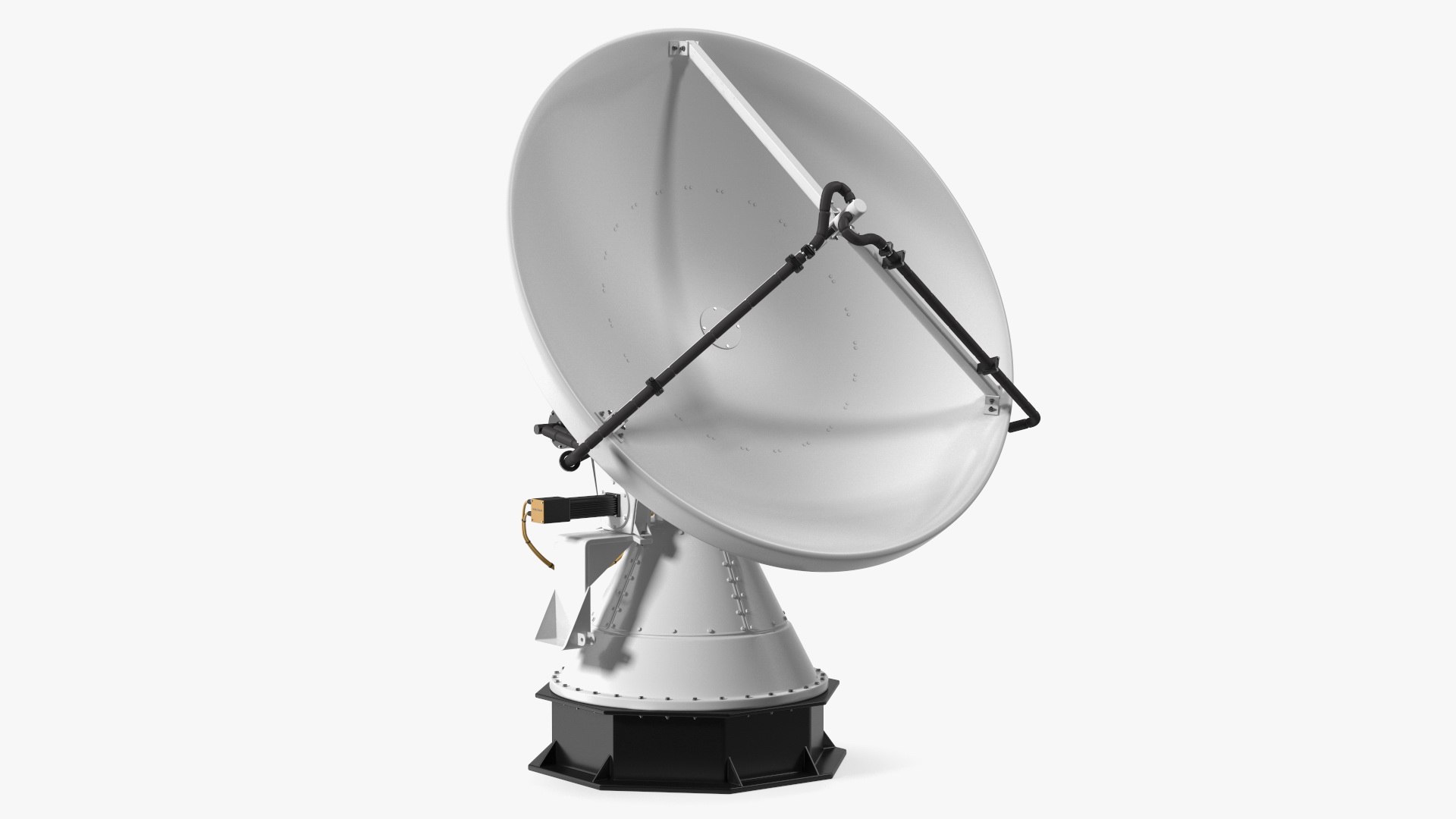
An early warning radar is a building shaped like an instrument. The phased array faces sit at a fixed angle on a massive concrete structure, because the antenna does not rotate - it steers electronically, and the geometry of the building is the aiming mechanism. That is why these installations look like truncated pyramids with blank faces.
The mesh runs 565,503 polygons and 830,358 vertices in quads and tris. The UVs overlap, which is a sound economy on a structure made of thousands of identical array elements, and the StemCell build means it works in a real-time engine.
At $49 it suits defence and strategic visualization, news and documentary graphics, missile defence presentation, education material and games. On sale since 2025.
Questions About This Model
What is the UEWR Early Missile Warning Radar model typically used for?
It is cataloged for technical visualization, software demos and film & TV VFX - the sort of work where the object needs to look right on camera but is not the subject of the shot.
What should I search for to find models like the UEWR Early Missile Warning Radar?
Useful search terms are early warning radar, phased array installation 3d model and missile defence radar. Browsing the Electronics & Gadgets category shows the closest alternatives at a range of prices.
Which industries use the UEWR Early Missile Warning Radar model?
It is tagged for Hardware, Software Development, Film & Video Production and Advertising. The categorisation reflects where similar Electronics & Gadgets assets end up rather than a hard restriction - the license does not limit the field of use.
How heavy is the UEWR Early Missile Warning Radar mesh?
565,503 polygons and 830,358 vertices, built as polygonal quads/tris. How that lands depends on your renderer and on how close the camera gets.