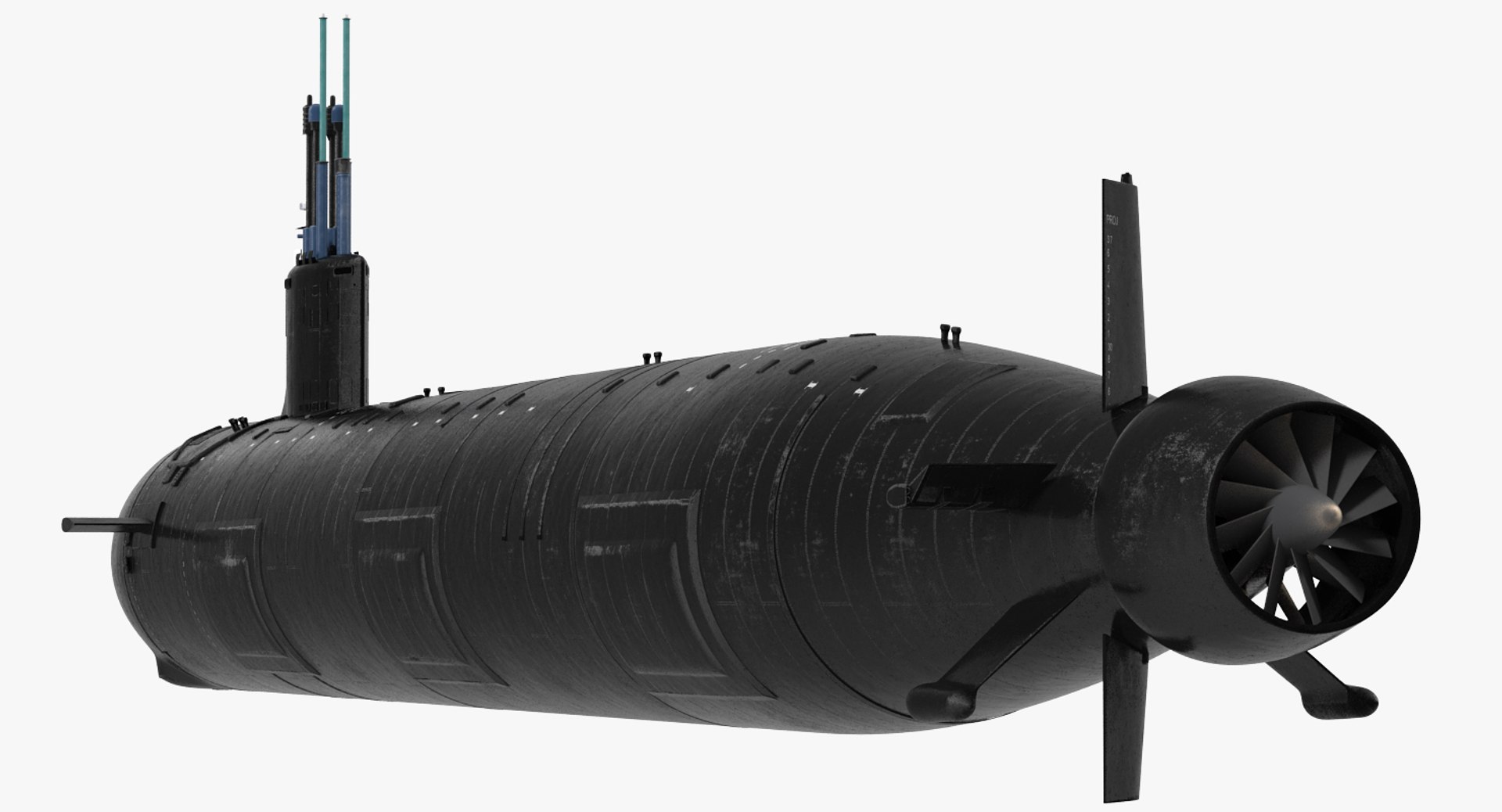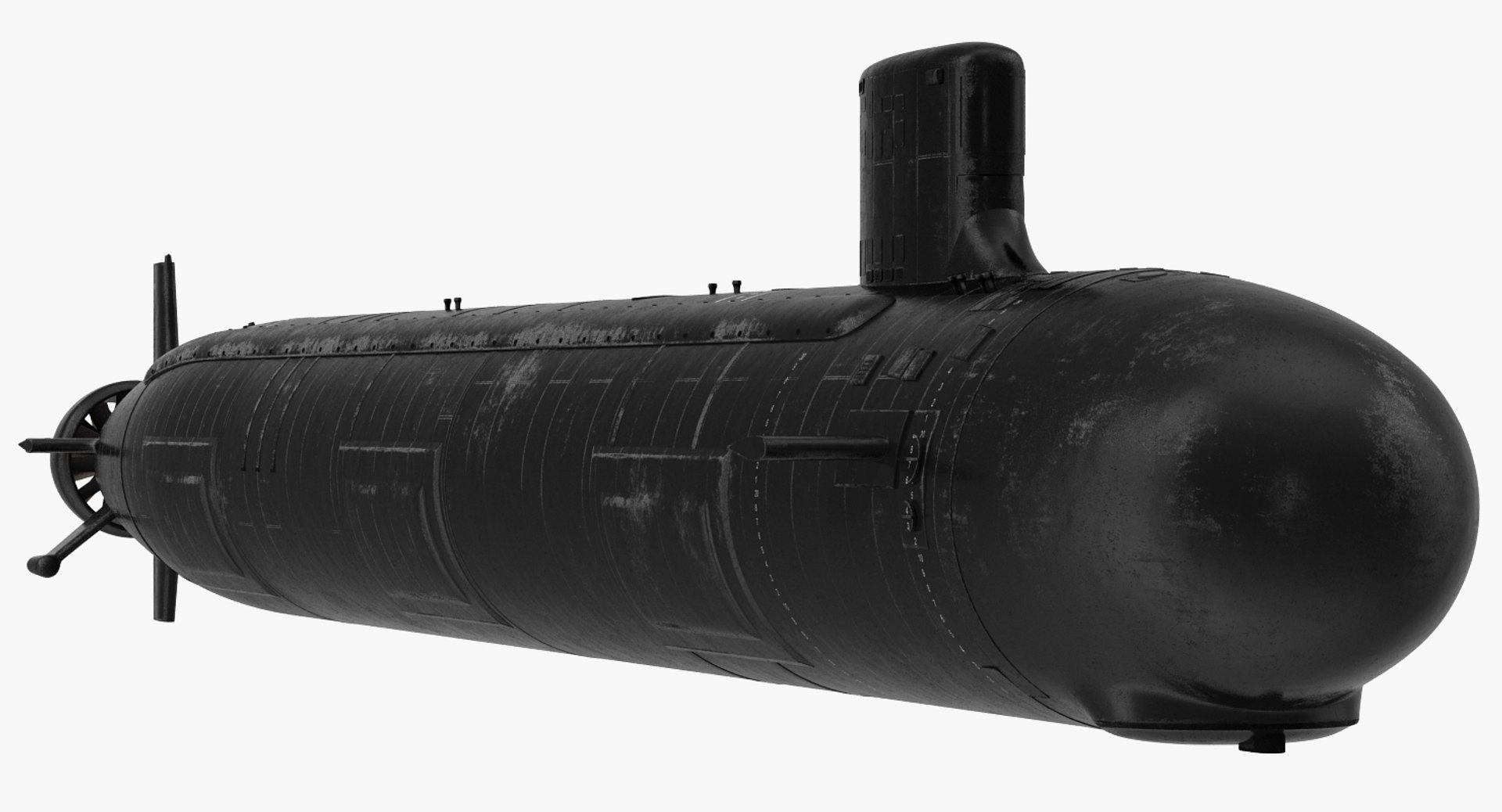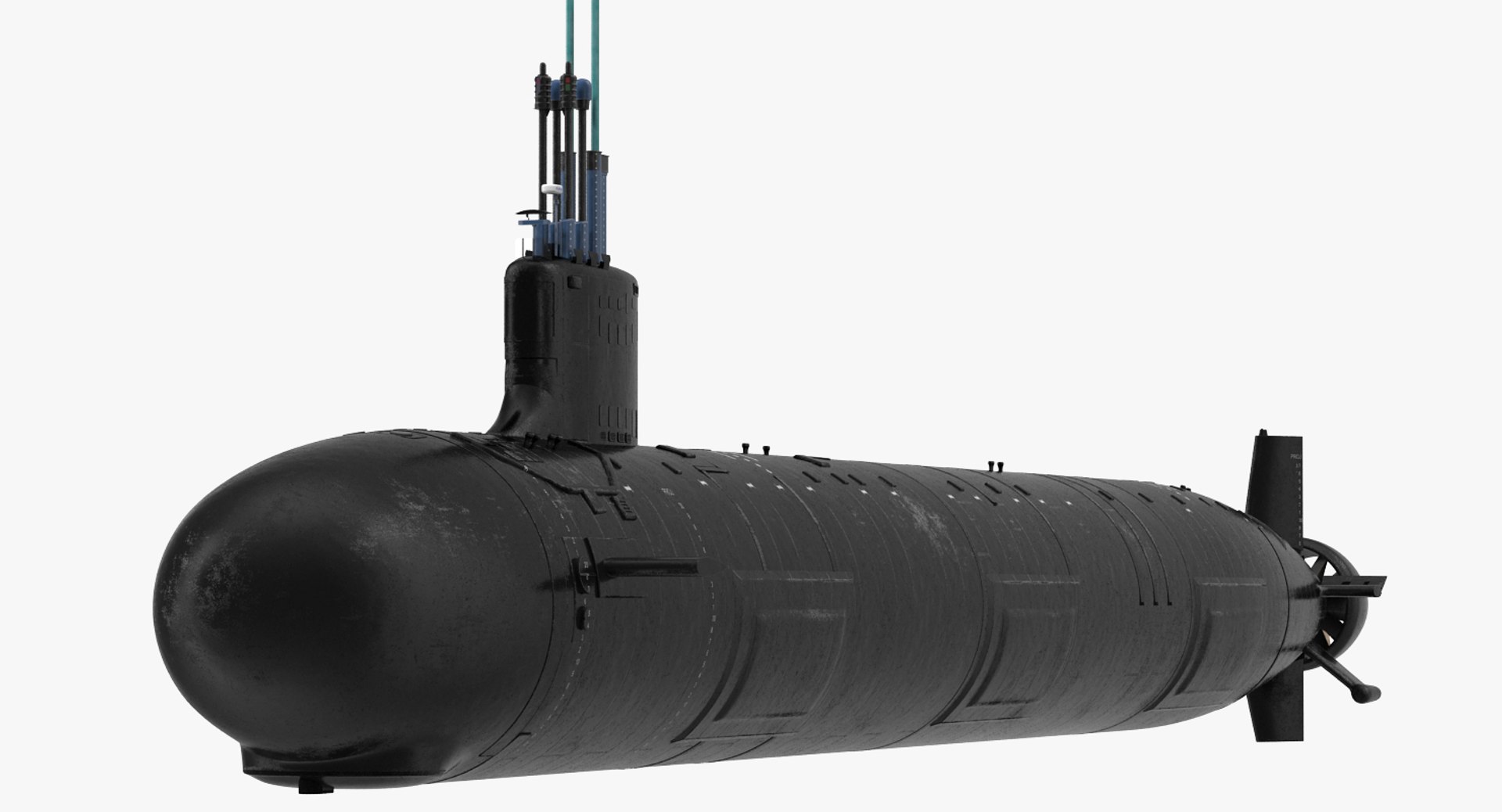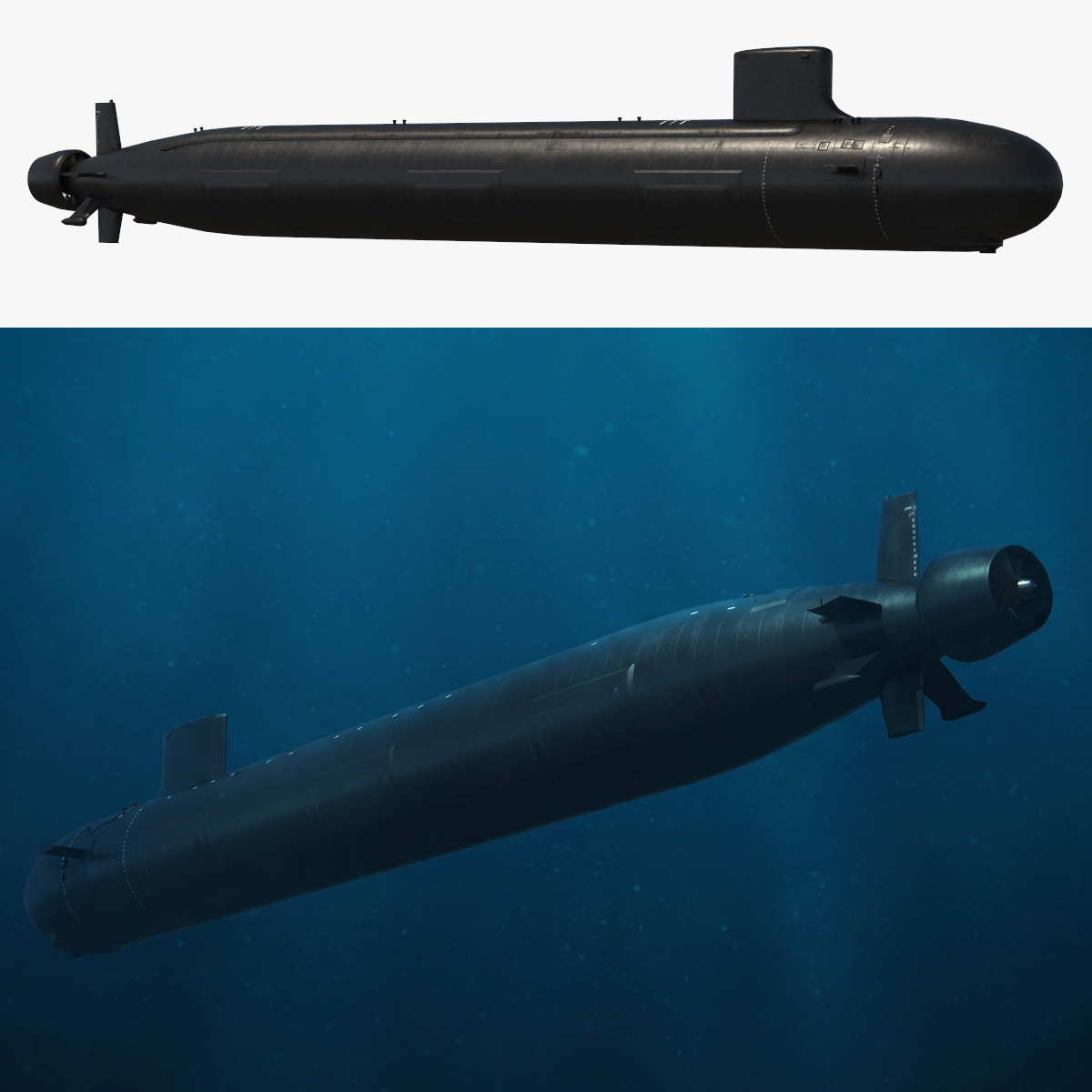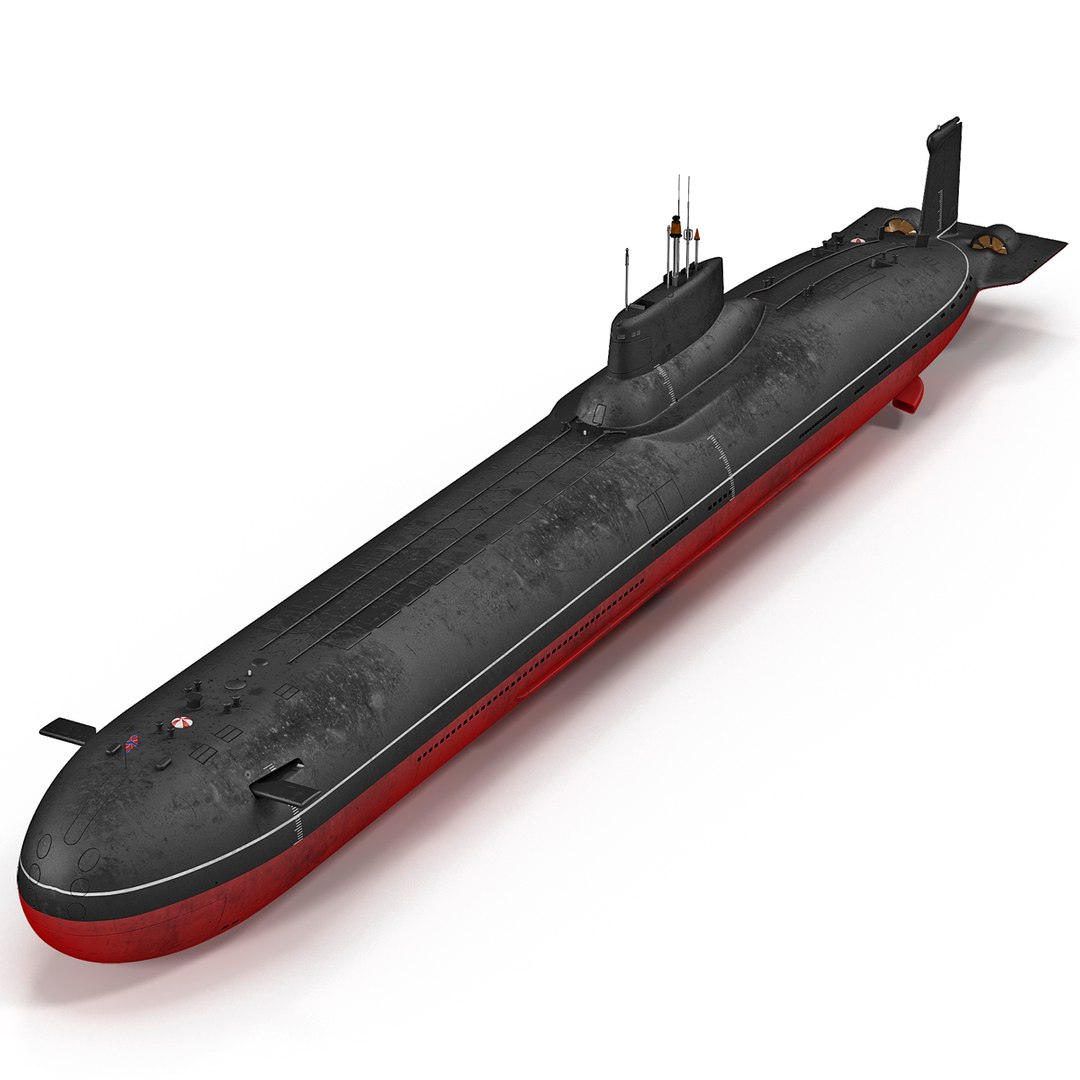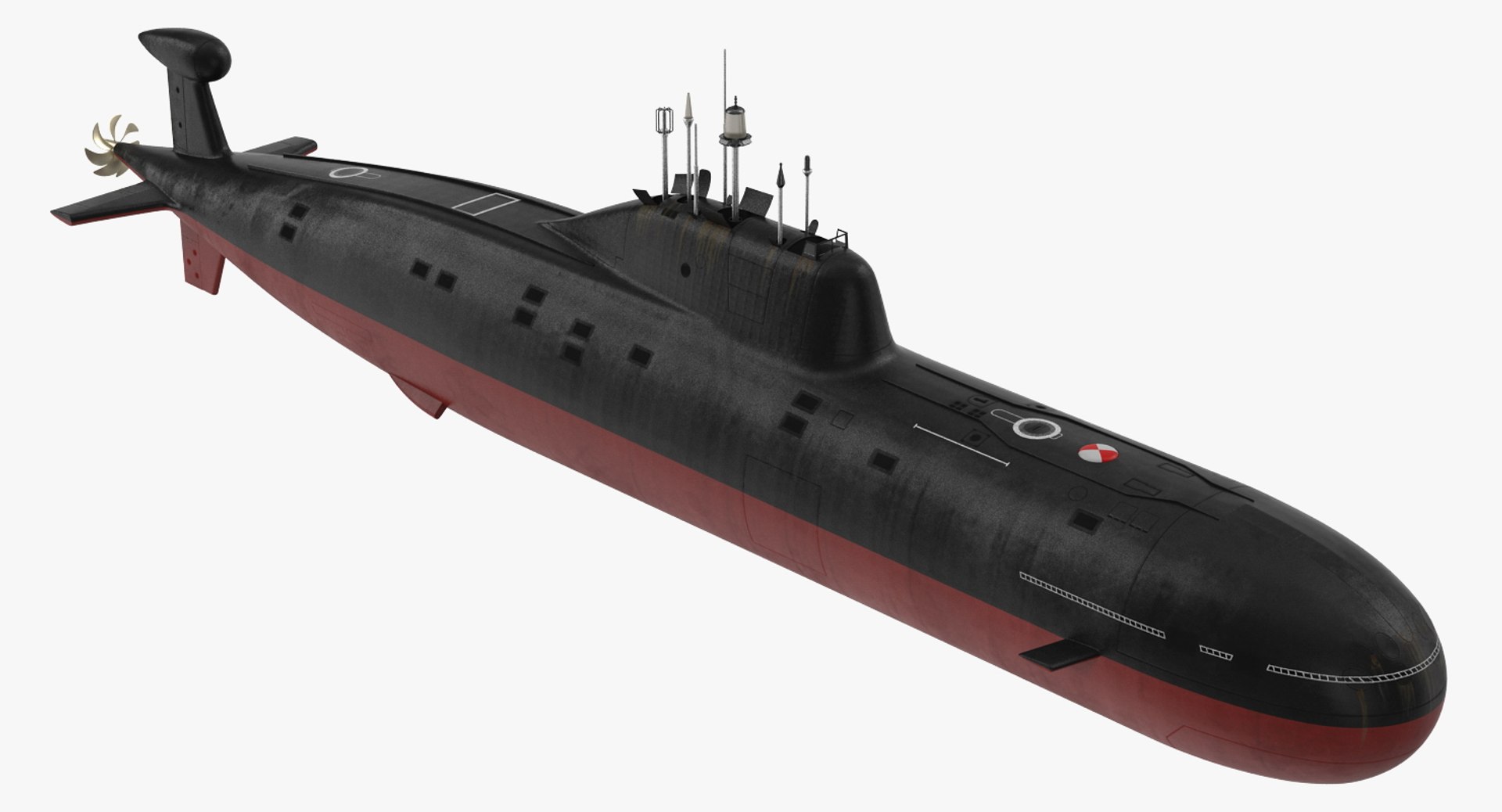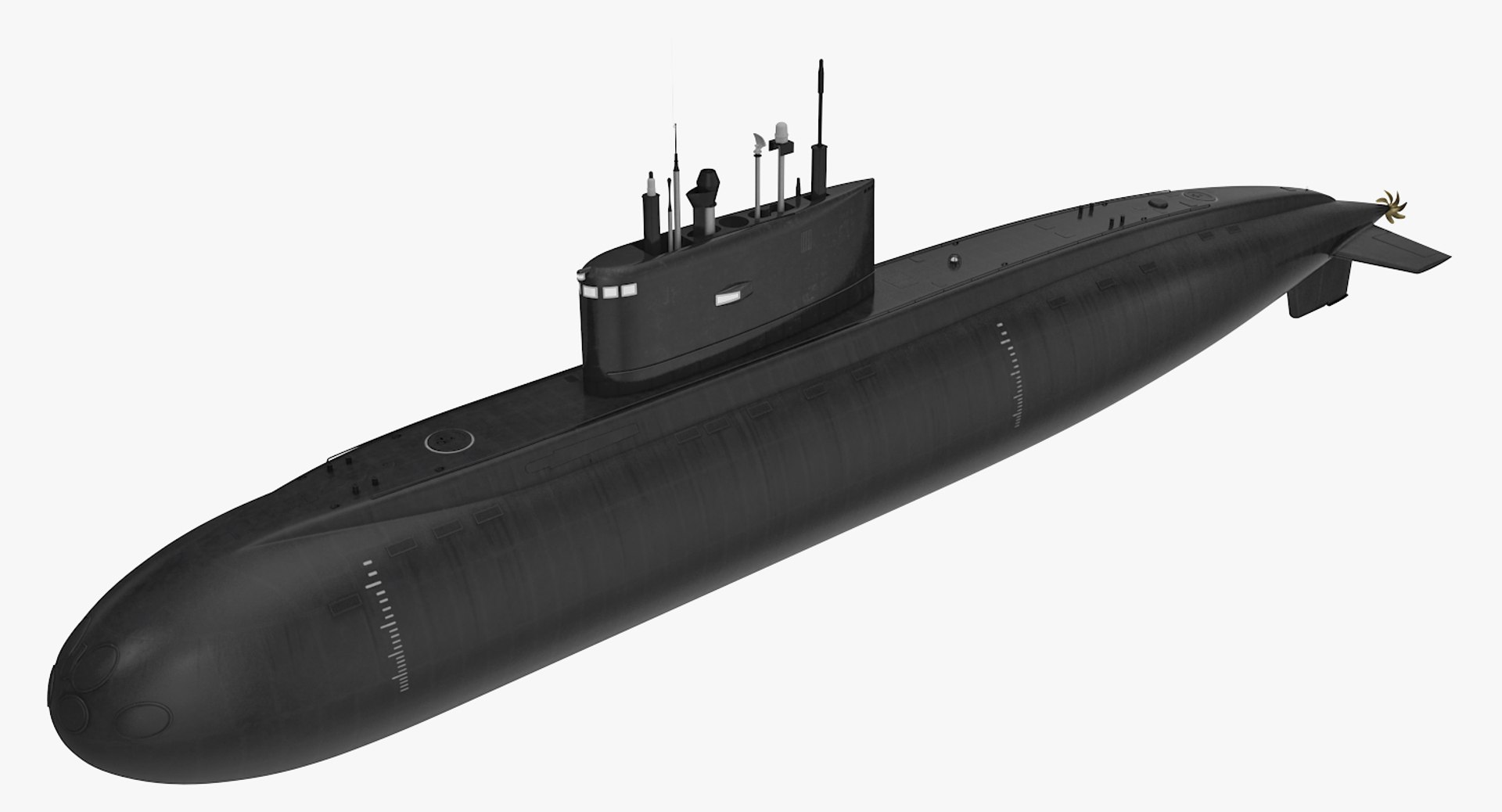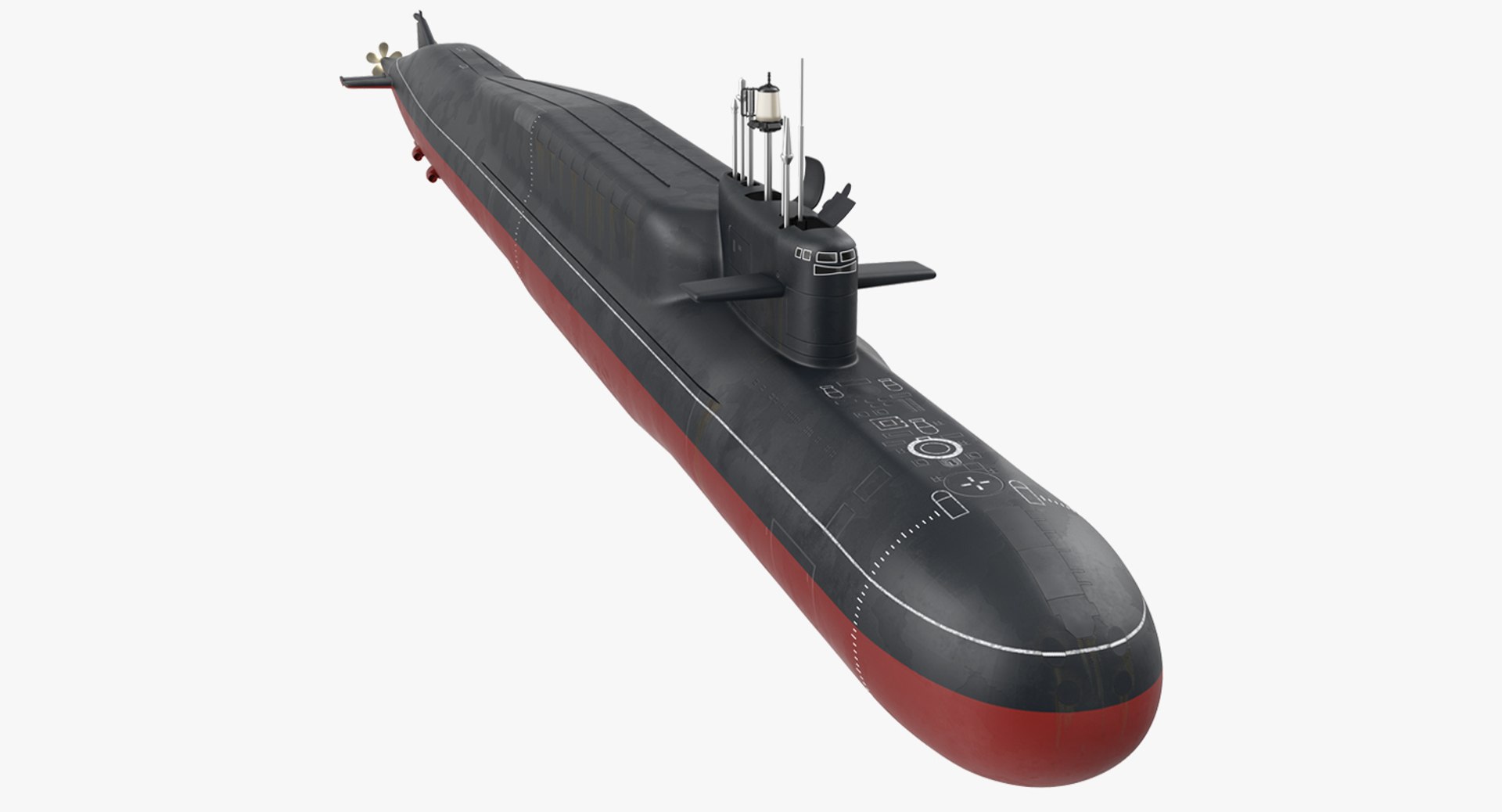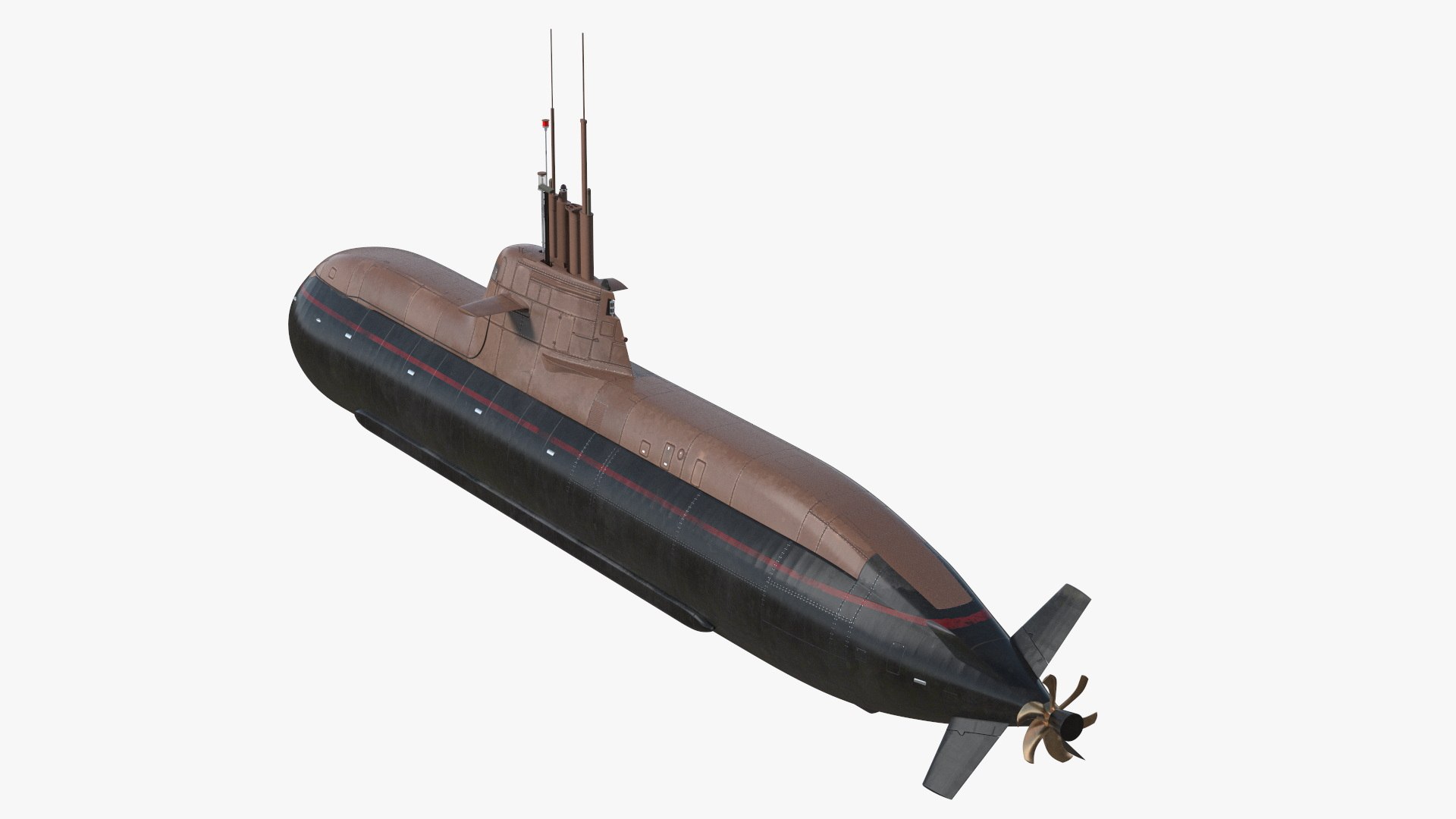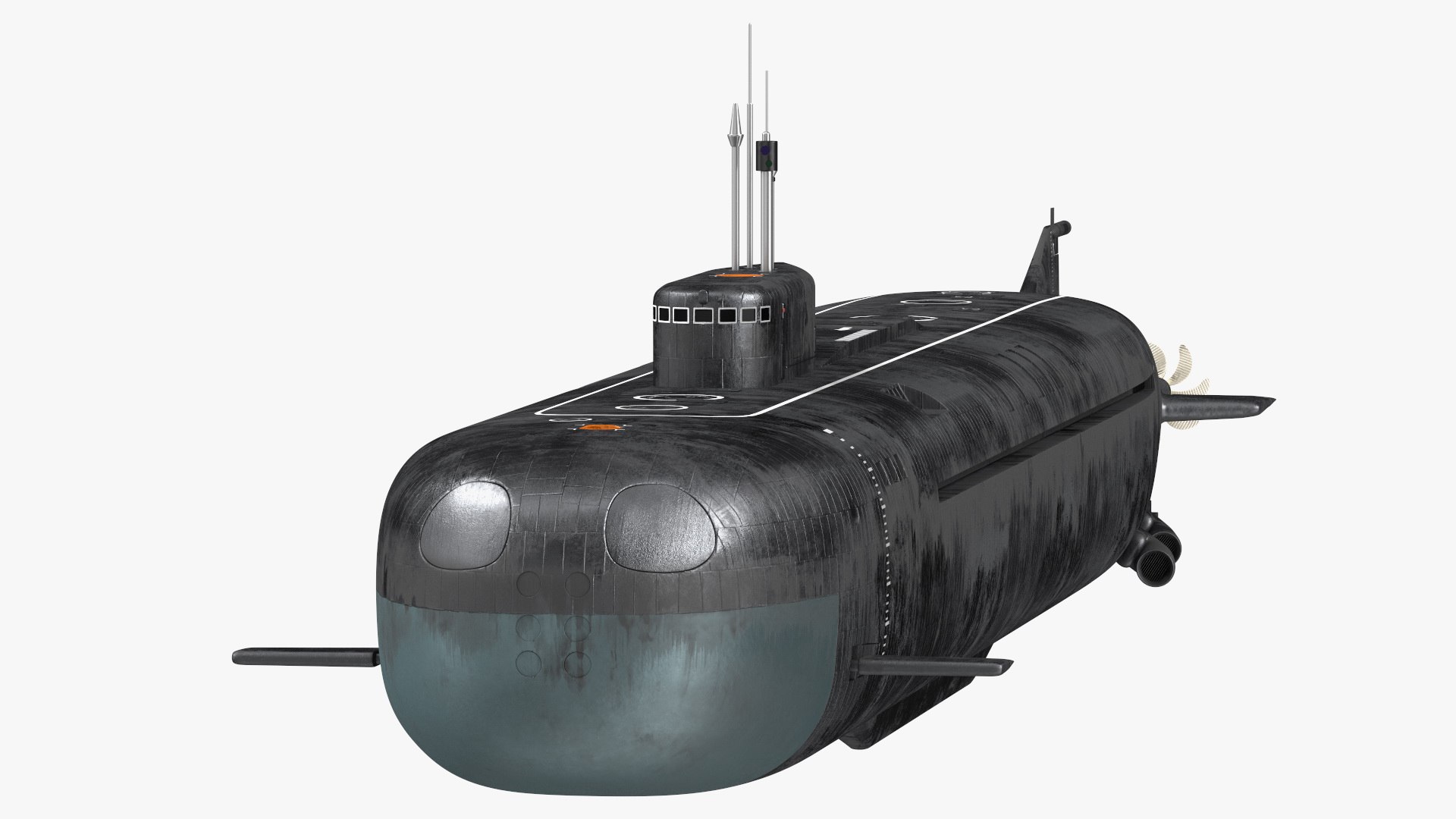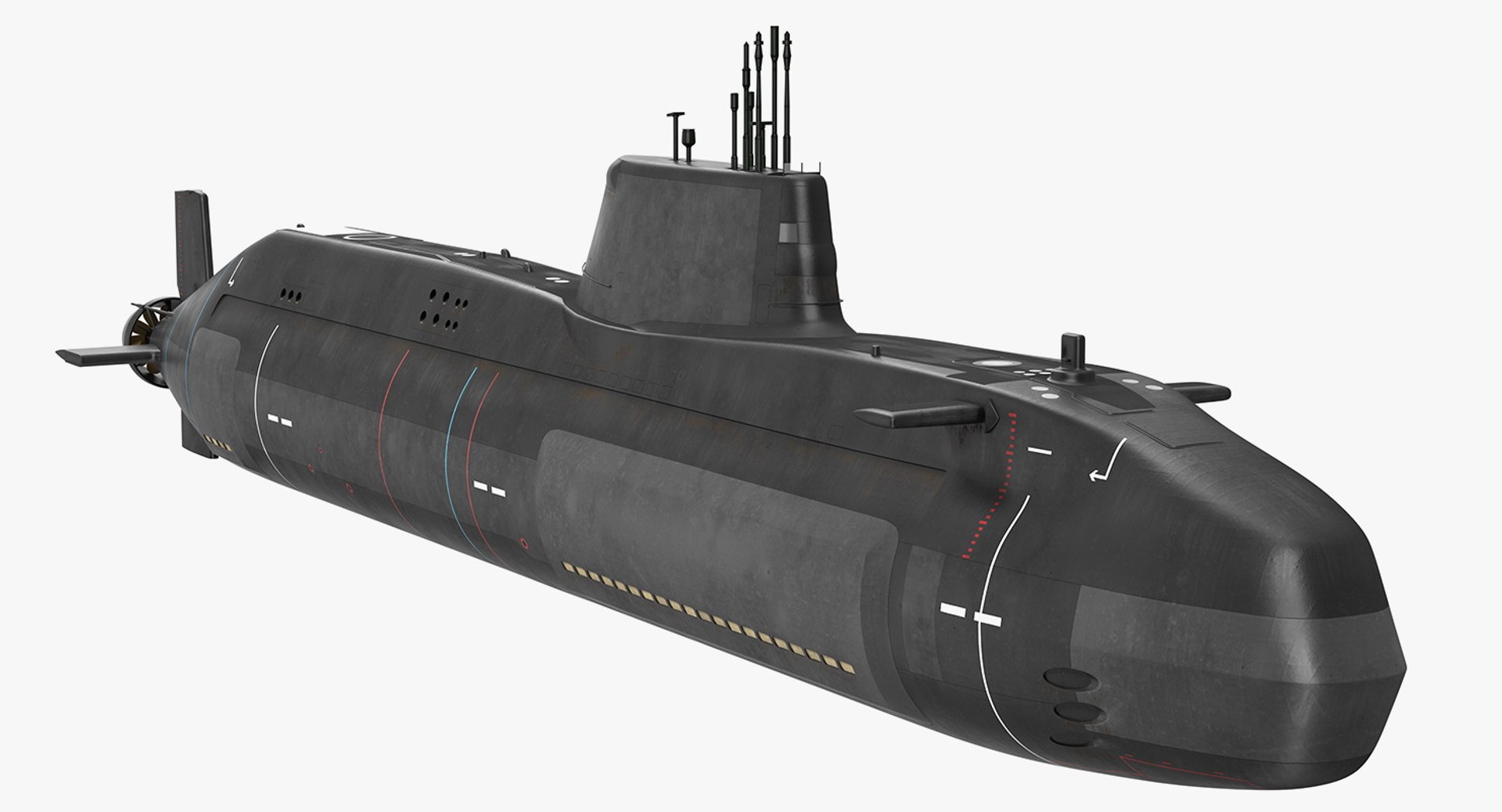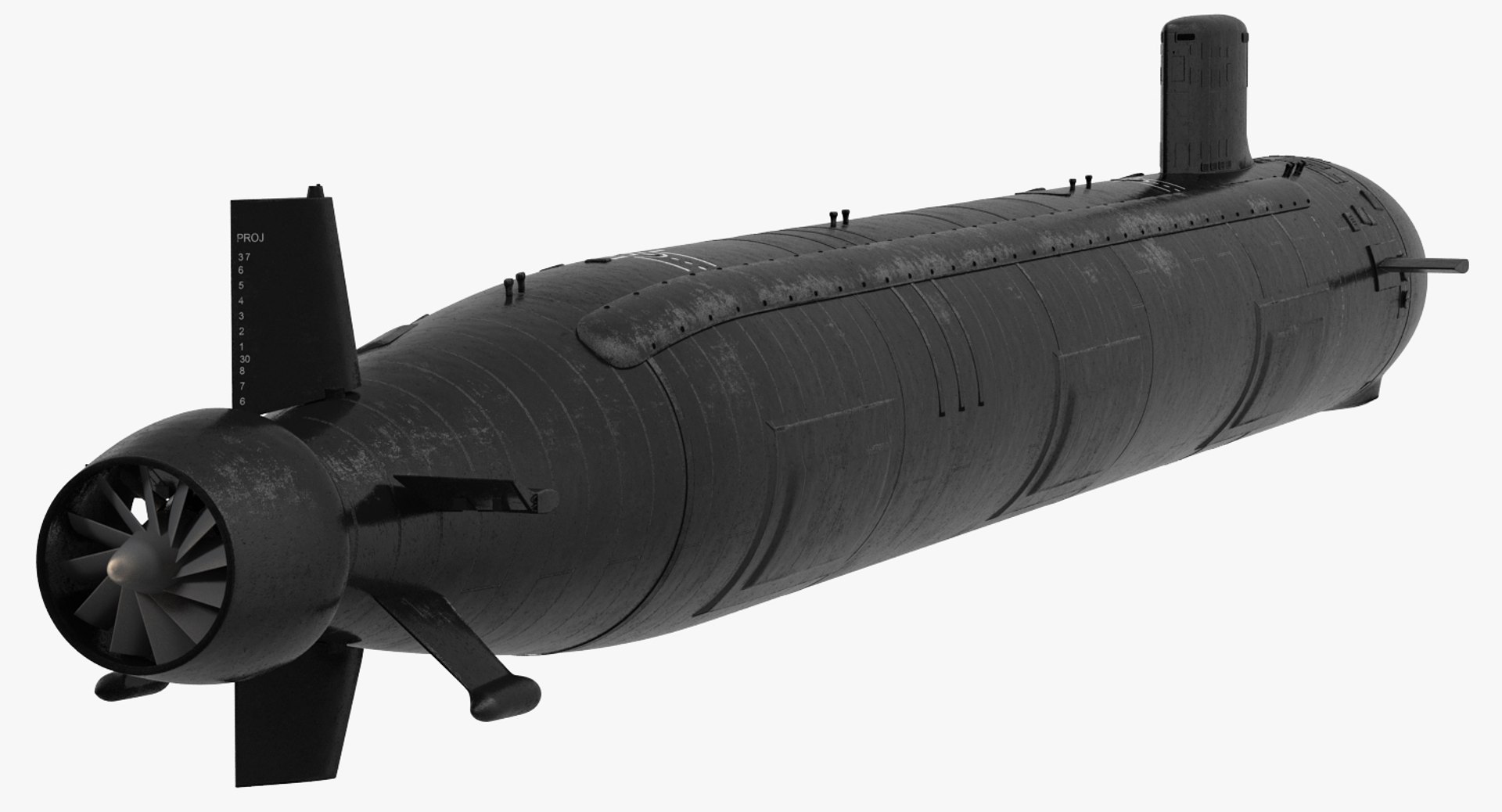
An attack submarine is shorter and finer than a missile boat, with the hull tapering back from the sail toward a single propulsor. The Virginia class replaced the traditional periscope with photonics masts, which is why the sail carries no through-hull optics and looks cleaner than earlier designs.
The mesh is deliberately economical at 66,113 polygons and 67,193 vertices in quads and tris with non-overlapping UVs, and ships with 11 texture maps including 4 at 8192x8192. That split is the right one for a smooth hull: the geometry is simple, and the surface detail is entirely texture.
A rigged build sits on this page at $139. The static model at $119 covers naval and defence visualization, documentary and news graphics, strategic analysis material, and games. On sale since 2017.
Questions About This Model
What file formats does the Virginia class Submarine 3D model come in?
The complete list of included formats is shown on the TurboSquid product page, where every file is named and sized before you buy. Native scene files and the common interchange formats are the usual pairing.
How much does the Virginia class Submarine 3D model cost?
It is listed at $139 USD on TurboSquid. That is a one-off purchase under the Royalty Free license - there is no subscription and no per-project fee afterwards.
How clean is the geometry on the Virginia class Submarine model?
The mesh uses organized, quad-dominant topology at real-world scale, with objects named and grouped rather than merged into one block.
How heavy is the Virginia class Submarine mesh?
66,113 polygons and 67,193 vertices, built as polygonal quads/tris. Whether that fits depends on where it lands - an architectural still and a real-time walkthrough tolerate very different counts.