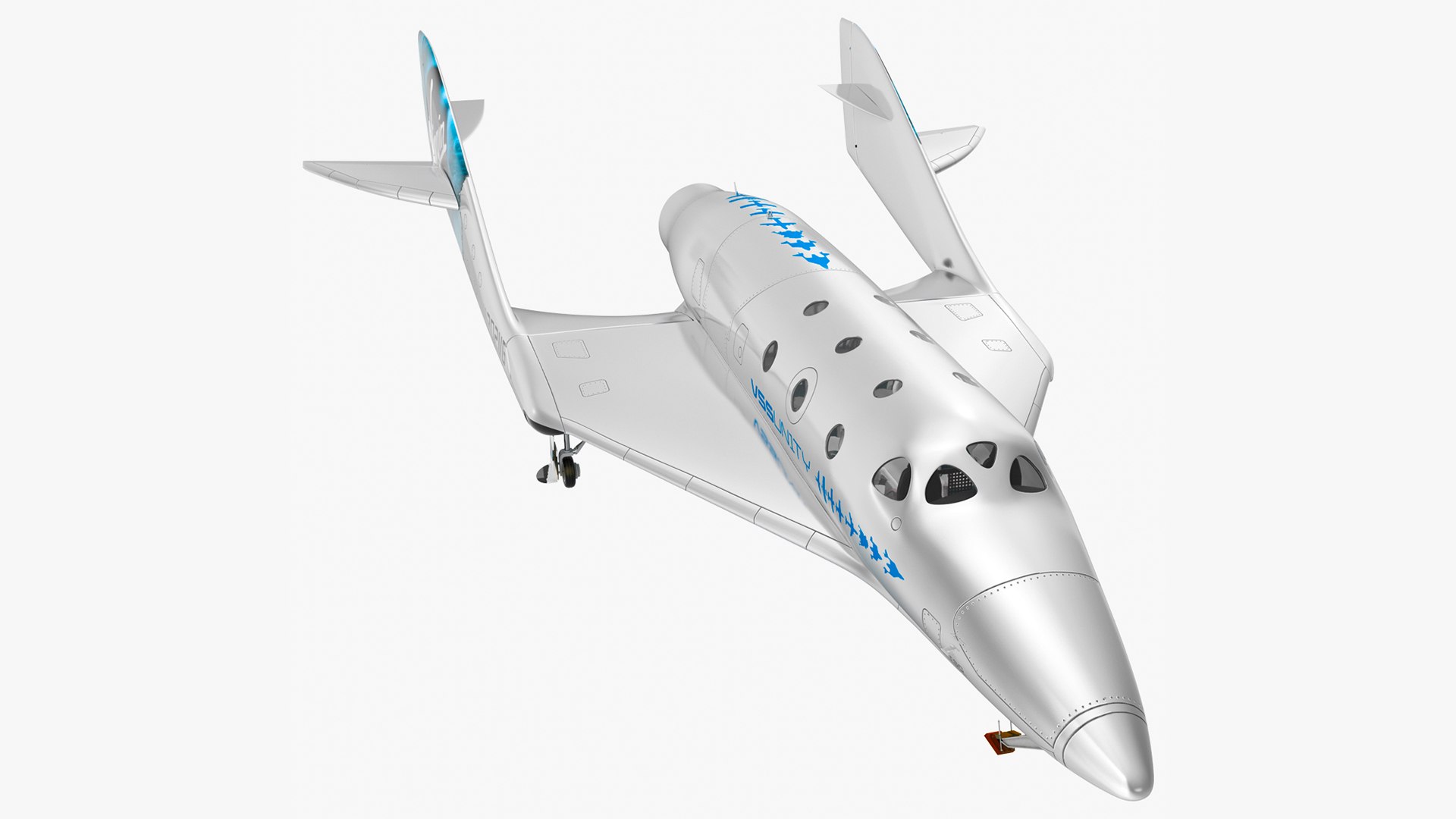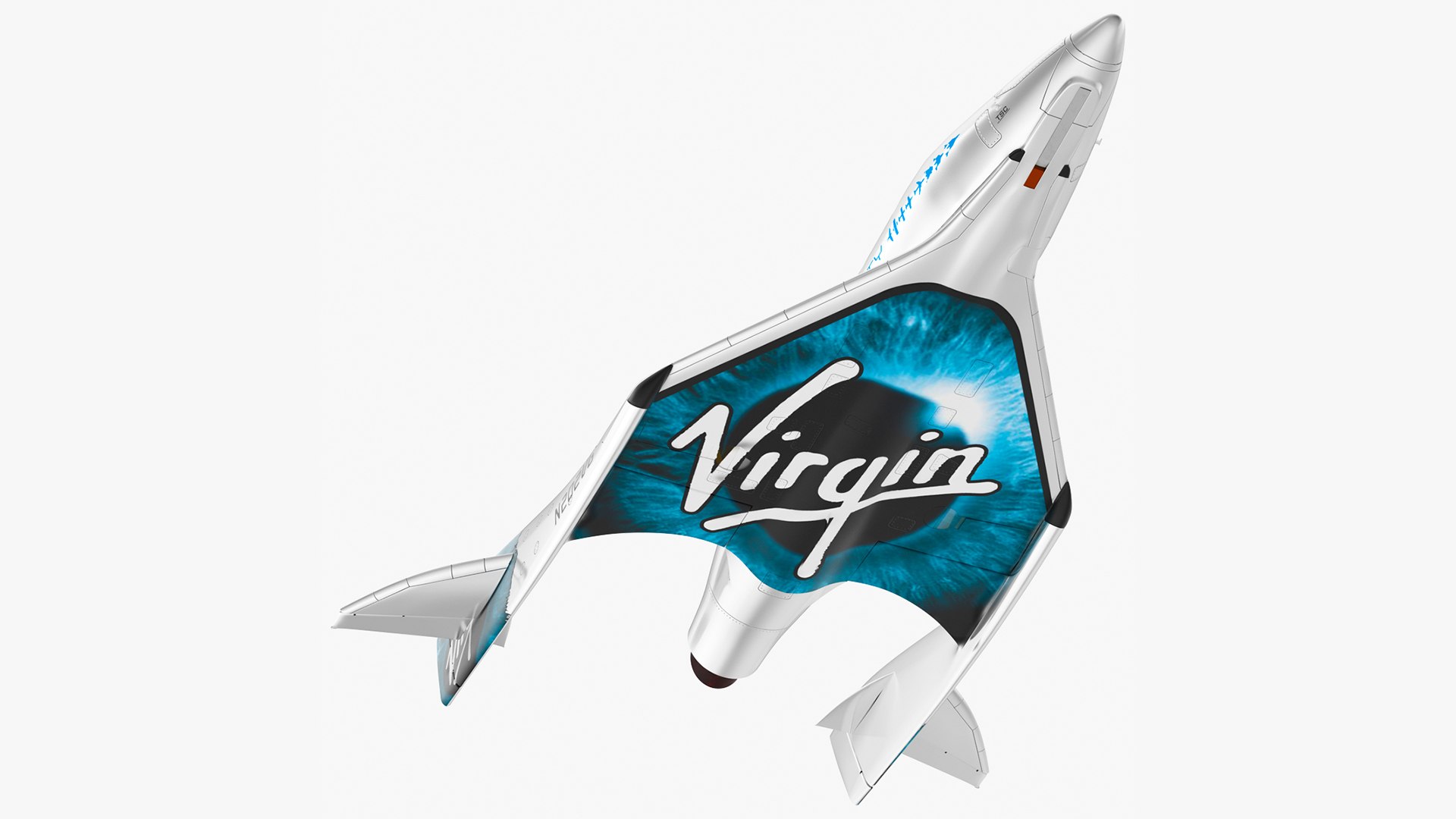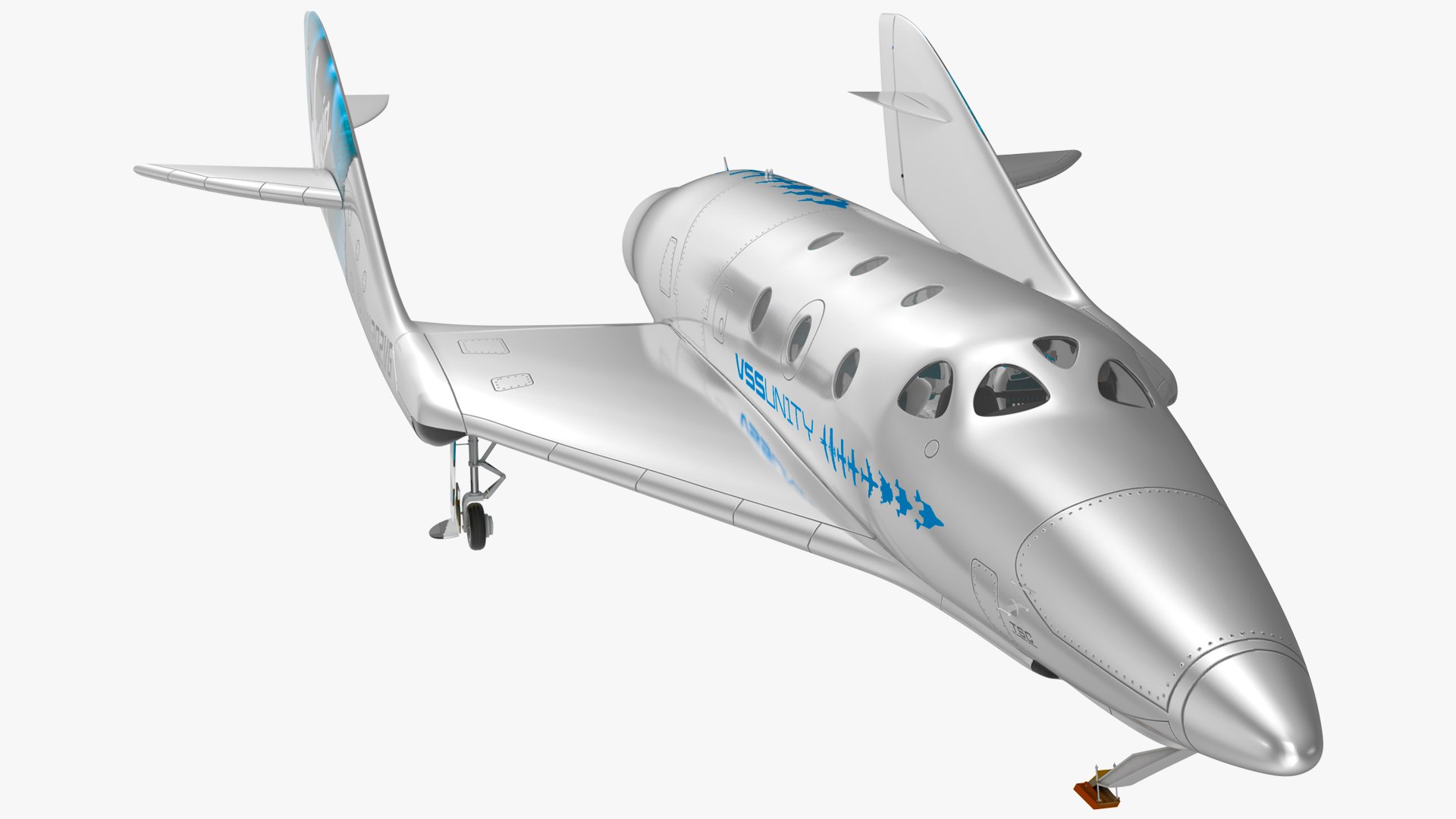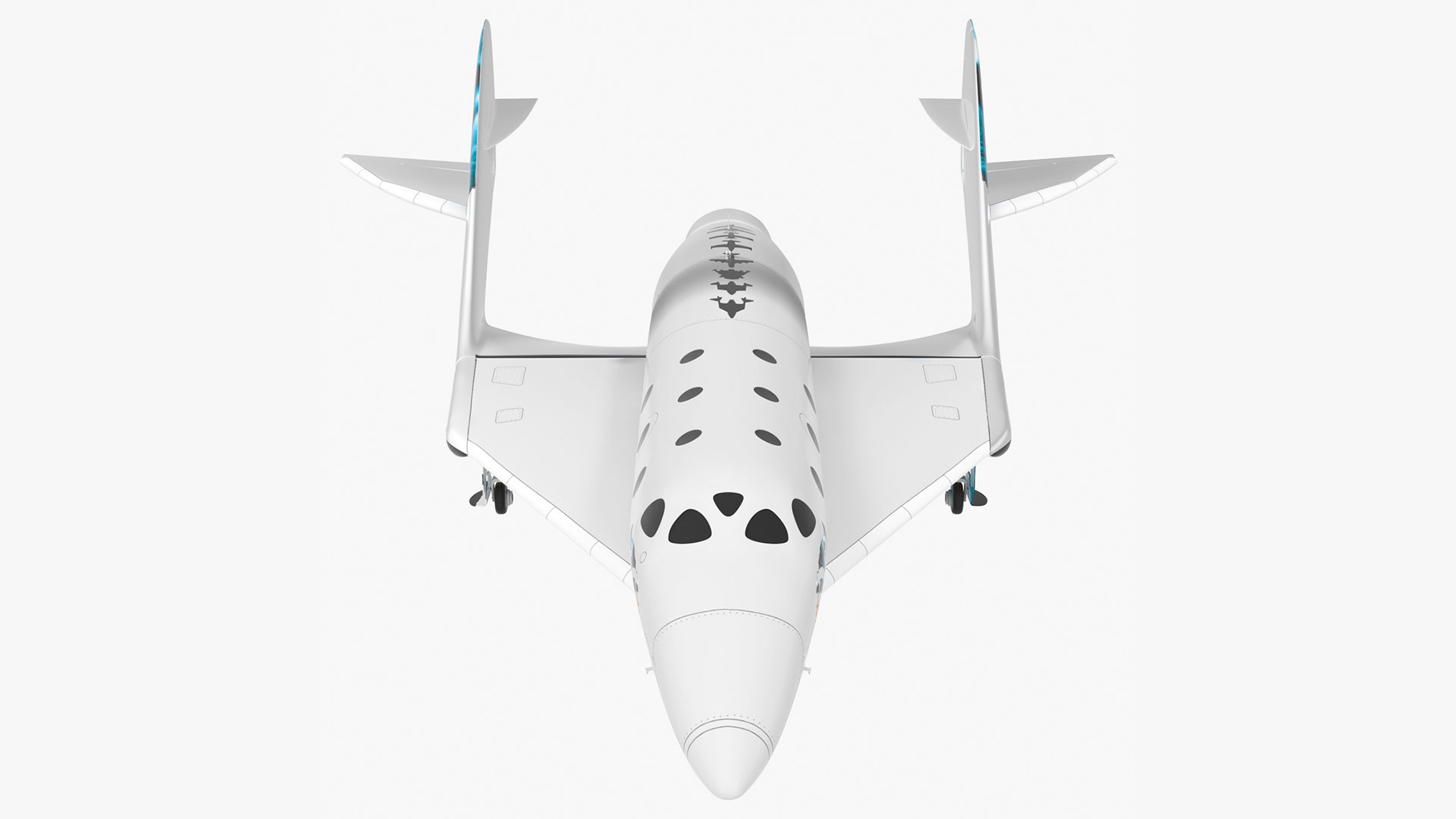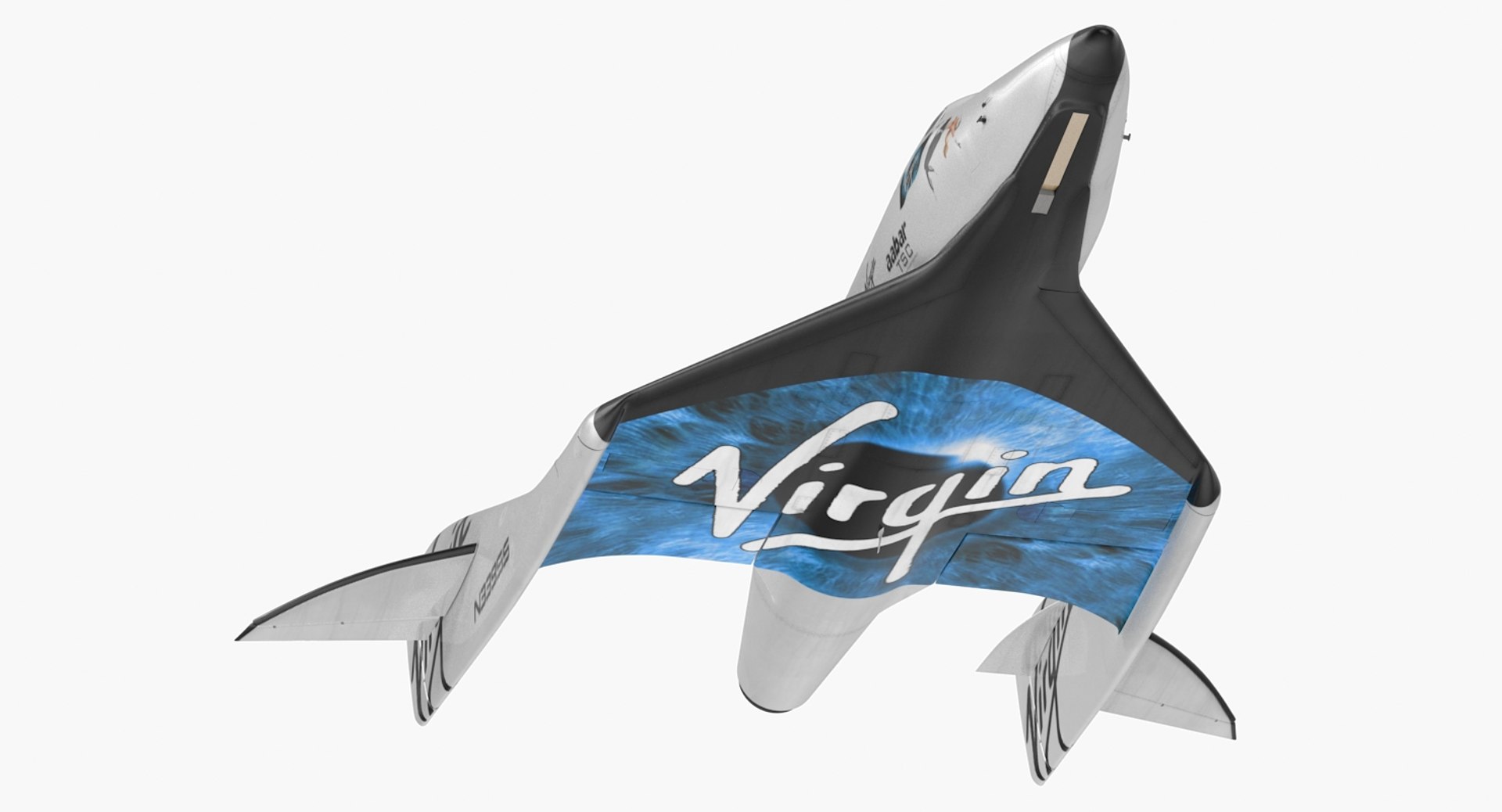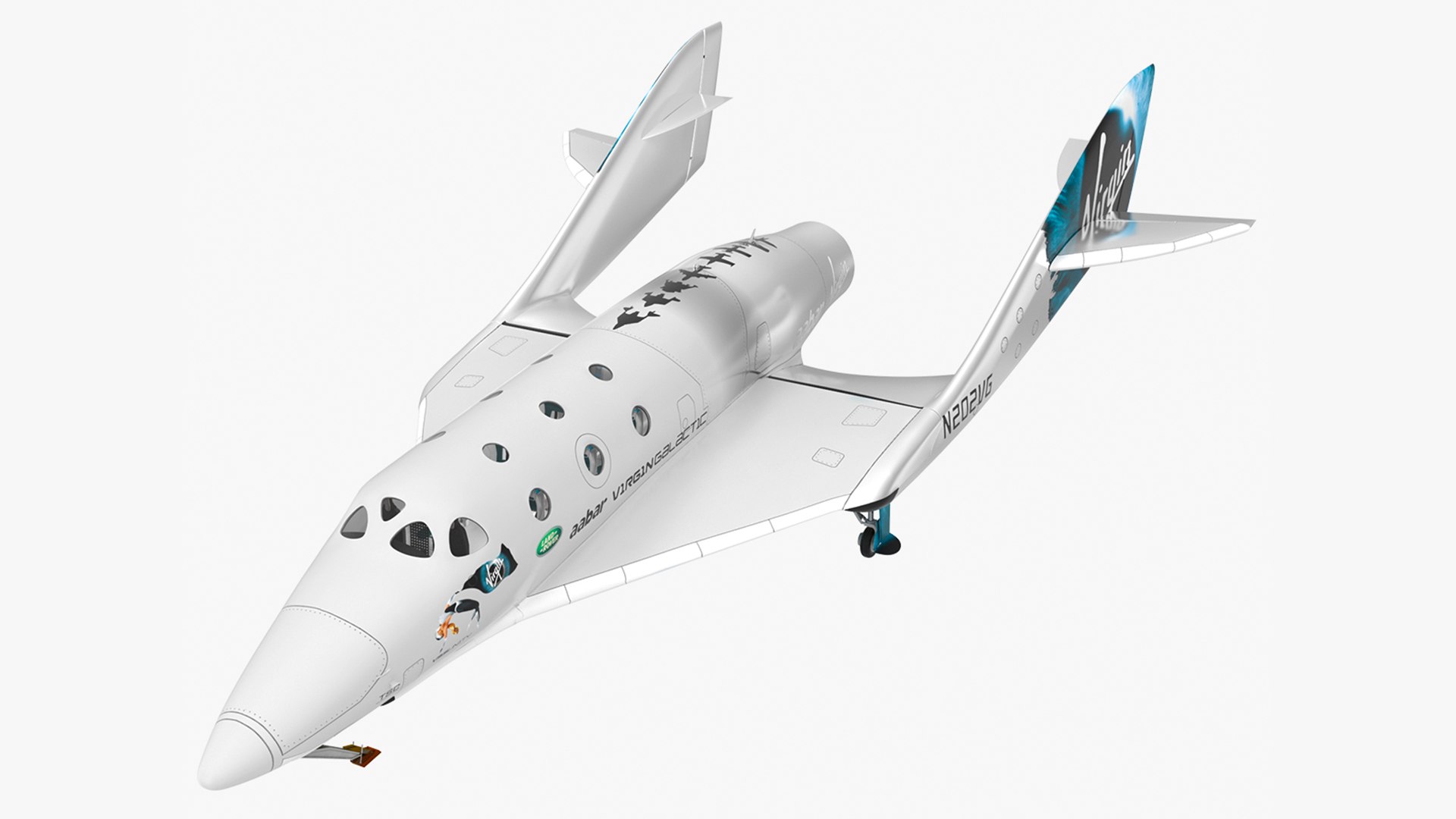
A suborbital spaceplane is built around one trick: the tail booms fold upward for reentry, turning the aircraft into a shuttlecock that stabilises itself without control input. That feathering mechanism is the vehicle's whole safety argument, and it gives the airframe its twin boom layout and its unusual proportions.
The mesh is efficient at 139,044 polygons and 143,101 vertices in quads and tris with non-overlapping UVs, with the geometry in the boom hinges, the cabin windows and the rocket nozzle.
A rigged build sits on this page at $149, which is the one to take if the tail has to feather. The static model at $99 covers commercial spaceflight marketing, space tourism material, news and documentary graphics, education and games. On sale since 2022.
Questions About This Model
What is the VSS Unity Virgin Suborbital Spaceplane model typically used for?
Stated applications are aerospace visualization, game assets and film & TV VFX. Because the asset is finished rather than a base mesh, it also holds up as set dressing in scenes it was not specifically built for.
How heavy is the VSS Unity Virgin Suborbital Spaceplane mesh?
139,044 polygons and 143,101 vertices, built as polygonal quads/tris. What matters is not the number itself but how many copies of the object your scene has to carry at once.
How clean is the geometry on the VSS Unity Virgin Suborbital Spaceplane model?
The mesh uses organized, quad-dominant topology at real-world scale, with objects named and grouped rather than merged into one block.
Does the VSS Unity Virgin Suborbital Spaceplane model include materials and textures?
The product page states what ships with each format. Textures, when present, come inside the download rather than as a separate purchase. See the listing for the exact contents.