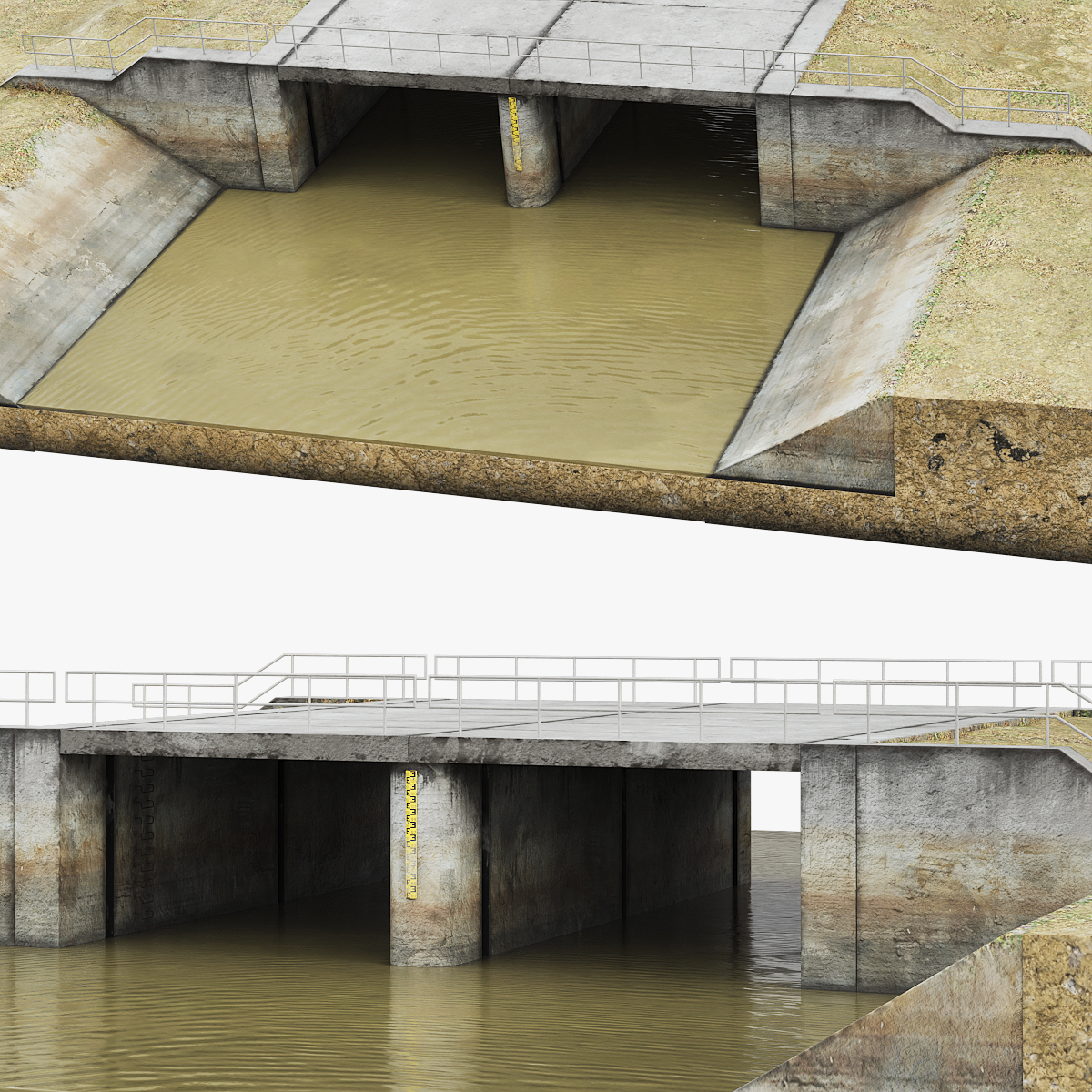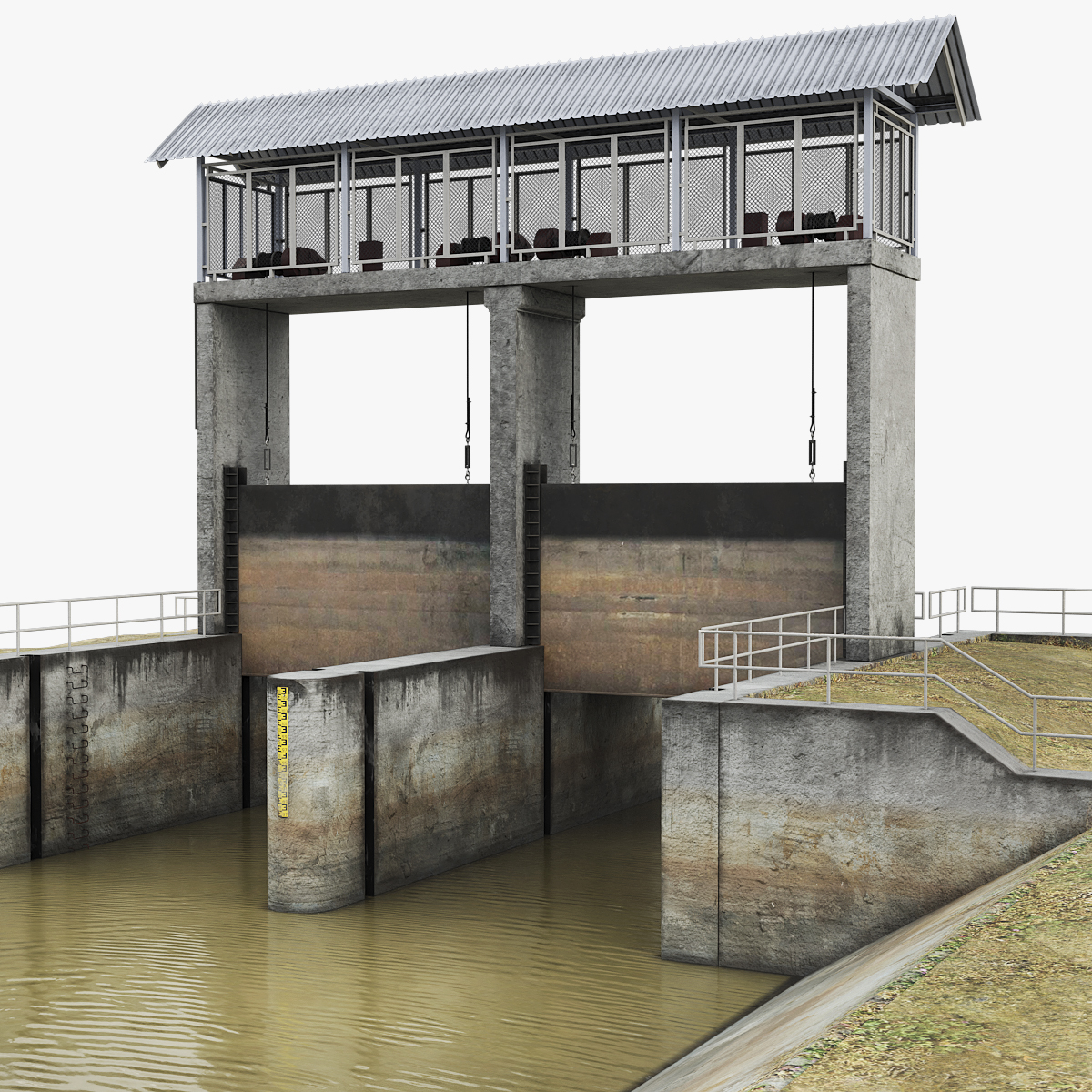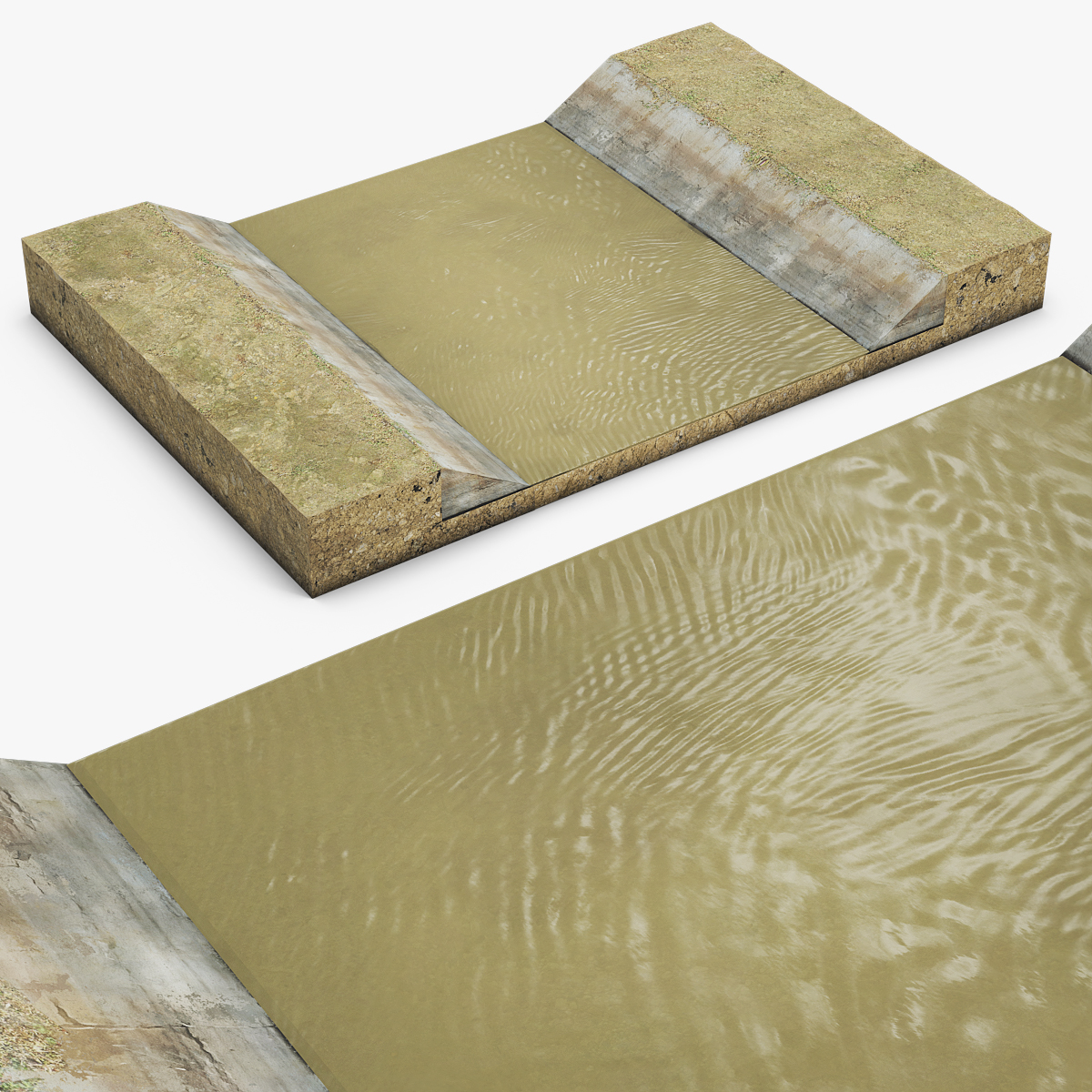
Water Retention Canal Bed Structure
A channel structure built to hold and slow water, a landscape piece for irrigation, flood control and civil engineering scenes. It needs only 2,328 polygons and 2,494 vertices, so it can stretch across a large terrain without weighing down the scene. The broad, shallow form sits into the ground plane, letting water, mud or grass meet its edges naturally.
Its geometry follows the CheckMate specification and accepts terrain blending and displacement without trouble. UV mapping is mixed, so long walls can tile a concrete texture while special faces keep unique detail. Its low weight also suits real-time walkthroughs that cover long stretches of rural infrastructure.
Issued in 2026, it suits architectural masterplans, city simulation games, hydrology education and environmental visualization. Fill it partly with water and add reeds along the rim, and the structure becomes a believable drainage basin. Seen from drone height, its clean geometric outline contrasts with the soft shapes of surrounding fields.
Questions About This Model
What is the Water Retention Canal Bed Structure model typically used for?
Stated applications are architectural visualization and film & TV VFX. Because the asset is finished rather than a base mesh, it also holds up as set dressing in scenes it was not specifically built for.
Which industries use the Water Retention Canal Bed Structure model?
This listing is cataloged for Architecture and Film & Video Production. Those are the sectors the model was tagged for on TurboSquid, based on how comparable assets in the Nature & Plants range are bought.
Where can I buy the Water Retention Canal Bed Structure 3D model?
It is sold through TurboSquid, where this listing has been available since 2026. Purchase, download and licensing are handled by TurboSquid; delivery is immediate after checkout.
How clean is the geometry on the Water Retention Canal Bed Structure model?
The mesh uses organized, quad-dominant topology at real-world scale, with objects named and grouped rather than merged into one block.