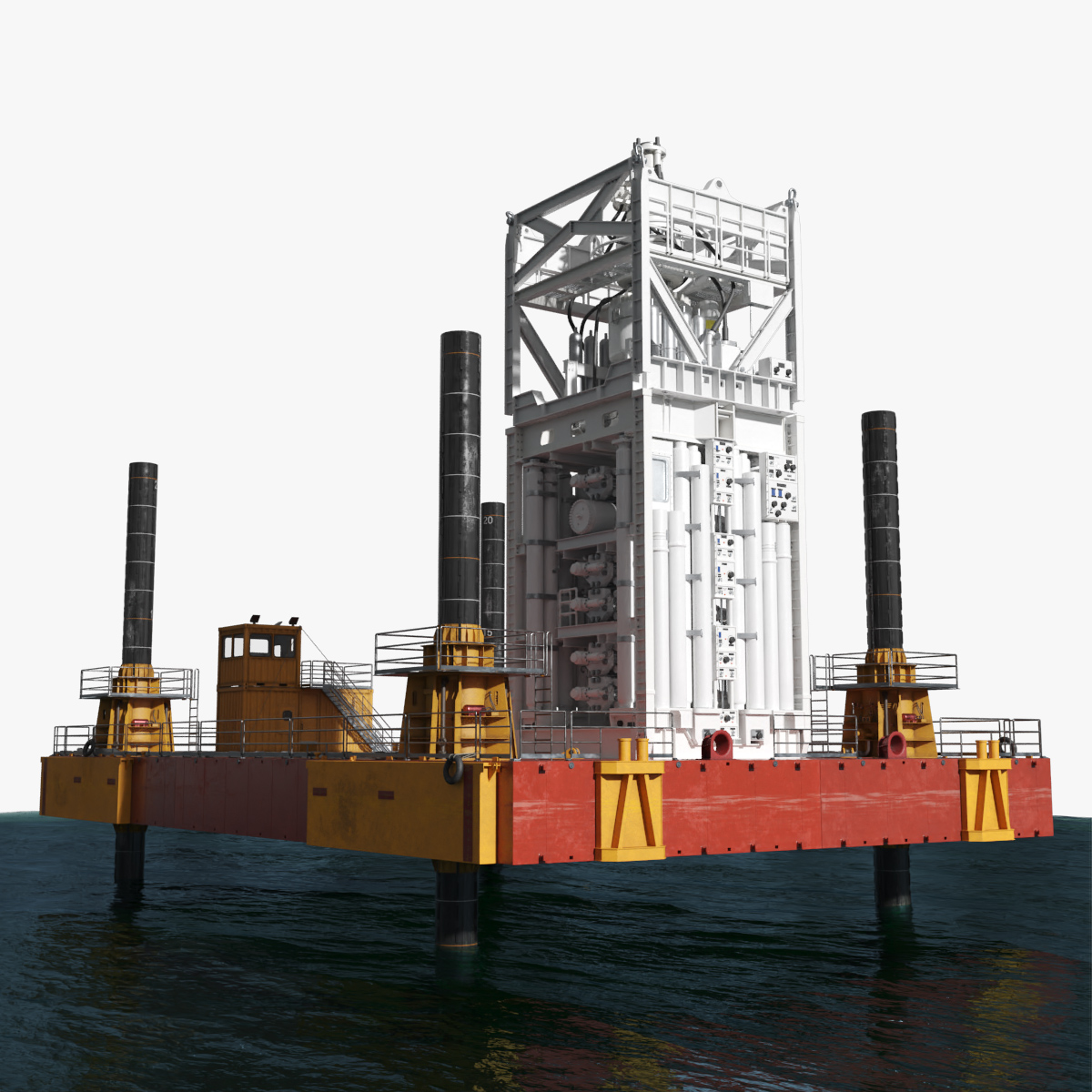
Handling Tug Vessel with Arthropod 600 Subsea Pipeline Trencher
An anchor handling tug carrying a tracked subsea trencher, built for offshore pipeline and cable burial scenes. Handling Tug Vessel with Arthropod 600 Subsea Pipeline Trencher uses 1,799,812 polygons and 1,869,549 vertices on hull, crane, deck and trencher. The trencher rides on wide tracks with a cutting arm that digs a channel along the seabed for the line.
StemCell certification means one master file with matching materials in each exported format. Rust, marine growth and safety markings on the deck machinery have dedicated UV space with no overlaps. Bright paint on the tug hull keeps it visible against a gray North Sea swell.
Released in 2024 at $249, the pairing serves a narrow but demanding offshore engineering audience. Presentations for subsea contractors, energy documentaries, engineering training and offshore simulation software use it to explain pipeline burial. A crane at the stern lowers the trencher over the side, the key moment for an animation.
Questions About This Model
What should I search for to find models like the Handling Tug Vessel with Arthropod 600 Subsea Pipeline Trencher?
Useful search terms are vessel, tug and marine. Browsing the Industrial Equipment category shows the closest alternatives at a range of prices.
What file formats does the Handling Tug Vessel with Arthropod 600 Subsea Pipeline Trencher 3D model come in?
Every included file is listed on the product page at TurboSquid, with format and size shown per download. That page is the source of truth rather than this summary.
Can the Handling Tug Vessel with Arthropod 600 Subsea Pipeline Trencher model be used in a commercial project?
It ships with TurboSquid's Royalty Free license, so a single purchase covers commercial delivery - you do not pay again per project or per seat of the finished work.
What does StemCell mean for the Handling Tug Vessel with Arthropod 600 Subsea Pipeline Trencher model?
StemCell is TurboSquid's multi-format standard. The model was authored once and delivered in several formats with matching PBR materials, so shading survives the move between a game engine and an offline renderer.