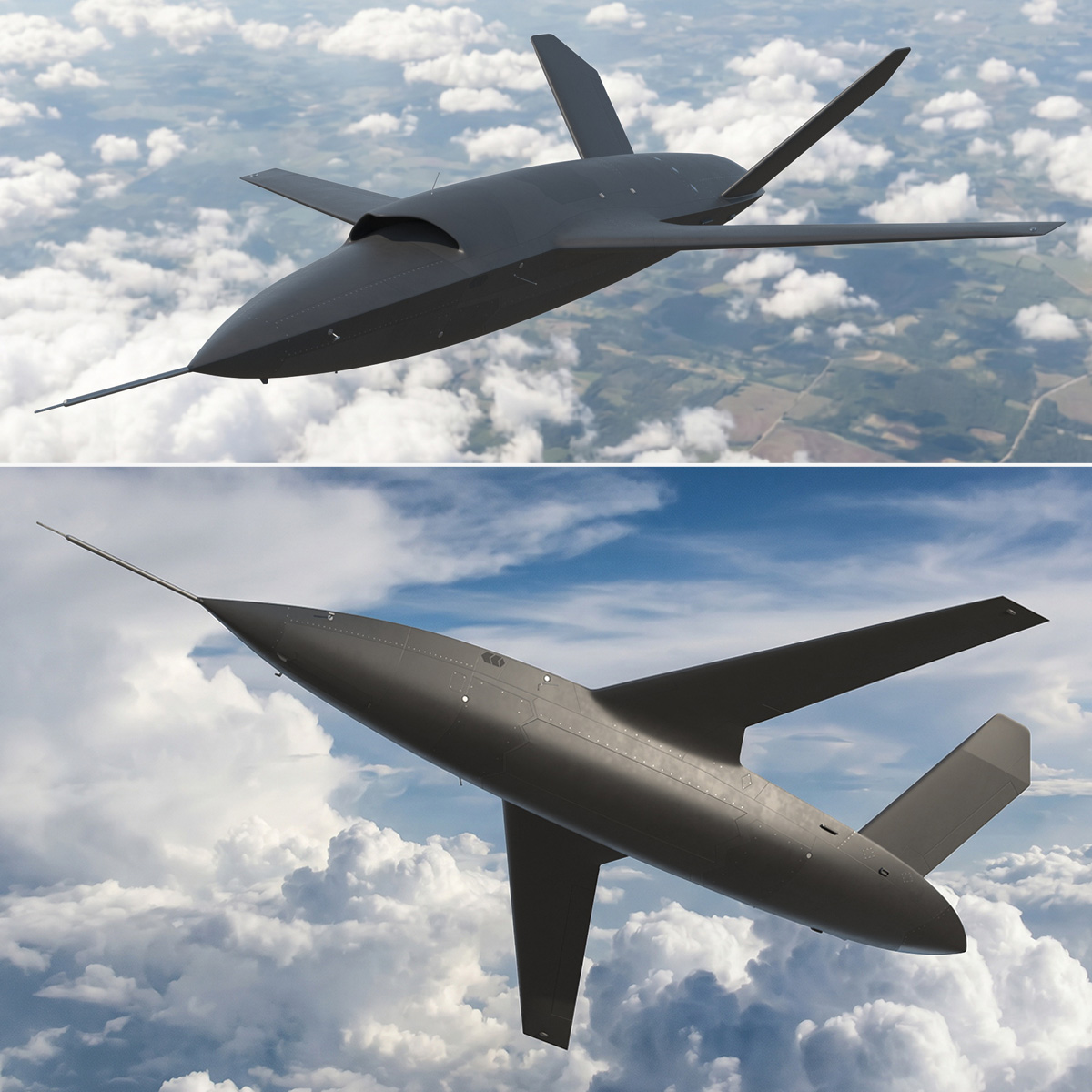
A needle-nosed experimental jet with a long slender fuselage, this aircraft was designed to fly supersonic while softening the sonic boom. The 22,120 polygons describe the extended nose, the low swept wings and the top-mounted engine, which define its unusual profile. Its length makes it look stretched next to any ordinary fighter on the same apron.
The jet is a StemCell product with native files for many packages, and it is licensed for Editorial Uses Only. That license fits aviation news, research explainers and documentaries about quieter supersonic flight over land. The cockpit has no forward window, since the long nose blocks the view, a detail worth a close shot.
Three versions come with the page: the Lockheed Martin X-59 QueSST, a quiet supersonic transport and an experimental supersonic aircraft. Since 2023 it has illustrated aerospace research stories, flight test animations and museum displays of experimental aircraft. Show it high over a desert test range with a chase plane to stage a research flight.
Questions About This Model
What does StemCell mean for the Lockheed Martin X-59 QueSST model?
StemCell covers both geometry and shading: the model is delivered across formats with materials that stay equivalent instead of needing per-engine conversion.
How heavy is the Lockheed Martin X-59 QueSST mesh?
22,120 polygons and 11,436 vertices, built as polygonal quads/tris. 22,120 polygons reads as economical next to the roughly 200,000 median of our Aircraft range.
What is the Lockheed Martin X-59 QueSST model typically used for?
Stated applications are aerospace visualization, flight simulation and film & TV VFX. Because the asset is finished rather than a base mesh, it also holds up as set dressing in scenes it was not specifically built for.
Can the Lockheed Martin X-59 QueSST model be used in a commercial project?
No. The model depicts a real branded product, so TurboSquid lists it under the Editorial Uses Only license. It may be used in news, commentary, education, personal projects and similar editorial contexts, but not in advertising, on merchandise or in any product offered for sale. See our license guide.