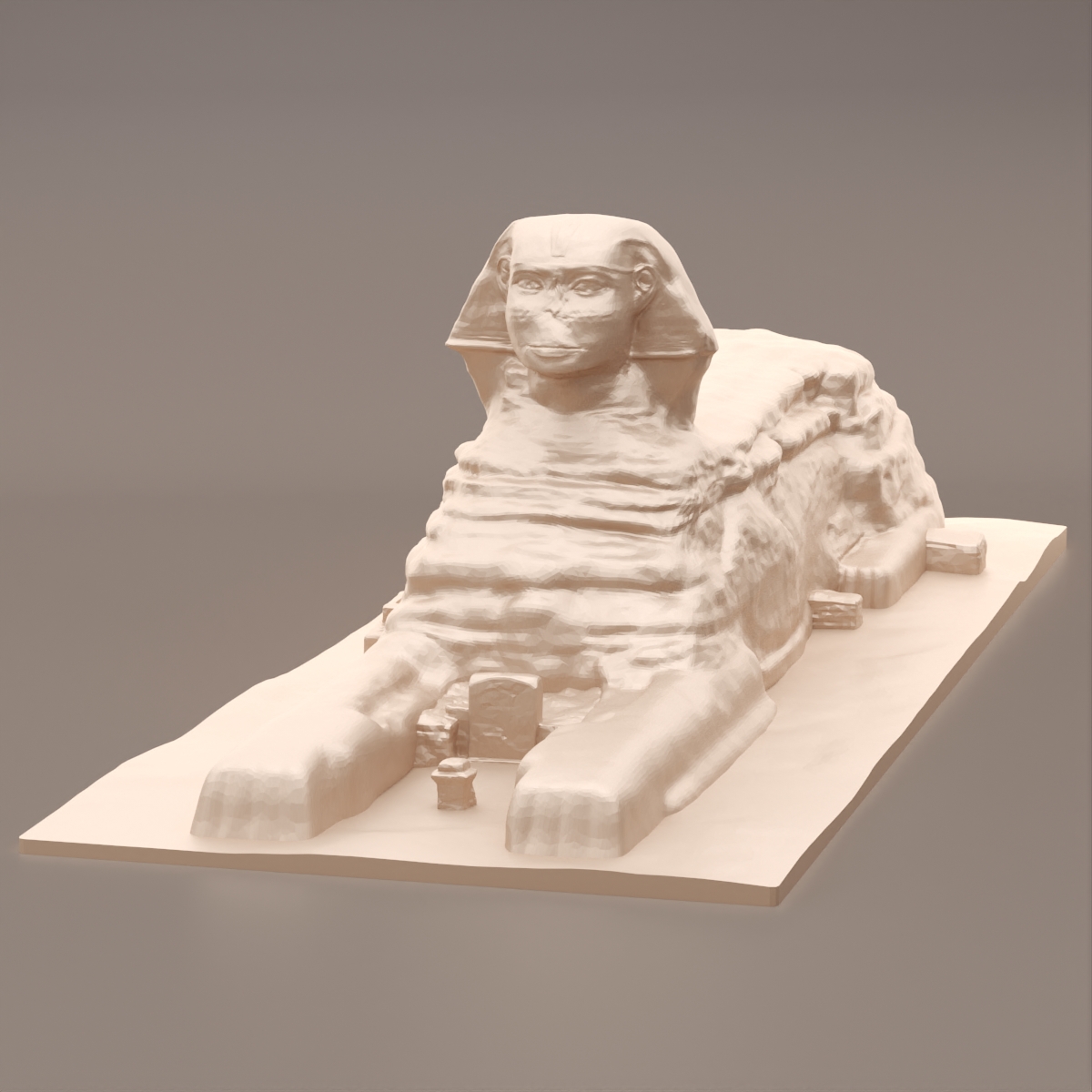
The Great Sphinx of Giza, the lion-bodied guardian with a pharaoh's head, carved from the bedrock of the plateau. Its 194,732 polygons capture the eroded headdress, the weathered body layers and the outstretched paws. Wind erosion has carved deep horizontal bands into the stone, and those bands are what make the monument read as ancient.
Its 98,408 vertices carry a non-overlapping UV set, so sandstone color and erosion can be tuned. StemCell certification means one master build exported to many formats, with PBR materials that behave the same everywhere. The missing nose and damaged face are part of its character, so close shots should keep them visible.
Available since 2023, the Sphinx costs $199, cleared for commercial use without royalties. Egyptology documentaries, travel campaigns, history lessons and adventure games set in Egypt rely on this landmark. Low golden sun with a pyramid behind it reproduces the most famous view of the Giza plateau.
Questions About This Model
Can the The Great Sphinx model be modified after purchase?
Yes, modification is covered by the license. Most buyers adjust materials or decimate the mesh for their engine; only redistribution of the source file is off-limits.
Does the The Great Sphinx model include materials and textures?
The product page states what ships with each format. StemCell delivery means a PBR material set that reads the same across renderers. See the listing for the exact contents.
Which industries use the The Great Sphinx model?
It is tagged for Architecture, Film & Video Production and Advertising. The categorisation reflects where similar Architecture & Landmarks assets end up rather than a hard restriction - the license does not limit the field of use.
What does StemCell mean for the The Great Sphinx model?
StemCell is TurboSquid's multi-format standard. The model was authored once and delivered in several formats with matching PBR materials, so shading survives the move between a game engine and an offline renderer.